Only be thou strong and very courageous, that thou mayest observe to do according to all the law, which Moses my servant commanded thee: turn not from it to the right hand or to the left, that thou mayest prosper whithersoever thou goest. This book of the law shall not depart out of thy mouth; but thou shalt meditate therein day and night, that thou mayest observe to do according to all that is written therein: for then thou shalt make thy way prosperous, and then thou shalt have good success. Have not I commanded thee? Be strong and of a good courage; be not afraid, neither be thou dismayed: for the LORD thy God is with thee whithersoever thou goest. (Joshua 1:7–9)
Should Christians read the Bible? Well, yes, of course, and they can hardly avoid it if they are pious and go to church and Bible class. But I don’t mean to ask about Christians reading the Bible in group settings: public worship or Bible class or whatever. Should individual Christians read the Bible for private devotion?
Yes, and no.
Thanks for reading Gallagher! Subscribe for free to receive new posts and support my work.
Or, actually, no and yes, and, again, no.
Let’s talk about it.
Ancient Believers Didn’t Read the Bible
We’ll approach the question through the side door. Should individual Christians pray? Yes, that’s an easy one. The Bible talks a great deal about people of faith praying. “Pray without ceasing,” said the Apostle. Jesus gave much instruction on prayer. In the Old Testament, there’s an entire book, a long book, comprising 150 prayers. Next question, should Christians go to church? Let’s reword that: should Christians routinely gather with the saints to worship God? Yes, another easy question. The Bible has a great deal to say about corporate worship, in the Old and New Testament—or, at least, gathering and doing the activities we tend to associate with worship: singing, praying, exploring Scripture. (Maybe Tom Wadsworth would agree with that description.) Let me just remind you about the verse in Hebrews that says, “not forsaking the assembling of ourselves together.”
What about Bible reading? Does the Bible tell people to read the Bible? We find instructions to listen to, or to hear, the word of God, or the message of the gospel. The prophets often call on the ancient Israelites and Judeans to pay attention, to listen, but they never tell them to read. Such a command would make no sense, because there was nothing to read, and even if there were, the common Israelite couldn’t read it. When I say there was nothing to read, I mean the Bible hadn’t been written yet. Isaiah certainly couldn’t tell people to read his book; his life was taken up with delivering the oracles that would eventually constitute the contents of the book of Isaiah. Some things were written—the Ten Commandments, for instance, but the only copy about which we know was stored in the Most Holy Place of the Tabernacle or Temple, and therefore not available for reading. We could assume that multiple copies of the Ten Commandments were made, chiseled in stone and displayed prominently in various spots of ancient Israel, just as in modern America.
But then you have the problem of literacy. It is impossible to be very precise about ancient literacy, but a pretty common guess for the ancient world is that about ten percent of the population could read. It is almost precisely the reverse in modern America, with about ten percent of the population considered illiterate. How has it come about that so many people in modern America can read? It’s because for about two hundred years or more, American society has invested a great deal of money and effort on public education, with the fundamental goal of teaching people how to read. Learning to read is not easy. You don’t graduate first grade considered “literate,” even if you can read Dr. Seuss books. It takes years of training to be proficient to read complicated texts. And the Bible is most definitely a complicated text. Absent a well-funded public education program, widespread literacy is not going to just happen, not at the levels familiar to us. That’s a pretty good reason why a general requirement that Christians should read the Bible would have made no sense prior to the modern period. As Keith Stanglin (p. 159) has mentioned, at the time of the Reformation and following the invention of the printing press, early “Protestants usually stressed the obligation of all Christians to read their Bibles.” This was a new phenomenon.
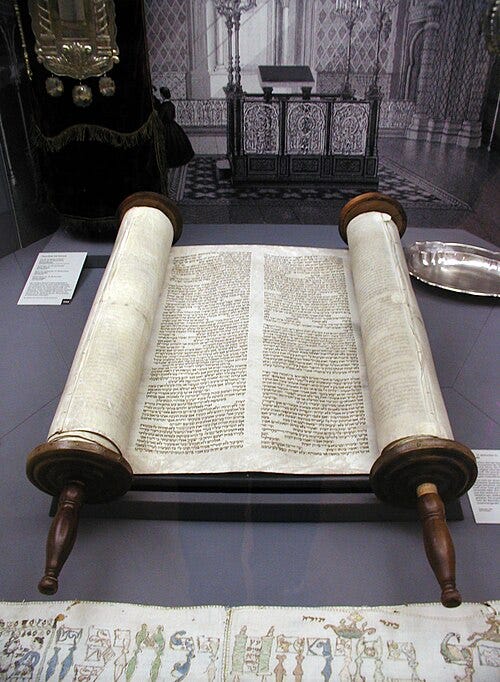
But there’s another reason we never find Jesus or Paul telling believers that they need to read the Bible. It’s not just that the concept of “Bible”—as in a collection of sacred books that you could hold in your hand—is an anachronism for the first century, but also because the individual books themselves were enormously expensive. Of course, everything was handmade: the leather or papyrus upon which the text was written, and the ink, and the process of writing itself, all done by hand. I have seen the plausible estimate that in the first century a scroll of the book of Isaiah would have cost about a month’s wages. Most believers did not have ready access to copies of the biblical books even if they had been trained to read them.
That’s why the Bible contains no general command to believers to read the Bible as a regular habit, like prayer or the assembling of believers. Such instruction would make no sense in their world; it would have been impossible to carry out. General Bible reading is a very recent phenomenon. (For similar thoughts, see Brad East, pp. 119–20.)
Christians Should Read the Bible
But, yes, Christians should definitely read the Bible. I mean, Christians now, with the opportunity and the ability. The fact is, by this point, the Bible has been written down and collected together. There are a plethora of cheap Bibles available, and you can easily find an organization giving Bibles away if you need that. And we have all been trained to read at a very high level, at great expense in money and time. We are judged by God according to what we do with our opportunities, and we—Christians in twenty-first century America—have been granted the opportunity—almost unique in the history of the world—of reading the Bible for ourselves.
Yes, we should read the Bible.
This is especially true for church leaders: if any believers should be reading the Bible, it should be church leaders. They will be judged by God not only according to their opportunities but also in how they have led God’s people, and so they need humbly to seek the will of God through constant devotion to Scripture.
Or Maybe Not?
But do Christians need to read the Bible? Is that what God wants for us? Maybe not. Maybe the point is not reading but something else. Could reading the Bible be a distraction from what God wants us to do with Scripture?
I’m asking these questions conscious of two influences: history and Socrates. The history we’ve already mentioned. Before the modern period, it would have made no sense to tell Christians generally that they need to read the Bible. What did such Christians do? Were they just not spiritual? Or did they do something with the Bible besides read it?
That brings me to Socrates. The famous philosopher was not a big fan of writing. Yes, I get the irony that the only way I know about the opinion of Socrates is that his student Plato wrote it down. I’m sure Plato got the irony too. But still, listen to Socrates:
For this invention will produce forgetfulness in the minds of those who learn to use it, because they will not practice their memory. Their trust in writing, produced by external characters which are no part of themselves, will discourage the use of their own memory within them. You have invented an elixir not of memory, but of reminding; and you offer your pupils the appearance of wisdom, not true wisdom, for they will read many things without instruction and will therefore seem [275b] to know many things, when th…