He that is slow to anger is better than the mighty; and he that ruleth his spirit than he that taketh a city. (Proverbs 16:32)
In the year 1811, there appeared a book with the following description on the title page:
Sense and Sensibility, A Novel in Three Volumes, by A Lady
It turned out that this 3-vol. set was the debut novel of a 35-year-old spinster, the second-youngest of eight siblings, born to George Austen, an Anglican clergyman, who died six years earlier. The author’s name was Jane Austen, who was living at the time in the village of Chawton, about 50 miles southwest of London. Within a couple of years, the first edition had sold out and a second edition was issued. It has never been out of print since.
Thanks for reading Gallagher! Subscribe for free to receive new posts and support my work.
There are two advantages to reading the classics. The first and most obvious is that people have heard of them, and they will be impressed with you if you read them. But the much greater advantage is that the classics are classic for a reason: they are good, they give pleasure, they teach things, they have enduring value and significance, they have literally shaped events. The great novels, the classics, have something to say about life, about humanity, about the nature of the world in which we live, and what they say is true, or close to true, at least worth pondering, and they say it in a way that draws in the reader. You might say that some novelists, the great ones, have something to teach. These authors want to tell a captivating story that inculcates morals, or lays bare a philosophy or theology. Think about The Lion, the Witch, and the Wardrobe. I have often told people that my favorite exposition of the doctrine of the afterlife is in The Last Battle. Or there’s Harry Potter and his almost magical exhibition of bravery and friendship. I’ve previously posted essays about lessons learned from Orwell’s 1984, as well as To Kill a Mockingbird. Other novels that clearly fall into this category are Crime and Punishment and Atlas Shrugged and The Color Purple and Gilead.
Some novels, I think, just want to tell a good yarn. I assume this is where James Patterson fits, the best-selling novelist of all time. I’ve never read one of his books. I think I’d also put John Grisham here.
What about Jane Austen?
In her first published novel, near the end (ch. 45), one young woman asks her sister about how she thinks about her own behavior in comparison to that of a male character revealed to be a scoundrel: “Do you compare your conduct with his?” to which the sister replies, “No. I compare it with what it ought to have been; I compare it with yours.” Yes, this is a book about what one’s behavior ought to be, and what it often is. This is a novel about the passions and the control of them, which has been a topic of philosophical discourse from time immemorial. The subject was already well-worn when Socrates began asking his relentless questions. Austen’s method diverges from that of Socrates, but not by much. Similar to what the Athenian gadfly accomplished in the Republic, when he pursued the notion of justice by imagining a city—and I stress again that Socrates used his imagination—by imagining a city in which justice could be perfectly pursued, Austen imagines not a city but a family, and especially two teenage sisters, one the epitome of sense, the other of sensibility. And she puts these sisters in situations that test their character and allow readers to examine the virtues and vices of each. Jane Austen is, indeed, my favorite moral philosopher.
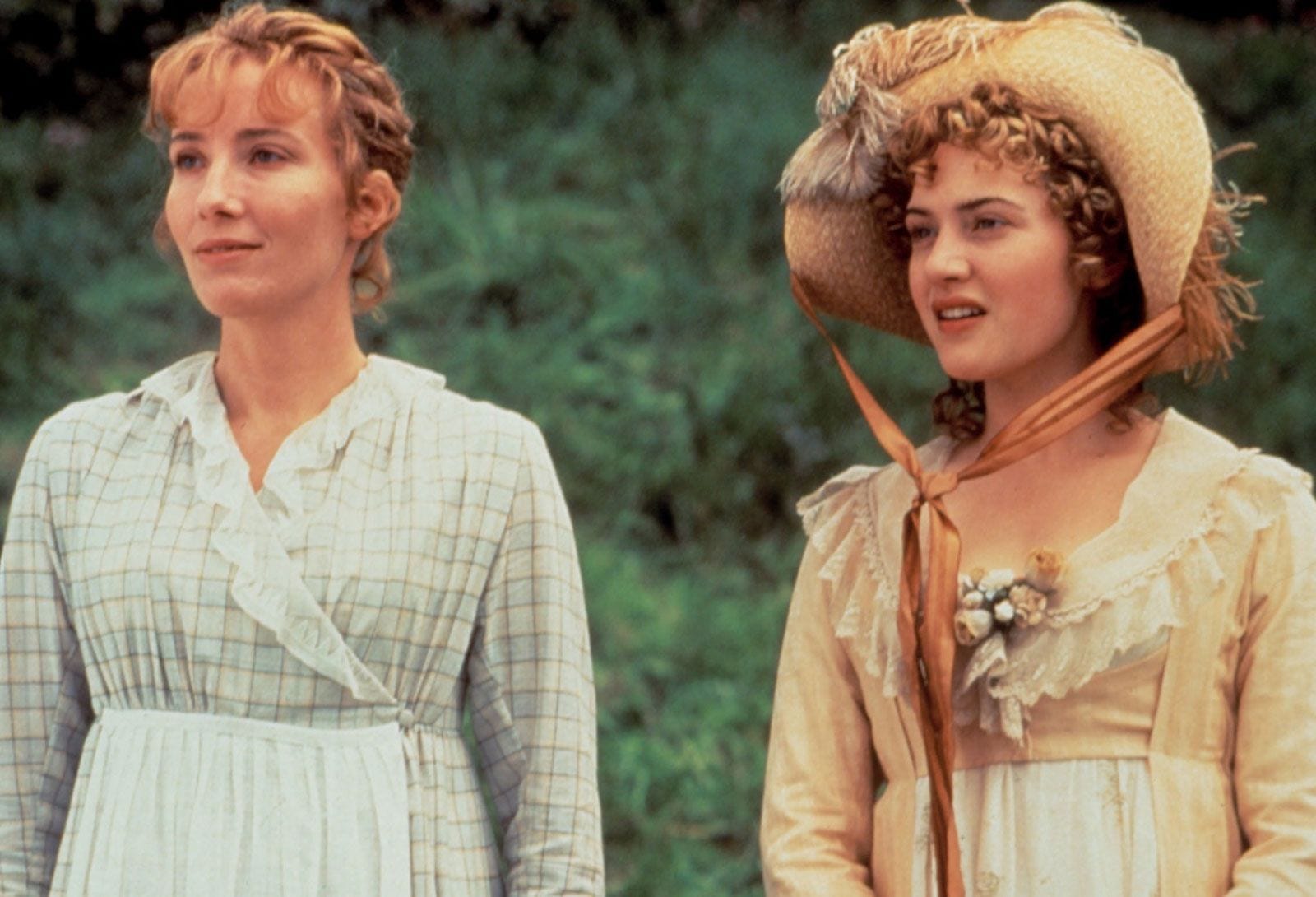
Sense and Sensibility is a book of secret engagements, and supposed engagements thought to be secret. The main characters are two sisters, Elinor and Marianne, 19 years old and 16 years old when the novel begins. They are the Dashwood sisters, and they have also a younger sister, Margaret, 13 years old, who comes into the story only occasionally, and a mother, Mrs. Dashwood, who becomes a widow in order to launch the plot. They are from the upper crust of society, but the lower end of it, too genteel to earn a living through work but too poor to be comfortable and secure without more income. Their financial stability is thus determined by the type of man they can catch, that is, whether he is rich or not, and their dignity is determined by how desperate they appear to catch that man. Through most of the novel, Elinor attempts to affect an attitude of indifference toward the man she wants to marry, and she mostly succeeds, while Marianne takes the opposite approach, leaving no one in doubt of how desperately she longs for her lover. As Marianne says to her sister halfway through the novel, “our situations are alike. We have neither of us any thing to tell; you, because you do not communicate, and I, because I conceal nothing” (ch. 27). In the words of Mrs. Jennings a couple chapters later, addressed to Elinor in reference to Marianne: “Upon my word, I never saw a young woman so desperately in love in my life!” (ch. 29).
The novel bears a superficial resemblance to Pride and Prejudice, Austen’s second novel, so we might as well go ahead and make that comparison. Is the book as good as its sequel? Almost, not quite. I think that is the general opinion, which I share. Reading this book is like having your second favorite dessert, meaning it’s a delightful experience. The two novels are alike in several ways: they are both written by Jane Austen, about two sisters, one more emotional than the other, from the same stratum of society, and the plot revolves completely around their romantic attachments. Both novels feature a villain in the form of an eligible bachelor whose name begins with W, here Willoughby, there Wickham. If you have experienced these stories only as movies that you watch while folding the laundry, you might imagine that Sense and Sensibility answers the question, what if Pride and Prejudice were told from Jane’s perspective rather than Elizabeth’s.
But that is not fair to Sense and Sensibility. With the constraints I have already mentioned, the plot is rather different. It does indeed focus on the older sister, Elinor, very restrained and proper, who observes the younger Marianne’s emotional swings with both disapproval and distress. This first novel from Austen concentrates much less on the marriage partners for the women than does her second; while Mr. Darcy is the second main character of Pride and Prejudice, here Edward Ferrars comes into the story only enough to remind us who he is. As I mentioned earlier, much of the plot here revolves around secret engagements and supposed engagements, not really a feature of the Bennet family. They are, indeed, different novels, though similar, and their greatest similarity is the delight they both give readers. Do you want Italian cream cake or blueberry cobbler?
While we’re asking such questions: Who do you like more, Elizabeth Bennet or Elinor Dashwood? With whom would you rather be friends, or whom would you rather marry? Much to my own surprise, I think I’ll take Elinor. I believe she is my favorite of Austen’s heroines.
I have now read Sense and Sensibility twice, maybe three times, and I have seen at least two adaptations of it (this one and this one), both excellent (but not yet the most recent one), and I can say that once again I thoroughly enjoyed reading it. There are some books you get through and are glad to never have to read them again, perhaps a class textbook. There are some books you enjoy but cannot imagine enjoying a second time. Sense and Sensibility is more like eating a large slice of pecan pie.…