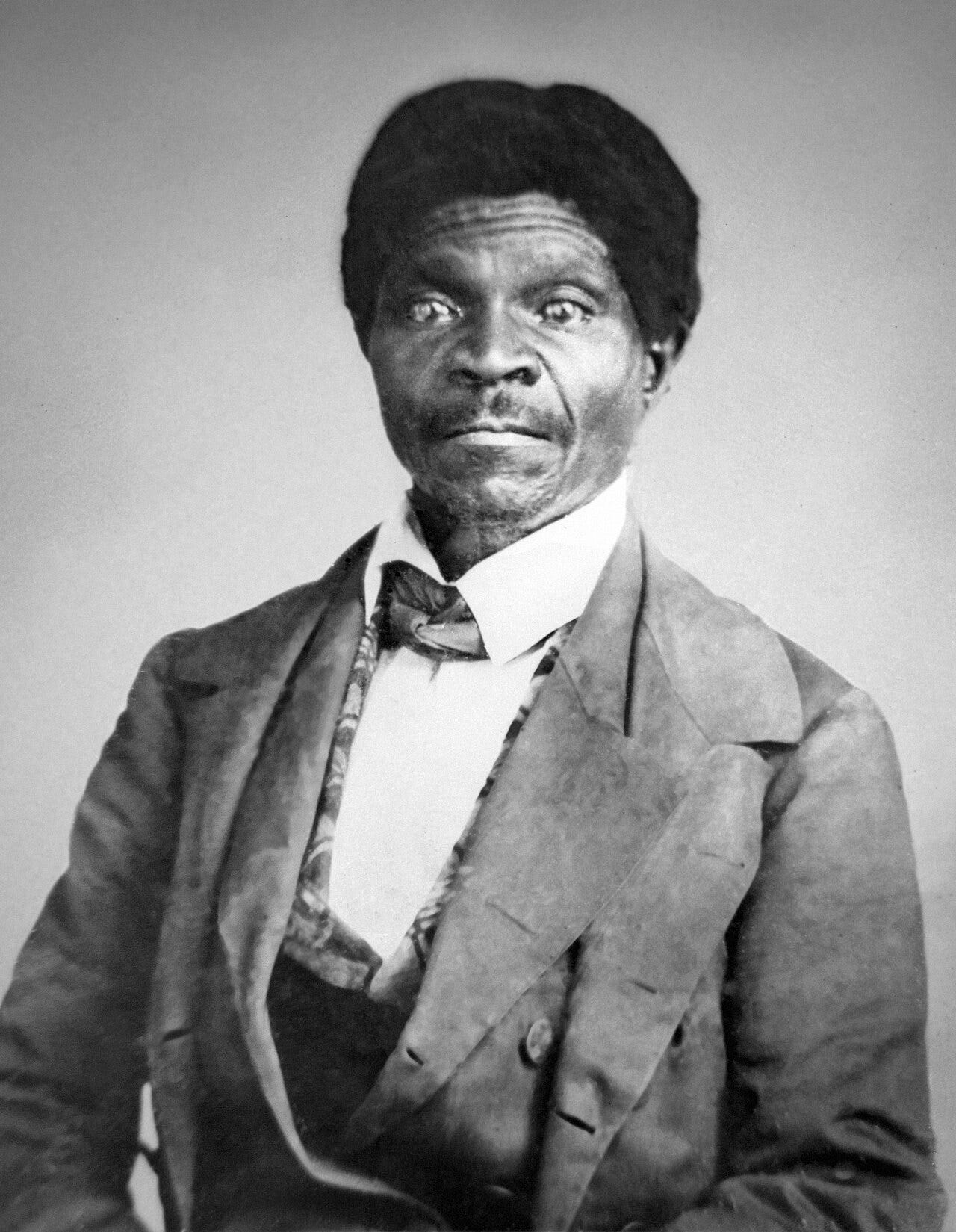
I am no expert on slavery. I am not an ethicist. I consider myself a reasonably intelligent person with an interest in how Christians should think through particular issues. Here I am not trying to talk Christians out of enslaving others; I don’t reckon there’s much danger there—not now, thank God. But from a biblical perspective, slavery is a potentially tricky issue, and there have been many arguments made favoring slavery—or, at least, anti-anti-slavery—based on the Bible. Giving consideration to slavery might provide some guidance to other issues, but, here, I am not talking about those other issues, just slavery.
Can we make an argument against slavery from biblical grounds?
Notice the assignment as I have described it? I have not asked the question, “what does the Bible say about slavery?” Nor have I asked, “Is the Bible opposed to slavery?” These distinct questions are not our concern at the moment, though they are both interesting and overlap with the present task. I want to assume that slavery is wrong, and I want to know how a case against slavery could be based on the Bible?
Assuming that Slavery Is Wrong
Let’s pause. Are we justified in making the assumption that slavery is wrong? The problem with this assumption, as I see it, is twofold: first, our Scripture does not explicitly talk about slavery as being wrong or sinful; and second, most human societies throughout history have countenanced some form of slavery. It is only relatively recently, since the end of the seventeenth century, that the idea gained traction that slavery might be morally problematic. And yet, in general, we do not and ought not to take our cues from society when it comes to morality. Usually we should be wary, dubious, about what society has to teach us about morality. So, if our Scripture does not explicitly condemn slavery, and most human societies have been fine with slavery, why should we consider slavery wrong?
Listen, the answer is yes, we are justified in assuming that slavery is wrong. And we base that belief not so much on Scripture or on society but because we feel it in our bones that slavery is wrong. Okay, right, most people have not felt its wrongness in their bones, I presume; they have been fine with the peculiar institution; and we feel its wrongness because we were raised to feel this way. We have been conditioned against slavery—and people a few hundred years ago were not so conditioned. I recognize this fact of historical situatedness, but that does not mean I think that slavery’s wickedness is conditional on society. (It does seem that Gregory of Nyssa overcame his own historical situatedness and promoted a proto-abolitionism; see, e.g., Tom Holland, ch. 5, pp. 142–43.)
I am trying to put all my philosophical presuppositions—at least the ones I recognize as important here—out on the table so you can recognize them and examine them.
I happen to think that our society has led us in the right direction here, but of course our society has been indelibly marked by Christianity, and while Christians played a part in defending the institution of slavery, there were also plenty of abolitionists motivated by their devotion to Christ.
The apostle Paul says that the works of the flesh are evident, and it is evident to me that enslaving another human being is a work of the flesh.
So, yes, we are justified, at least for the moment, in assuming that slavery is wrong. But there are two reasons that it doesn’t really matter whether this is a correct assumption, and briefly stated, those reasons are the following: (1) we have a habit of constantly examining Scripture, which informs and refines all of our presuppositions, just as our interpretations of Scripture are refined by our life experiences, including the societies in which we live; this is the hermeneutical spiral. (2) For the purposes of this presentation, we can just assume the wickedness of slavery for the sake of argument.
But let me make one more point about this assumption: we should assume the wickedness of slavery until persuaded otherwise. Our default position as human beings, and certainly as Christians, ought to be that owning someone is morally wrong. The burden of proof should be on the one who says that it is not morally wrong.
The Old Testament on Slavery
Neither does this essay concern what the Bible has to say about slavery or whether the Bible is opposed to slavery. Again, let’s pause and consider these points before getting to the main point. The Bible’s depiction of slavery is complicated. As I have said, the Bible never explicitly condemns slavery, though it does mention slavery a number of times. Note, however, that the Bible does not promote slavery. I think you would be hard-pressed to find in the Bible instructions on how to enslave people, or when people deserve slavery, or how best to exploit your slave labor. While the Bible contains a verse instructing Christian disciples to go into the world making disciples of all nations, there is no verse about making slaves of all nations. On the pro-slavery side, the Bible is at best neutral, not promoting it but not explicitly condemning it.
The Bible does mention slavery several times, in the Old Testament and the New—and the essential teaching here in these passages that reference slavery is the regulation of a social reality. The Bible does not say what I wish it said about this issue. (I have mentioned that before.) In the Old Testament, there are instructions for masters, some not altogether pleasant.
When you buy a male Hebrew slave, he shall serve six years, but in the seventh he shall go out a free person, without debt. If he comes in single, he shall go out single; if he comes in married, then his wife shall go out with him. If his master gives him a wife and she bears him sons or daughters, the wife and her children shall be her master’s and he shall go out alone. But if the slave declares, “I love my master, my wife, and my children; I will not go out a free person,” then his master shall bring him before God. He shall be brought to the door or the doorpost; and his master shall pierce his ear with an awl; and he shall serve him for life. (Exod 21:2–6; cf. Lev 25:39–55; Deut 15:12–18)
This passage raises for me several questions for which I have no answers. Mostly here the master is addressed. The thoughts of the slave are considered, if he is a male slave, and it is considered possible that he might want to continue his slavery rather than be emancipated. This regulation seems to envision a type of slavery that might not be altogether unwelcome to the slave—or, preferable to some other likely life situations. But that’s as far down that path as I am inclined to go.
On Slavery
Maybe this is a good time to problematize the very notion of slavery. When I say the word “slavery,” what comes to mind? For me, it’s the nineteenth century American South, and the slavery practiced there was chattel slavery, in which people were enslaved for life with no legal recourse, and their children also automatically became life slaves. Slave owners did sometimes emancipate their slaves, but that was at the whim of the slaveowner, and some states had laws in place to discourage or prohibit emancipation. There are stories of slaveowners wanting to emancipate their slaves but being legally prohibited, so they would move to a different state where emancipation was permitted.
As I understand it, the slaves that populated the antebellum southern United States came from Africa, having been kidnapped there and sold to Europeans for transportation across the Atlantic Ocean. The 1789 memoir of Olaudah Equiano describes his own experience of having lived in Africa—probably modern Nigeria—and as a young adolescent being attacked by a neighboring tribe and bopped on the head and shoved in a bag. He grew up free until he was eleven or twelve, and then he was kidnapped.
I wonder how often pro-slavery ap…