I have previously proposed the use of the so-called “steps of salvation” as an avenue for spiritual growth. The first step is “hear,” and this essay is a first reflection on how to go about doing that.
If ye know these things, happy are ye if ye do them. (John 13:17)
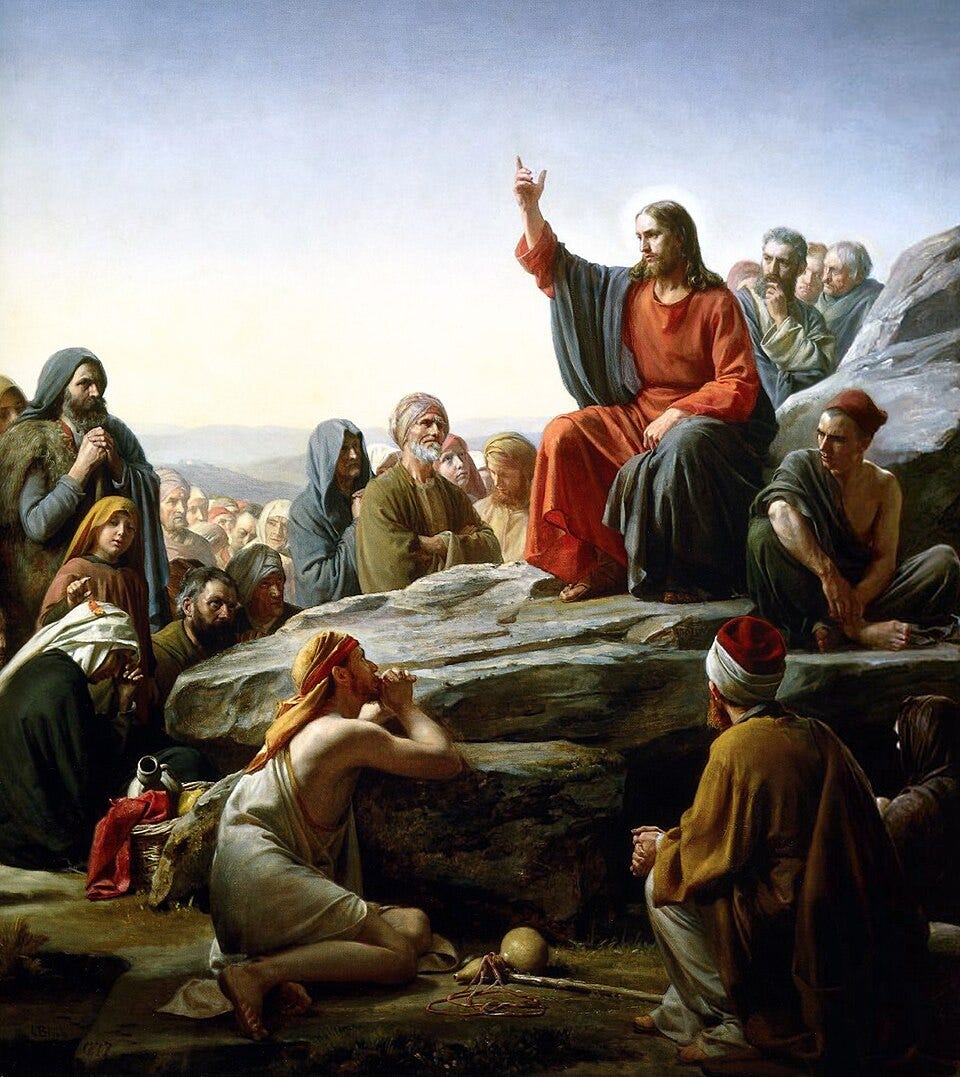
At the end of the Sermon on the Mount, the Evangelist Matthew records a story told by Jesus about two builders. You probably remember singing a song about them. The wise man built his house upon the rock, and when the rains came tumbling down, the house stood firm; but the foolish man built his house upon the sand, and the torrential rains caused his house to go splat. The point of this story, according to the song, is to encourage us to build our house on the Lord Jesus Christ, and what does that mean? Jesus himself explained the difference between the two builders: the wise builder exemplifies, according to Matthew 7, “whosoever heareth these sayings of mine, and doeth them”; whereas the foolish builder illustrates “every one that heareth these sayings of mine, and doeth them not.” The common element between both builders is hearing. If I may extend our Lord’s metaphor, they both receive the blueprints for the house, and they both study those blueprints, but only one of them builds his house according to the blueprints. To change images, only one of them follows the recipe. Only one of them executes the instructions of Jesus that they both hear.
Thanks for reading Gallagher! Subscribe for free to receive new posts and support my work.
Hearing is not the problem. The problem is doing. What distinguishes these two men is action. And no wonder, for the words that they are being asked to perform are, as Jesus says, “these sayings of mine.” Which sayings exactly? Why, the Sermon on the Mount, of course, of which the conclusion is this very parable about the two builders. Hearing the Sermon on the Mount is fine, necessary, essential, but ultimately insufficient. Doing the Sermon on the Mount, now that’s what matters. And that’s hard. I completely understand the guy who wants to build his house not up to code, because building your house according to the code of Jesus is difficult, time-consuming, and expensive. The code of Jesus, the Sermon on the Mount, is filled with stuff I don’t want to do. And I don’t mean avoiding anxiety. Yes, naturally, it would be nice to do such a thing, to avoid anxiety, but, as Jesus knew, that’s easier said than done. At least we all want to try that one. But what about the Golden Rule? or the prohibition on judging others? or the instructions on fasting? or the command to store up treasures in heaven and not on earth? or the command to turn the other check or to go the second mile or to pray for one’s enemies? I don’t really even want to try to follow that recipe, and the way my fellow church-goers talk makes me suspect that they have no interest in trying it either. Which means that we are the fools in Jesus’ parable, building our house without a foundation, counting on good weather.
What is Scripture for? It’s for doing. Later in the Gospel of Matthew (16:24), we read these words, also in red: “For the Son of man shall come in the glory of his Father with his angels; and then he shall reward every man according to his works.” Doing is important. How does this concept relate to the grace of God? And is doing really all that important? Doesn’t the grace of God mean that doing is not important? Yes, I see the tension. Take it up with Jesus. He’s the one that said that the son of man “shall reward every man according to his works.”
The point I’m trying to make is that hearing is not the problem. Doing is the problem. Both builders heard, the wise builder and the foolish builder. Only one of them executed what they heard. Hearing is not the problem.
Hearing is sometimes the problem. In the Gospel of Luke (8:18), Jesus says, “Take heed therefore how ye hear.” There are better and worse ways of hearing. This concept is illustrated for us in the Parable of the Sower, which is the immediate prelude to this saying of Jesus in the Third Gospel. When Jesus says “take heed how ye hear,” he is thinking about the Parable of the Sower. Remember that the seed represents the word of God that is distributed liberally, but people respond to that message in different ways, some better than others. Different kinds of people hear in different ways. “Take heed therefore how ye hear.” We might also think about the disciples of Jesus and how they struggled to hear Jesus. At one point, a group of Jesus’ disciples actually said about one of Jesus’ messages, “this is a hard saying, who can hear it?” (John 6:60). Even Jesus’ closest disciples routinely misunderstood him. One time he warned them about the leaven of the Pharisees, and the disciples thought Jesus was reprimanding them for not bringing bread (Mark 8:14–21). Their years spent with Jesus could be understood as training for how to hear.
I want to talk to you about hearing, but I need to tell you that the point of Scripture is not hearing but doing. Scripture calls on its readers or hearers to respond to the message. There are some literary works that are, I guess, merely for reading or hearing—maybe a John Grisham book or something. I enjoy the TV show Monk, and part of what I enjoy is that it is empty calories; it’s fun, but there’s not much there that I take with me once the TV is off. Of course, many great works of art, whether literature or movies or whatever, do stick with a person and even encourage a particular behavior. I would say the movie It’s a Wonderful Life has a very clear message about how we the viewer ought to live. Same for Groundhog Day. Same for To Kill a Mockingbird. It’s maybe less true for many Shakespeare plays, that is, less true that these plays have a clear message about how people ought to live, but certainly the plays do force the audience who hears well to reflect on various aspects of life. These examples of great works of art get close to what Scripture is doing in calling for a response. A John Grisham novel is for reading and enjoying. Groundhog Day is for watching and enjoying but also for reflecting on life and perhaps encouraging better behavior. Scripture is for reading or hearing and enjoying and for reflecting on life and for repenting and for enacting in life. The point of a John Grisham novel has been achieved when you read it and enjoy it. That is not true of Scripture. Scripture is for doing.
Just think for a moment about the premier passage on Scripture in the Christian Scriptures, Paul’s description of Scripture in his second letter to Timothy. “All scriptureis given by inspiration of God, andis profitable for doctrine, for reproof, for correction, for instruction in righteousness: That the man of God”—or, we might say the person of God, anthrōpos—“may be perfect, throughly”—or completely—“furnished unto all good works.” Where does the profit of Scripture lie? Wherein is its usefulness? The Apostle supplies the answer: Scripture is profitable for doctrine, reproof, correction, and instruction in righteousness. Scripture is for doing, not just hearing.
Think back to the greatness that was Christian America, before the culture turned away from traditional values announced from America’s pulpits: before abortion on demand, before the sexual revolution, before prayer was removed from public schools. Think back to America in the 1950s, when placing the Ten Commandments in public spaces was uncontroversial. This was the decade when the words “under God” were added to the Pledge of Allegiance by an act of Congress, and when “In God We Trust” became the official national motto. Was America a more Christian nation in the 1950s? This was the decade when the Little Rock Nine walked to school amid a howling mob of Christians. I have no doubt that people heard the word of God, but the point of Scripture is not hearing but doing. May we avoid s…