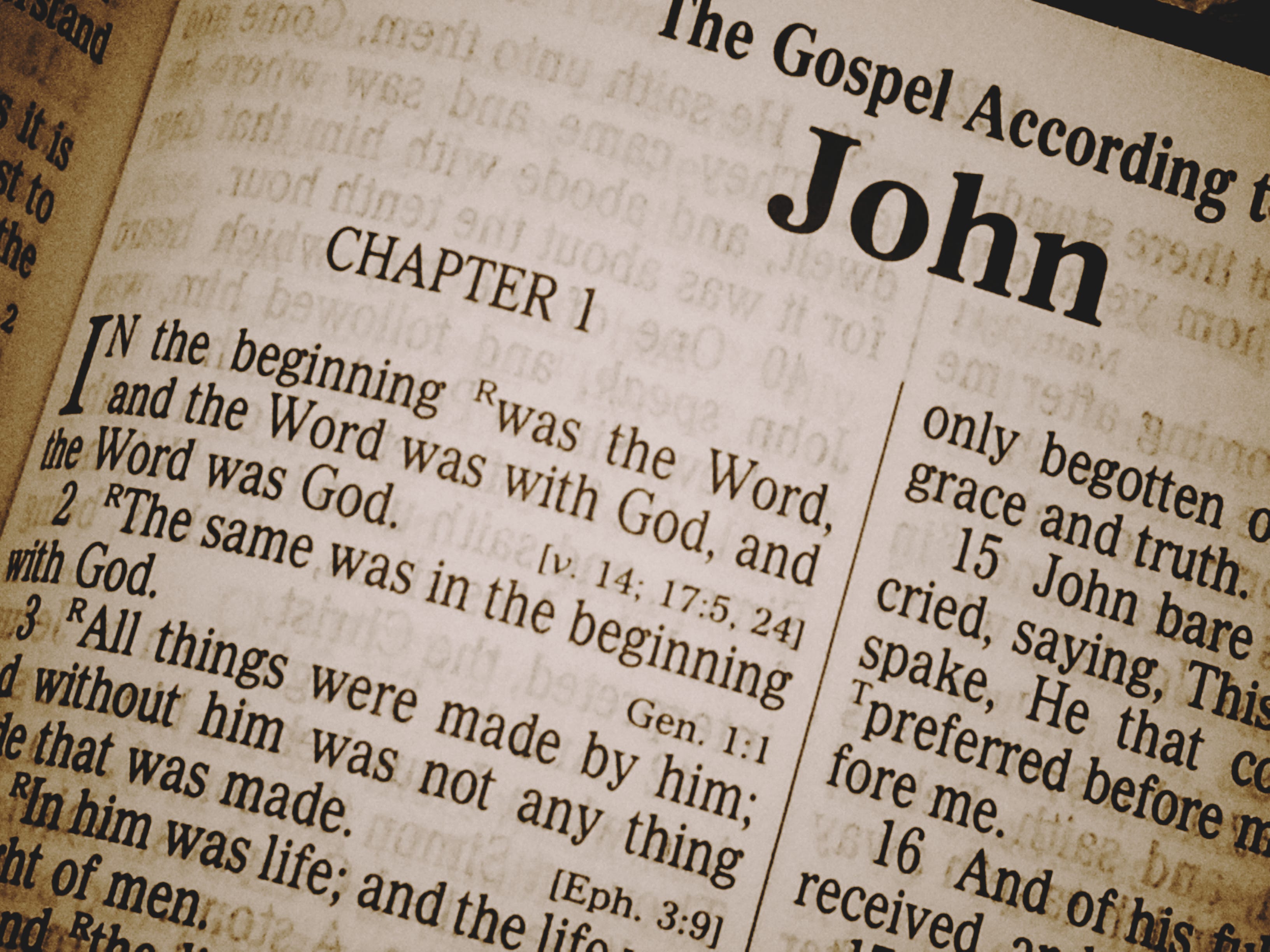
“Book, chapter, and verse” has become one of the most familiar phrases in the heritage of the Churches of Christ, even if it’s not unique to us. It represents a commitment to biblical authority, a conviction that doctrine and practice must be grounded in Scripture rather than tradition, emotion, or popular opinion. For generations, this phrase has served as a challenge: show the passage that authorizes what you believe and do.
At its best, this instinct reflects the heart of the Restoration Movement, which called believers to return to the text of Scripture rather than trust the traditions of men. It encouraged accountability in teaching and urged Christians to examine what they heard in light of God’s Word.
This Substack is reader-supported. To receive new posts and support my work, consider becoming a free or paid subscriber.
Yet like many well-intentioned slogans, this one can become distorted in practice. When “book, chapter, and verse” is reduced to proof-texting or used to settle arguments without engaging the larger biblical context, it can limit rather than enrich biblical understanding. When every doctrine is expected to be found in a single verse, the result is often a fragmented reading of Scripture that ignores literary structure, historical setting, and theological development.
Today, we will consider where this phrase came from, the theological convictions it was meant to preserve, how it has sometimes been misapplied, and what it means to pursue biblical authority faithfully and theologically maturely.
Where It Comes From
The idea reflects one of the American Restoration Movement’s core commitments: the belief that the Scriptures alone must govern the church’s faith, worship, and organization. It emerged as a practical expression of the movement’s call to reject creeds, councils, and denominational traditions in favor of direct appeal to the Word of God.
This approach was shaped by figures like Thomas and Alexander Campbell, who argued that unity among Christians could only be achieved by returning to the Scriptures as the common ground. In his Declaration and Address (1809), Thomas Campbell wrote:
“Nothing ought to be received into the faith or worship of the church… for which there cannot be produced a ‘thus saith the Lord.’”
That spirit carried over into later Restoration preaching and teaching. “Book, chapter, and verse” became the shorthand way to say: if we cannot find it in the Bible, we should not teach or practice it.
What the Slogan Gets Right
The original impulse behind the slogan is commendable. It reflects a deep respect for the authority of Scripture and a conviction that no human voice should outweigh what God has revealed in His Word. This phrase pushes us to read Scripture carefully and apply it faithfully in a religious world where doctrines are often shaped by personal preference or church tradition.
At its best, the slogan affirms the sufficiency and clarity of Scripture. Paul tells Timothy that “all Scripture is inspired by God and is useful for teaching, for reproof, for correction, and for training in righteousness” (2 Timothy 3:16). The goal is not just knowledge, but to shape the church and guide believers into lives of faithful obedience. That assumes that the Word of God is both accessible and trustworthy for those who are seeking to follow Christ.
“Book, chapter, and verse” also encourages doctrinal precision and personal accountability. It reminds teachers not to preach speculation as truth or pass down tradition as if it carried divine authority. It challenges Christians to test what they hear against the text, as the Bereans did when they examined Paul’s preaching “to see whether these things were so” (Acts 17:11). That kind of active, discerning posture is still essential for a healthy church.
This idea has also helped cultivate biblical literacy by encouraging generations of Christians to open their Bibles, memorize key passages, and see Scripture as something that belongs in every aspect of life and worship. It helped create clarity and conviction on central doctrines, especially in areas where the wider religious world has often drifted into confusion or compromise.
The phrase has kept alive the expectation that the church’s authority is not grounded in tradition, emotion, or experience, but in the written Word of God. The problem isn’t the conviction itself. The problem is how that conviction sometimes gets reduced to a method that misses the deeper purpose of Scripture altogether.
Where the Slogan Goes Wrong
The desire to base everything on Scripture is right and necessary. But like many good things, the phrase can go sideways when used in ways the original Restoration leaders never intended.
This Substack is reader-supported. To receive new posts and support my work, consider becoming a free or paid subscriber.
Proof-Texting Replaces Biblical Theology
One of the most common misuses of this phrase is the tendency to pull verses out of context to prove a point, without considering how that passage fits within the larger flow of Scripture. A verse may say something true, but quoting it doesn’t automatically mean we’ve interpreted it correctly.
For example, someone might quote Acts 2:38 to defend baptism (as they should) but ignore how that verse’s covenant promises echo the prophets’ language. Others might insist on a worship practice because of a single New Testament example, without asking how that example fits into the broader biblical theology of worship, the work of the Spirit, or the nature of the new covenant.
When “book, chapter, and verse” becomes about finding a citation rather than understanding Scripture as a whole, it encourages a fragmented approach. The Bible is not a string of laws or disconnected rules. It’s a unified story of God’s redeeming work in Christ.
Expectations of Simplicity
Not every doctrine is found in one neatly packaged verse. Some truths unfold gradually and are held together by a wide range of passages. If we expect every belief to be confirmed by a single proof text, we’re setting ourselves up for frustration, shallowness, and even theological errors.
For example, the doctrine of the Trinity isn’t explained in one single verse, nor is the kingdom of God, a full picture of eschatology, or the structure of biblical covenants. These doctrines are not unclear, but they require a deeper engagement with Scripture than a slogan like “just give me the verse” allows for.
That doesn’t mean we abandon clarity. It means we grow in our ability to think theologically rather than just looking for quick answers.
Legalistic Readings of Scripture
In some circles, the demand for “book, chapter, and verse” has been tied to a highly rigid, pattern-based approach to Scripture that treats the New Testament like a new law code. This approach tends to flatten out literary differences, treats every passage as if it were a direct command, and builds systems around silence and inference that often go well beyond what the text itself supports.
Instead of forming people into thoughtful, Spirit-led disciples who know how to reason from the Scriptures, it can produce an atmosphere of fear and conformity where the goal is to find the right combination of verses rather than to understand God’s will with wisdom and maturity.
Rethinking Biblical Authority
The solution to the misuses of the phrase isn’t to abandon it but to recover what it was meant to be. If we believe that Scripture is the church’s authority, then we need to handle it with more than precision. We need to handle it with the depth, care, and wisdom that comes from reading the whole counsel of God.
Biblical authority involves more than citing a verse. It requires asking whether we’ve understood that verse in its proper contexts: literary, historical, theological, and covenantal. The Bible is not a list of commands and examples to be applied in isolation. It is a unified narrative that centers on God’s redemptive work in Christ. If we treat it like a legal code, we miss its power to transform hearts.
This means we must learn to read Scripture canonically, recognizing how the books of the Bible work together to reveal God’s character and plan. It means reading covenantally, understanding how the Old and New Covenants relate to each other and how Christ fulfills them. It means reading as the church, not as isolated individuals looking for ammunition, but as a community seeking to be shaped by the Word.
We still need to ask, “Where is that in Scripture?” But we also need to ask better questions alongside it:
* What was the author’s purpose in giving this revelation?
* How does this passage fit into the larger story of Scripture?
* What does this teach us about God, Christ, and who we are called to be?
Ultimately, “book, chapter, and verse” should be more than a method of winning theological debates; it should invite all Christians to engage in deeper study and discernment of God’s Word. It should lead us into the richness of Scripture, not just what it says, but what it means, and how it forms us as the people of God.
Thanks for reading! This post is public so feel free to share it.
This Substack is reader-supported. To receive new posts and support my work, consider becoming a free or paid subscriber.