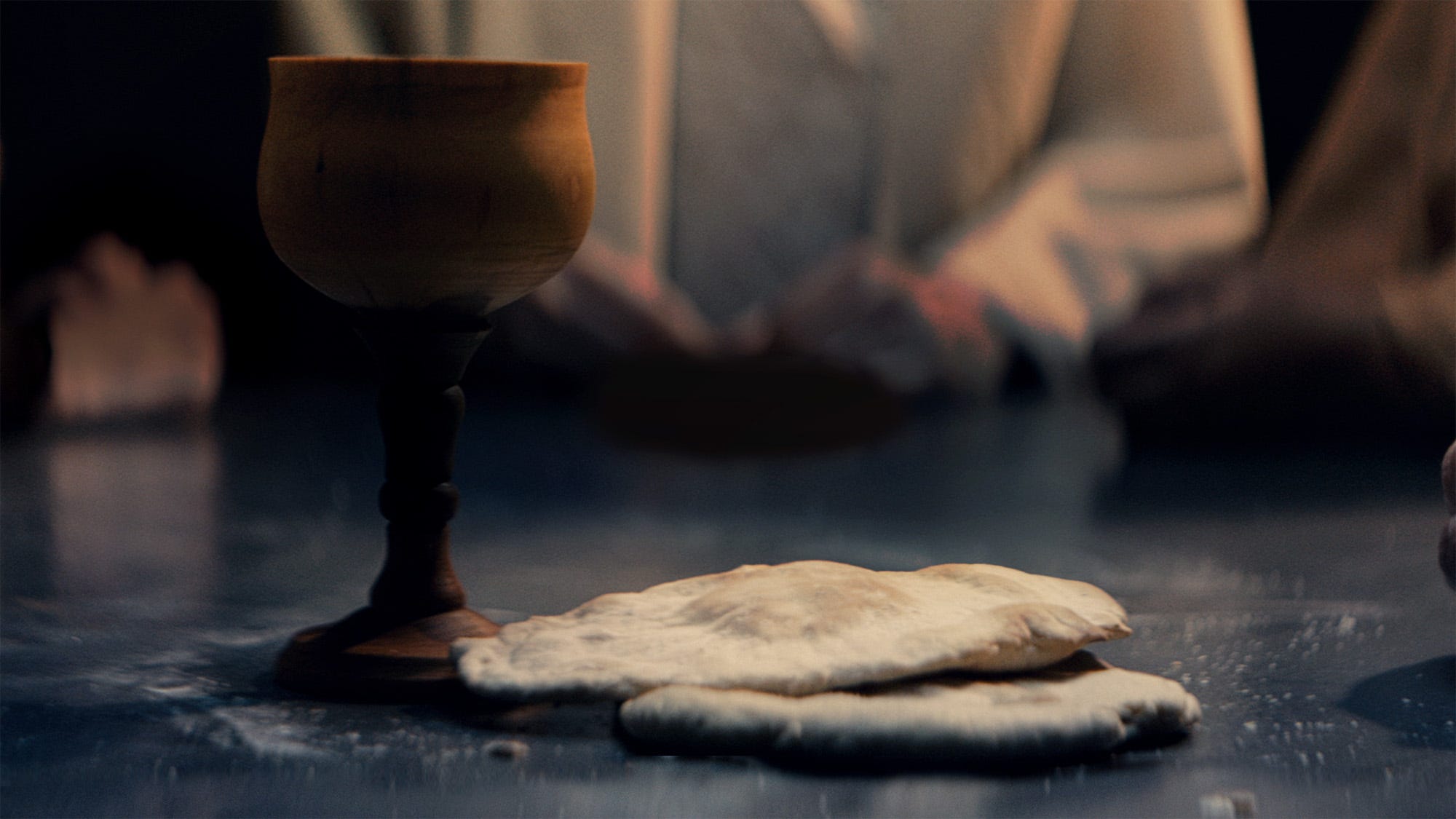
Few practices are as central to the Christian faith as the Eucharist. Yet, almost every tradition interprets it differently.
In some traditions, it’s been layered with rituals and philosophical explanations so elaborate that the simplicity and power of the moment seem lost. In others, it’s been reduced to a casual afterthought, treated simply as a sentimental reminder rather than a sacred participation in the body and blood of Christ.
But when we turn to Scripture, we find that the Eucharist is more than a mindless ritual or an empty symbolic gesture. It’s a command from Christ Himself, a proclamation of His death, and a shared communion with the risen Lord.
This Substack is reader-supported. To receive new posts and support my work, consider becoming a free or paid subscriber.
Today, many Christians have inherited assumptions about the Eucharist without asking whether they reflect the Scriptures or the faith and practice of the earliest believers. Even within the Churches of Christ, while the practice of weekly observance remains strong, the theological understanding sometimes leans too far toward a purely symbolic view that risks flattening the deeper reality Scripture describes.
(If you’re looking for the first hints of my critiques for the Churches of Christ, this post is for you).
Today, we’ll explore what the Bible teaches about the Eucharist, how the earliest Christians understood it, when different interpretations arose, and why reverence without ritualism is the path the church must recover. The table was never meant to be a dead tradition—it was meant to be a living proclamation of the gospel.
What is the “Eucharist”?
The word Eucharist might sound unfamiliar or even uncomfortable to some modern Christians, especially those from Evangelical or Protestant, or even Restoration backgrounds. For many, the term feels “too Catholic,” associated with elaborate rituals or theological debates that seem far removed from the simplicity of the New Testament. Yet the word itself is deeply biblical, historical, and fitting for the church’s sacred meal.
Eucharist comes from the Greek word eucharistia (εὐχαριστία), which simply means “thanksgiving.” It is directly tied to how the New Testament describes the institution of the meal:
* Luke 22:19 — “And he took bread, and when he had given thanks (eucharistēsas), he broke it and gave it to them...”
* 1 Corinthians 11:24 — “And when he had given thanks (eucharistēsas), he broke it and said, ‘This is my body that is for you.’”
The earliest Christians adopted this term naturally. When they spoke of gathering for the breaking of bread, they spoke of the Eucharist—the thanksgiving offered to God for Christ’s sacrifice and the grace poured out through His body and blood.
Documents like the Didache (c. A.D. 70–120) and Justin Martyr’s First Apology (c. A.D. 155) use “Eucharist” freely and unapologetically to describe the church’s weekly observance. For them, it wasn’t a technical or sectarian term. It was simply the most natural way to speak about the meal: a moment of deep gratitude for salvation, real participation in Christ, and communal proclamation of the gospel.
Choosing to call the sacred meal the Eucharist is not an attempt to sound more traditional, Catholic, or academic. It is an effort to recover biblical language and align ourselves with the faith and practice of the earliest believers. After all, that is the stated goal of the Restoration Movement.
By using the word Eucharist:
* We remember that this meal is about thanksgiving—not mechanical ritualism or casual sentimentality.
* We emphasize the gravity and grace of what is happening at the table.
* We reconnect with apostolic and early church language—long before theological distortions later complicated the practice.
Other biblical terms, such as “the Lord’s Supper” (1 Corinthians 11:20) and “breaking of bread” (Acts 2:42), rightly emphasize different aspects of the same meal. But the term Eucharist captures the heart of the act—the church’s gathered thanksgiving for the crucified and risen Christ—and is part of the church’s original vocabulary.
(It also is more recognizable to other Christian groups, so I will use it exclusively throughout this post.)
The Eucharist in Scripture
The foundation for the Eucharist is not church tradition, later theological debate, or even early Christian writings. It’s the teaching of Christ Himself and the consistent practice of His apostles. In Scripture, the Eucharist isn’t presented as an optional ritual or a cultural custom but as a commanded, central act of corporate Christian worship designed to continually proclaim the message of the gospel.
All four New Testament accounts of the institution of the Eucharist highlight its intentionality and covenantal nature.
While they were eating, he took a loaf of bread, and after blessing it he broke it, gave it to them, and said, ‘Take; this is my body.’ Then he took a cup, and after giving thanks he gave it to them, and all of them drank from it. He said to them, ‘This is my blood of the covenant, which is poured out for many.
Mark 14:22–24
Matthew 26:26–28 and Luke 22:14–20 offer parallel accounts, emphasizing the same basic elements: taking, blessing (giving thanks), breaking, sharing, and commanding remembrance.
Paul also explicitly says that what he delivered to the Corinthian church was “from the Lord”; not an apostolic invention, but a direct command from Christ:
“Do this in remembrance of me... For as often as you eat this bread and drink the cup, you proclaim the Lord’s death until he comes.”
1 Corinthians 11:23–26
The language is active and ongoing: “do this” and “proclaim” suggest a continual practice embedded in the life of the church.
The first Christians took Jesus’ command seriously and structured their worship around it. In Acts 2, “breaking of bread” stands alongside teaching, fellowship, and prayer as a central act of the Christian assembly. They didn’t meet and happen to share the bread afterward; they met to break bread.
The Eucharist has been central to Christian identity and worship from the beginning. It wasn’t something the church did once a month, quarter, or year. It wasn’t a second-class citizen to the sermon. It was the gathered church proclaiming Christ’s death, receiving His life, and anticipating His return.
Scripture doesn’t treat the Eucharist as a casual afterthought. It’s a living testimony to the gospel, a thankful offering, and a spiritual communion with Christ.
How the Earliest Christians Understood the Eucharist
The generation immediately following the apostles carried forward the teaching and practice of the Eucharist with remarkable clarity and consistency. They didn’t treat it as a casual memorial or a mere symbol—they understood it as a profound act of communion with Christ, rooted in thanksgiving, reverence, and real spiritual participation. Their writings and practices show that from the very beginning, the church believed something far deeper was happening in the Eucharist.
The Eucharist at the Center of Worship
One of the clearest windows into early Christian worship is Justin Martyr’s First Apology (c. A.D. 155). Writing to explain Christian practices to a Roman audience, Justin describes the order of the weekly assembly.
“On the day called Sunday, all who live in cities or in the country gather together to one place... Then the memoirs of the apostles or the writings of the prophets are read, as long as time permits. When the reader has finished, the presider (or bishop) verbally instructs and exhorts to the imitation of these good things. Then we all rise together and pray... When the prayers are ended, we exchange the kiss of peace. Then bread and a cup of wine mixed with water are brought to the presider (or bishop). He takes them and offers praise and glory to the Father of the universe... and after finishing the prayers and thanksgivings, the whole congregation assents, saying ‘Amen.’ Then those whom we call deacons give to each one present to partake of the bread and wine mixed with water over which the thanksgiving was pronounced, and they carry away a portion to those who are absent.”
(First Apology, chapters 65–67)
Several important points stand out:
* The centrality of the Eucharist in the Sunday gathering. It occupies its own place at the end of the gathering, the last impression left on those in attendance.
* The offering of thanksgiving and the strong description to emphasize its importance.
* The distribution by deacons to both those present and those absent shows how important this was for the early Christians.
* The sense of communal participation—the Eucharist was not a private act but the action of the whole gathered body.
Accusations of Cannibalism
Early Christians described the Eucharist using powerful bodily language: eating Christ’s flesh and drinking His blood (as Jesus Himself commanded in John 6:53–56). Unsurprisingly, this language led to gross misunderstandings among outsiders.
Roman critics accused Christians of practicing cannibalism—a charge that not only slandered believers but also fueled violent persecutions. Octavius is a 2nd–3rd century apologetic dialogue written by Minucius Felix, presenting a fictional debate between a pagan named Caecilius and a Christian named Octavius that addresses common Roman accusations against Christians.
Caecilius accuses:
“What monstrous banquets your Christians have… a man covered with meal… is slain by young pupils; and this they greedily lick up with thirsty jaws.” (Octavius 9)
Octavius replies by strongly refuting the rumor:
“Do you think that we secretly suffer such things to be done, which we do not even permit to be done or spoken openly? …It is a bad thing to speak falsely of good men, but it is worse to hate them without reason.”(Octavius 31)
Through this dialogue, Minucius Felix shows that Christians were wrongly maligned and presents them as a moral, virtuous people misunderstood by the Roman world.
Yet despite the risk, Christians did not abandon their Eucharistic language. They knew what they meant. They weren’t literally eating human flesh; they were truly participating (koinōnia) in Christ’s life, death, and resurrection through the bread and the cup.
In First Apology, Justin Martyr also clarifies that the bread and cup are not considered ordinary food and drink. They are received with the understanding that they are connected to the body and blood of Christ. He defends the practice by saying:
“They say that we eat men... but we do not receive these things as common bread and common drink. But... the food which has been made into the Eucharist... is the flesh and blood of that Jesus who was made flesh.”(First Apology, ch. 66–67)
The accusation of cannibalism ironically highlights just how seriously early Christians took the reality of the Eucharist. They didn’t soften their language to avoid controversy. They clung to the truth that the Eucharist was more than a memorial—it was spiritual participation in Christ’s sacrifice.
This Substack is reader-supported. To receive new posts and support my work, consider becoming a free or paid subscriber.
Eucharistic Interpretations
As Christianity expanded across the centuries, the question of what exactly happens during the Eucharist became a major point of theological debate. The earliest Christians spoke openly and seriously about participating in the body and blood of Christ, but without the rigid philosophical explanations that later generations developed. Over time, attempts to explain the mystery of the Eucharist produced competing views.
Transubstantiation: The Scholastic Explanation
By the High Middle Ages, attempts to define the nature of Christ’s presence became more philosophically sophisticated, culminating in the doctrine of Transubstantiation. Officially affirmed at the Fourth Lateran Council in 1215 A.D. and later codified by Thomas Aquinas, this view taught that:
* At the moment of consecration, the substance of the bread and wine is changed into the substance of Christ’s body and blood.
* The accidents (the outward appearances) of bread and wine remain, but their true essence is entirely transformed.
This explanation relies heavily on Aristotelian categories of “substance” and “accidents,” reflecting the scholastic philosophical methods of the time. Transubstantiation was an attempt to protect the deep reality of Christ’s presence in the Eucharist, but in doing so, it moved beyond the language of Scripture and early Christian practice.
While well-intentioned, the doctrine of Transubstantiation imposed a metaphysical framework onto the Eucharist that Scripture does not demand. It turned a sacred mystery into a philosophical mechanism, something the early church carefully avoided.
Real Presence: The Historic View of the Early Church
The earliest Christian writings reflect a belief that Christ is truly and spiritually present in the Eucharist. This understanding is rooted in passages like 1 Corinthians 10:16–17, where Paul writes:
“The cup of blessing that we bless, is it not a sharing (koinōnia) in the blood of Christ? The bread that we break, is it not a sharing (koinōnia) in the body of Christ?”
Paul’s language of koinōnia (fellowship, participation, communion) suggests something far deeper than mental remembrance is occurring. The Eucharist is a real spiritual event—a moment where the believer, by faith, is nourished by Christ Himself.
Later, in the early medieval period, Martin Luther upheld a version of this view called Consubstantiation. Luther rejected the Catholic doctrine that the bread and wine ceased to be bread and wine. Still, he insisted that Christ’s body and blood were truly “in, with, and under” the elements. The bread and wine remained physically what they were, but the believer truly received Christ through them.
Other early theologians, such as Irenaeus and Cyprian, spoke in similar terms. They affirm that the Eucharist involved real participation in Christ without resorting to overly technical explanations about how that participation occurred. The mystery was accepted with reverence rather than dissected by philosophy.
Pure Symbolism: The Radical Departure
In the 16th century, during the Reformation, Ulrich Zwingli (not this guy again) proposed an entirely different understanding of the Eucharist. In Zwingli’s view:
* The Eucharist is purely a memorial.
* The bread and wine represent Christ’s body and blood but contain no real presence.
* The act is a symbolic reminder of Christ’s sacrifice and a public testimony of faith.
Zwingli’s approach stood in stark contrast to the prevailing beliefs of both Catholicism and the other Reformers like Luther and Calvin. Luther, in particular, fiercely opposed Zwingli’s view, insisting that Scripture clearly taught real participation, not mere remembrance.
Despite Zwingli’s minority position at the time, his views gradually gained influence, especially among later Protestant groups, particularly in America. Today, many Evangelical churches have unknowingly inherited Zwinglian symbolism, treating the Eucharist as a simple ceremony without any real participation in Christ.
(Similarly, Zwingli’s minority-turned-popular view also destroyed the modern view of baptism)
Historical theology aside, even Scripture clearly teaches that the Eucharist involves far more than symbolic recollection. Paul warns that partaking unworthily brings guilt concerning the body and blood of the Lord, something that makes little sense if the Eucharist is only a memorial.
Which View is Most Biblical?
When we weigh these competing interpretations of the Eucharist, the question is not simply which view is most familiar or historically popular. The only question that matters is which view is most faithful to the Scriptures and to the deposit of faith entrusted to the apostles.
The New Testament consistently presents the Eucharist as a profound, spiritual reality, not a mere symbol. It suggests a real, spiritual communion between the believer and Christ during the Eucharist. Paul does not speak of the bread and cup merely representing Christ’s sacrifice or serving as intellectual reminders. He describes an active, living participation in Christ’s body and blood through faith.
Paul also warns that whoever eats the bread or drinks the cup “in an unworthy manner” will be “answerable for the body and blood of the Lord,” and that some have even fallen ill or died because they failed to discern the body properly. Such severe consequences would make little sense if the act were only symbolic. The gravity of the warnings only makes sense if something real happens when believers partake.
At the same time, the New Testament does not require the heavy philosophical interpretations that would later emerge in doctrines like Transubstantiation. Jesus speaks plainly at the institution of the Supper, saying, “This is my body... this is my blood,” but He does so without offering philosophical definitions. The apostles present the Eucharist as a mystery to be embraced through faith and thanksgiving, not dissected through Aristotelian metaphysics. There is no hint that the bread and wine cease to be bread and wine, nor is there any necessity to believe in a change of substance beyond recognition.
The Bible also leaves no room for Zwingli’s purely symbolic reduction. Christ’s presence is more than a memory. His presence is real, though not physical or mechanical. It is a spiritual presence mediated through the act of faithful communion. In the Eucharist, believers truly participate in Christ’s life, death, and resurrection, nourished spiritually by His grace.
Therefore, the most biblical view is one that affirms:
* A genuine spiritual participation in Christ through faith at the Eucharist.
* A profound thanksgiving for His once-for-all sacrifice.
* A communion that unites believers both with Christ and with one another.
It neither over-explains the mystery through human philosophy nor reduces it to a hollow memorial stripped of any spiritual power. It simply accepts the Eucharist as Christ gave it—an act of thanksgiving, communion, proclamation, and hope rooted in His living presence among His people.
How the Churches of Christ Fit
The Restoration Movement sought to return to the simplicity and purity of New Testament Christianity. In doing so, they reclaimed many important biblical practices that had been obscured or distorted over time, including the proper observance of the Eucharist. In many ways, the Churches of Christ align more closely with the early church’s practice than most modern Protestant traditions. Yet, in some respects, especially regarding theology, there is still room for greater faithfulness and depth.
One of the great strengths of the Churches of Christ is their commitment to the weekly observance of the Eucharist. Following the pattern seen in Acts, where the early Christians gathered on the first day of the week to break bread, Churches of Christ have consistently treated the Eucharist not as an occasional ceremony but as a central part of every Sunday assembly. In an age when many churches have relegated the Eucharist to an afterthought, this consistent weekly observance is a profound witness to the New Testament pattern.
Likewise, the simplicity of the practice—using unleavened bread and the fruit of the vine without elaborate ritual and ceremony—echoes the early Christian emphasis on thanksgiving and proclamation rather than spectacle. The focus remains on Christ’s sacrifice, His victory over death, and the unity of believers. In terms of outward form, the Churches of Christ have preserved a faithfulness that few others can claim.
However, there are also areas where the theology of the Eucharist within the Churches of Christ often falls short of the biblical fullness. In many congregations, the teaching about the Eucharist leans heavily toward pure symbolism, influenced by broader American Protestantism. While the act itself is faithfully performed, the depth of meaning is often underemphasized or overlooked entirely.
This is not necessarily a formal doctrinal error but a theological gap. Many within the Churches of Christ rightly reject Transubstantiation, but in doing so, they sometimes unintentionally adopt a view closer to Zwingli’s radical symbolism than to the apostolic teaching. The Eucharist can be treated as a solemn but ultimately empty remembrance rather than the profound, grace-filled communion described by Paul.
Recovering a fuller understanding of the Eucharist would not require abandoning the Restoration commitment to simplicity and Scripture. On the contrary, it would mean deepening it—returning even more closely to the biblical vision of a meal that proclaims Christ’s death, nourishes the believer’s faith, and binds the body of Christ together in hope and thanksgiving.
The Churches of Christ are uniquely positioned in this. They already possess the biblical form. They already gather faithfully around the table each week. What remains is to enrich that practice with the biblical and apostolic understanding that the Eucharist is not just a memorial but a living participation in the grace of the risen Christ.
Conclusion
The Eucharist demands more from us than familiarity or routine. It calls us to approach in faith, to remember with reverence, and to partake with grateful hearts that know the cost of redemption. It is not a ceremony to complete or an empty sign to observe. It is the church’s living act of communion with Christ—a participation in His body and blood, a proclamation of His death, and a pledge of hope for His return.
If we truly believe Christ meets us at the Eucharist, we cannot afford to come carelessly. If we truly believe that in this meal, we share in His sacrifice and victory, our hearts must be engaged, our minds humbled, and our spirits filled with thanksgiving.
Thanks for reading! This post is public so feel free to share it.