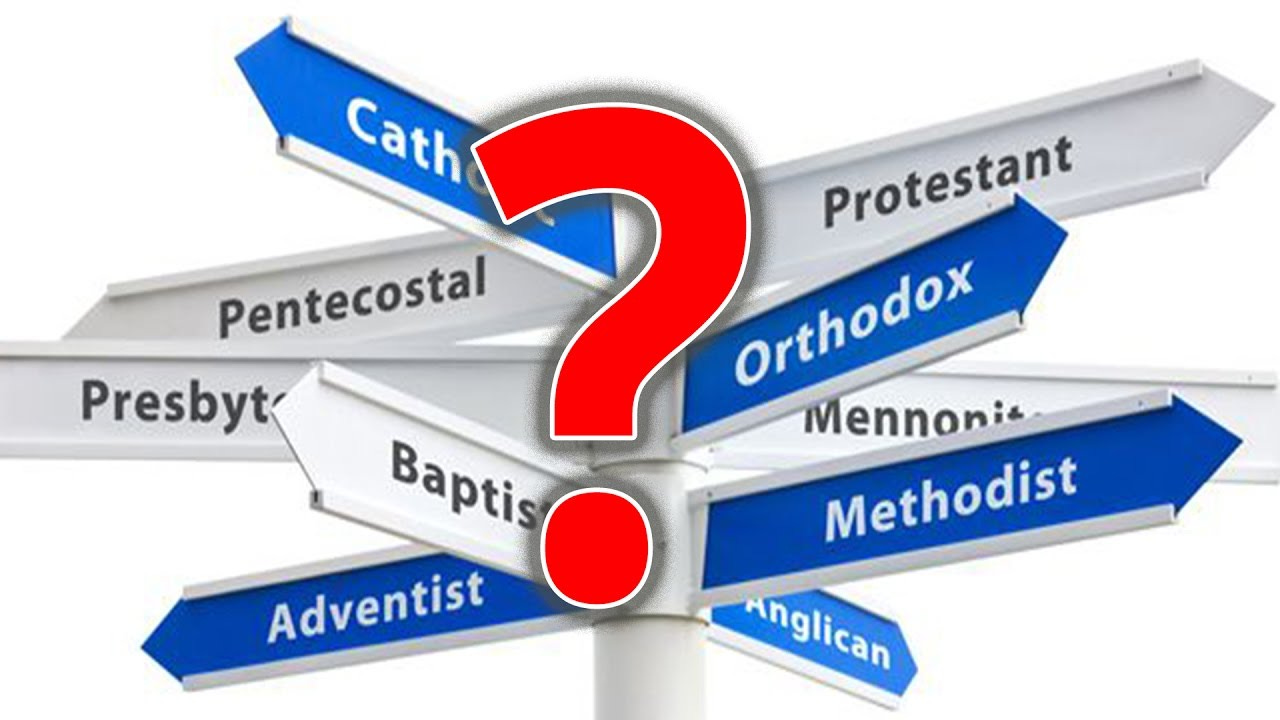
It’s a phrase that has been repeated in Churches of Christ for generations, sometimes proudly, sometimes defensively, and often without much contemplation. On the surface, it speaks to one of the defining convictions of the Restoration Movement: that the church should not be divided by man-made labels, creeds, or hierarchies. The goal was to return to the unity of the New Testament church, not to start another religious group.
In principle, the statement is true. The Churches of Christ have no denominational headquarters, governing council, or formal creed. Each congregation is autonomous, and the Bible is upheld as the sole authority. These are important distinctions, and they reflect a sincere attempt to avoid the denominationalism that fractured the Christian world for centuries.
But this claim deserves a closer look.
This Substack is reader-supported. To receive new posts and support my work, consider becoming a free or paid subscriber.
If we claim not to be a denomination while maintaining unspoken doctrinal expectations, exclusionary fellowship lines, and a shared institutional culture, then are we really being honest about what we are?
Today, we’ll explore why the statement “We are not a denomination” was meaningful in its original context, how it has sometimes been used to obscure rather than clarify, and what it looks like to uphold the unity of Christ’s church without falling into the very denominationalism we claim to reject.
Where the Statement Comes From and What It Meant
The claim finds its roots in the earliest convictions of the American Restoration Movement. Restorationists were not attempting to create a new religious tradition; they were pleading for a return to the undivided church described in the New Testament.
In an era of denominational complexity, the Restoration pioneers issued a simple but powerful appeal:
“The church of Christ upon earth is essentially, intentionally, and constitutionally one.” — Thomas Campbell
This wasn’t a rejection of doctrine but of sectarian division. They believed denominationalism was contrary to Scripture and Christ’s prayer for unity (John 17:20–23). Their goal was to restore the apostolic church’s faith, worship, and identity, not as a new sect, but as a return to what was always intended: one church, with Christ as its only head and Scripture as its only authority.
“We are not a denomination” made sense in this context. It was a refusal to join in with the sectarian divisions of the time. It was a commitment to shed every name but Christ’s, and every rule but His Word.
Functional Denominationalism
However, the movement that began with a unity plea would, over time, develop its own boundaries, expectations, and institutional structures.
While the Churches of Christ have long rejected the denominational label, we often operate with many of the same features in practice. No official headquarters or written creed may exist, but a recognizable framework has developed over time. This includes shared institutions, unwritten doctrinal boundaries, and an informal network of influence that shapes which congregations are considered faithful and which are viewed with suspicion.
Consider the following:
* Many churches rely on the same publications, lectureships, and universities to reinforce teaching and identity.
* Doctrinal conformity is often expected on matters that go beyond the essentials of the gospel.
* Preachers may find themselves blacklisted or disinvited from events over differing positions on issues that are not matters of salvation.
* Language such as “soundness” or “faithful congregations” often functions as code for alignment with a particular interpretive tradition.
This Substack is reader-supported. To receive new posts and support my work, consider becoming a free or paid subscriber.
None of this is coordinated through an official governing body, so some insist we are not a denomination. But when patterns of behavior consistently reflect the same kind of boundary-drawing and internal policing that characterize denominational structures, the line between non(or un)-denominational and functionally denominational becomes very thin.
The concern is not about shared values or doctrinal consistency—the New Testament church had that. The problem is whether we have been honest about the nature of our structure and culture. If we continue to say, “We are not a denomination,” but function as one in nearly every way, we risk substituting slogans for reality.
When we use the phrase today while ignoring how we’ve formed our own distinctive structures, norms, and boundaries, we’re no longer continuing the Restoration plea. We are repurposing it to defend our current identity. That shift is not restoration. It is traditionalism disguised as renewal.
Worse still, when we claim not to be a denomination as a way of elevating ourselves above others, we directly contradict the spirit of the very movement we claim to follow. The early Restoration leaders welcomed all who followed Christ in faith and obedience. They did not insist on conformity in all matters of interpretation before extending fellowship.
To continue using this phrase without reflection is misleading and historically dishonest. We cannot appeal to the ideals of the past while rejecting the humility, self-awareness, and unity that those ideals demanded.
Recovering Unity With Humility
The call to reject denominationalism was never about claiming moral or doctrinal superiority. It was about calling believers back to the simplicity and unity of the church revealed in Scripture. That vision is worth recovering, but it’s impossible to do by simply repeating slogans or defending inherited structures without serious self-examination.
If we are serious about the Restoration plea, we have to move beyond saying “we are not a denomination” and ask whether our patterns reflect the unity of Christ’s body. We must be willing to critique ourselves, not just the traditions of others. We must measure our faithfulness not only by doctrine, but also by humility, love, and our willingness to extend grace to others who seek to follow Christ.
We can and should hold fast to biblical convictions. We can and should affirm that the church belongs to Christ and is governed by His Word. But we must also acknowledge that the church is larger than our movement, and that faithfulness to Christ includes recognizing His work beyond the boundaries we may have drawn.
Unity is not achieved by minimizing truth, but it’s also not preserved by isolating ourselves. True restoration does not seek to recreate the first-century church in form only. It seeks to recover the spirit of Christ, including His humility, His truth, and His prayer that His people would be one.
If we are going to say we are not a denomination, then let us live in a way that reflects that, not just in what we claim to reject but also in how we welcome, teach, and love others.
Thanks for reading! This post is public so feel free to share it.
This Substack is reader-supported. To receive new posts and support my work, consider becoming a free or paid subscriber.