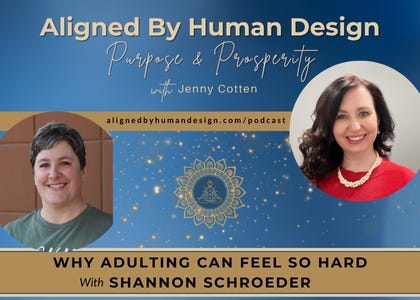
If you’ve ever looked around and thought, “Why is everyone else managing life better than me?”—this episode is for you.
This week on Aligned by Design: Purpose + Prosperity, I’m joined by Shannon Schroeder, executive function coach and founder of EF Bomb Coach, to talk about something so many of us struggle with (especially those who’ve received a late ADHD or autism diagnosis): executive function.
Shannon’s work supports neurodivergent women in understanding how their brain works—and how to build systems that work with them, not against them.
We explore:
* What executive functioning really means
* Why adulting feels exhausting for so many women
* The deep connection between shame, identity, and self-trust
* What Human Design teaches us about our emotional energy
* Tools for moving forward—without the burnout
✨ Grab Shannon’s free intro course and start creating structure that supports your energy and your life:👉 efbombcoach.com/introcourse
🔗 Connect with Shannon:Website: efbombcoach.comFacebook Group: EF Bomb Community for Women (6k+ members!)Free Course: efbombcoach.com/introcourse
✨ CONNECT + EXPLORE MORE
Thanks for tuning in to the show! Here’s your next steps to getting aligned with your Human Design.
🔍 Book a Free Human Design Strategy SessionGet support in discovering what’s next in your life or career — through the lens of your Human Design. 👉 alignedbyhumandesign.com/session
💛 Join the CommunityLearn, share, and connect with others on the path in the Aligned by Human Design Facebook group. 👉 alignedbyhumandesign.com/facebook
📲 Follow on InstagramHuman Design insights, behind the scenes, and inspiration 👉 @alignedbyhumandesign
🌐 Explore the WebsiteLearn more about Human Design and grab your free Human Design report.👉 alignedbyhumandesign.com
📚 Recommended Resources to Learn More About HD👉 Gene Keys by Richard Rudd👉The Definitive Book of Human Design, The Science of Differentiation by Ra Uru Hu👉 The Encyclopedia of Quantum Human Design by Karen Curry Parker👉 Parenting The Child You Have: Re-Imagining The Parent-Child Relationship Through The Lens of Human Design