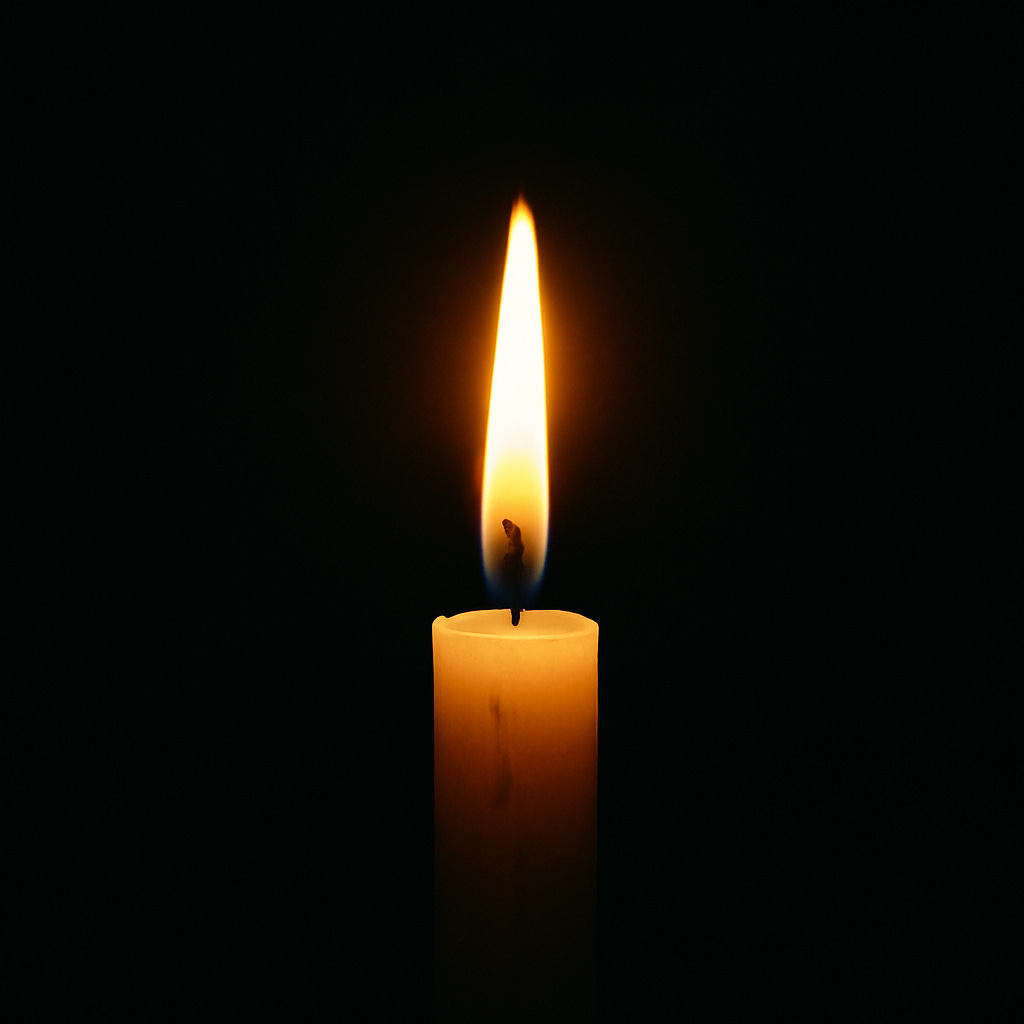
Cynicism comes easily in a season like this. The empire parades its soldiers in quiet streets, drags families from their homes, strips the air itself of safety. The news shouts with panting urgency, never pausing long enough to remember what came before. The days collapse into spectacle, and the soul grows tired of believing anything could be different.
And cynicism offers relief. To sneer instead of grieve. To harden instead of hope. To stop expecting mercy, and so to stop being wounded by its absence. Cynicism feels like wisdom, like armor, like the final maturity of those who have seen too much.
But I refuse it.
Because love that only survives in light is not love at all. The test of love is darkness. And though the empire teaches despair, I will not learn it. Hope is not naïveté. It is rebellion. It is the last defiance the machinery of fear cannot crush.
Chapter 1 — The Temptation of Cynicism
Cynicism is the empire’s quietest victory. It does not march in uniforms or bark through megaphones. It seeps into the heart, whispering: “You have seen enough. Stop expecting anything better.” And when the heart agrees, the empire has no more enemies—only spectators.
We live in a season designed to breed cynics. Soldiers stand watch in streets where crime is lowest, not to protect but to perform. Families are seized in the night by men who call it law but know it is fear. The earth burns hotter, yet those in power dismantle even the frail protections that might slow the fire. The news performs its rituals of alarm, shouting each headline until breathless, never pausing to ask what roots made the disaster inevitable.
Everywhere, the lesson is the same: give up your hope, and you will suffer less. If you believe in justice, you will be mocked. If you believe in mercy, you will be betrayed. If you believe in love, you will be broken. Why not retreat into scorn, into clever despair, into the safety of expecting nothing?
Cynicism dresses itself as wisdom. It says: “I am not naïve like you. I have grown up. I know the truth.” But what it really means is: “I am afraid to hope, because hope exposes me again to grief.”
The prophets of old faced this same temptation. Israel in exile sang the songs of Zion no more, hanging their harps on the willows. The bones lay dry in the valley, and who dared to believe they could live again? Cynicism was the sensible choice. But the prophets refused it. They spoke of a remnant, of breath returning to the slain, of light shining in the darkness. They risked ridicule to keep believing.
And Christ himself, nailed beneath Rome’s empire, could have cursed, could have spat, could have turned bitter. Instead he forgave. Not because his killers deserved it, but because love is strongest when it is least deserved. At the edge of despair, he refused cynicism.
I write this now because I feel that temptation in my own bones. The headlines tell me the story is over. My own body, stumbling through collapse, tells me that nothing can change. The machinery of fear says: give up, harden, sneer. And part of me longs to obey.
But I will not.
I refuse to let the empire write my heart. I refuse to let despair masquerade as wisdom. I refuse the safety of bitterness. Cynicism is surrender, and I will not surrender.
Hope, for me, is not a mood. It is a discipline. It is rebellion. It is the stubborn act of love in the very place where love feels impossible. And if all I can do today is refuse cynicism, then that refusal itself is my act of faith.
Chapter 2 — The Machinery of Fear
Fear is the empire’s most faithful servant. It does not sleep. It does not question. It works without wages, multiplying itself in every mind it touches. And in America, fear is not only present—it is manufactured, rehearsed, broadcast, sold.
Watch the news and you will see the theater of fear. The anchor with wide eyes and breathless tone, shouting as if history itself depended on your panic. The endless repetition of sirens, warnings, emergencies. Always the latest “breaking” story, as if memory itself were a threat. This is not reporting. It is performance, designed to quicken the pulse and weaken the soul.
Step outside and you will see soldiers where none are needed—patrolling quiet neighborhoods, guarding empty courthouses. They are not there to keep order. They are there to teach a lesson: we are stronger than you, and we are everywhere. Their presence is less about protection than about pedagogy, a daily reminder of who holds the guns.
Ask the immigrant mother who no longer leaves her home. Ask the child who flinches at a knock on the door. Ask the man who drives to work each day rehearsing what he will say if pulled over, rehearsing how not to die. Fear has been placed in their bodies like a second skeleton. And still, the empire says it is not enough.
Fear is efficient. It kills hope faster than bullets. You don’t need to silence a man who has already silenced himself with despair. You don’t need to crush a woman who has already decided nothing will ever change. Cynicism is simply fear that has learned how to speak.
But the machinery of fear does more than terrify. It isolates. It convinces you that you are alone, that no one else sees what you see, that love is weakness, that mercy is foolishness. It whispers: “Don’t reach out, don’t trust, don’t act. Protect yourself. Stay silent. Stay small.”
This machinery is not new. Rome had its crosses. Hitler had his rallies. Every empire builds a stage for fear and then demands that the people play their part. America has its cable news, its detention centers, its endless sirens. The costumes are different; the machinery is the same.
And yet—here lies the empire’s weakness. Fear is powerful, but it is also fragile. It cannot create; it can only destroy. It cannot love; it can only divide. Its entire machinery depends on convincing us to stop believing in anything beyond it. The moment one person says no, the machinery shakes. The moment one person refuses cynicism, hope is born.
This is why I write. Not because I am strong, but because I feel the machinery pressing into me every day, and I know what it wants: silence, surrender, scorn. I will not give it what it wants. If the empire thrives on fear, then hope—fragile, disciplined, stubborn—is the only rebellion left.
Chapter 3 — The Witness of Love
If fear is the empire’s machine, then love is the one force it cannot counterfeit. Power can mimic justice with laws. Wealth can mimic generosity with spectacle. Propaganda can mimic truth with performance. But love—the uncalculated act of mercy—cannot be manufactured by empire. It arrives unbidden, unprofitable, unmeasured. It breaks the script.
I have seen love in places where the empire swore it was extinct. A stranger stopping in the desert to leave water for those who cross unseen. A neighbor bringing food to a family too afraid to open their door. A nurse working past exhaustion, not for wage or recognition, but because the patient before her was human and that was enough. These are not gestures for history books. They are acts of rebellion in the present tense.
The headlines will never show them. Fear sells better. But love endures quietly, in the ordinary. It is not loud, but it is persistent. And persistence is its strength. Fear exhausts itself in bursts of panic. Love carries on in silence, like roots pushing through stone.
History remembers these witnesses only in fragments, yet they are the true counter-narrative of America. Quakers opening their homes to fugitives from slavery. Strangers—unknown names now—hiding Jews from the Gestapo. A mother from Detroit, Viola Liuzzo, who joined a march in Selma and was murdered by those who hated her courage. Their acts were not abstractions. They were specific mercies, paid for with risk, and sometimes with blood.
What ties them together is not ideology but humanity. Love is not a policy. It is a refusal. A refusal to let empire decide who counts as neighbor. A refusal to let cruelty name the terms of existence. A refusal to stop seeing the other as human.
And the truth is this: without these refusals, America would already be lost. The only reason there is still soil left for hope is because, in every generation, ordinary people have chosen to love where they could have chosen to fear.
This is not sentimentality. Love is costly. Love is impractical. Love makes you vulnerable to betrayal, disappointment, loss. But love is also the only thing the empire cannot predict. It cannot schedule it, cannot legislate it, cannot force it. And that is why love is hope.
The witnesses of love are rarely thanked. They are rarely noticed. Often they are ridiculed as naïve, weak, out of touch. But they are the reason collapse is never complete. They are the ones who make sure fear does not get the last word.
I write this now because I know how easy it is to forget them. Cynicism drowns their memory, fear smothers their presence. But if I am to refuse cynicism, I must remember them. I must write them into the record, even if only here. For the machinery of fear thrives on forgetfulness, and the witness of love survives only if we remember.
Chapter 4 — The Scriptural Frame
The story of empire and love is not new. Long before America, long before Rome, the prophets spoke into the same darkness. They too lived under systems that thrived on fear, that exalted the powerful, that mocked mercy as weakness. And yet, in that wasteland, they named hope.
Ezekiel was led into a valley full of bones. Dry, scattered, silent. Nothing left but the memory of a people who had once been. Cynicism would have said: these are finished, leave them in the dust. But God asked: “Can these bones live?” And Ezekiel, too honest to lie and too faithful to despair, answered: “Lord, you know.” Then breath returned. Bone to bone, sinew to sinew, flesh to flesh. A people thought dead lived again.
That vision is not naïve optimism. It is the announcement that despair is not the final author of history. What looks like the end is not the end. Even bones remember how to rise when breath enters them.
John began his gospel in darkness. Not in victory, not in comfort. “The light shines in the darkness, and the darkness has not overcome it.” The light did not wait for safety to appear. It came into the terror. It was small, fragile, contested. And still, the darkness could not smother it.
And then there is the cross. Rome’s machinery of fear perfected in one symbol: naked, humiliated, executed, displayed as warning. Fear carved into flesh. If cynicism were ever justified, it was there. Yet the words that rose from that dying man were not bitterness but mercy: “Father, forgive them, for they know not what they do.”
To forgive is not to excuse. It is to refuse the empire’s final victory: the victory of hatred over love. Jesus chose not to become the thing that was killing him. He chose love when everything in him cried for vengeance. That was his last defiance, and it broke the machinery of fear.
These stories are not distant relics. They are maps for us now. The valley of bones is the landscape of our despair, and still the question comes: “Can these bones live?” The light in darkness is the ember we keep alive when cynicism says it is foolish. The cross is the proof that even in the empire’s worst hour, love is still possible.
To read these scriptures today is to remember that fear has always claimed to be final, and love has always proven it wrong.
Chapter 5 — The American Thread
Every empire believes itself eternal. Every empire trains its people to forget that collapse is its inheritance. Yet in every empire there are those who refuse to forget, who carry love into the ruins. America is no different. Its history is written in blood and chains, but also in acts of mercy that refused cynicism.
The abolitionists knew this. They lived in a nation where slavery was law, where the economy was chained to cruelty, where cynicism would have said: accept it, you cannot change it. And still they defied it. Quaker families opened their barns to fugitives. Preachers thundered against the auction block. Neighbors risked prison to hide the hunted. They did not dismantle slavery alone, but they preserved the ember of hope until the nation itself was forced to reckon.
The civil rights marchers knew this. They were spat on, beaten, jailed. Fire hoses tore their flesh, dogs tore their clothes. The empire’s message was clear: you do not matter, your lives will not change, give up. But they refused cynicism. They sang hymns in jail cells. They prayed on bridges. They endured terror with dignity. Their love was not sentimental—it was structured, disciplined, unyielding. And it bent the machinery of fear until the law itself had to change.
And there are the quieter witnesses, too, whose names do not fill books but whose acts breathe life into the record. White and Black farmers in Appalachia who joined arms to demand justice in the mines. Teachers in rural towns who fed children when families had no food. Immigrants who built neighborhoods stone by stone, not because the nation welcomed them, but because they refused to stop believing that life could be made together.
America has always been two stories at once: empire and remnant, cruelty and mercy, cynicism and hope. The empire builds plantations, prisons, detention centers. The remnant builds safe houses, churches, schools. The empire passes laws of exclusion. The remnant writes letters from jail cells. The empire shouts that the world is finished. The remnant whispers that it is not.
To love America is not to deny her crimes. It is to insist that the remnant is real, that the witness has always been here, that the light still shines in this soil. It is to say: yes, this nation wounds, but it also births prophets. Yes, the machinery of fear is strong, but mercy has not been erased.
The American thread of love is not triumphalist. It is scarred, fragile, often betrayed. But it is here. And it is enough to keep faith alive.
Chapter 6 — Hope as Discipline
Hope is not naïve. Hope is not sentimental. Hope is not the shallow cheer that denies the storm. Hope is the discipline that insists the storm will not have the last word.
Cynicism is easier. It asks nothing but surrender. It disguises itself as realism, as wisdom, as maturity. But cynicism is simply the decision to stop loving, to stop risking, to stop being vulnerable to disappointment. It is the posture of a heart that has chosen safety over faith.
Hope is harder. Hope is costly. Hope requires waking each day and refusing to let the empire dictate the terms of your soul. It requires remembering the remnant when headlines scream collapse. It requires trusting that the small mercies—the teacher’s gift, the neighbor’s hand, the marcher’s hymn—matter more than the empire admits.
Hope is a discipline because it must be practiced when it feels least possible. To forgive when bitterness is justified. To believe in life when bones lie scattered. To write in love when cynicism seems wiser. These are not emotions. They are choices. They are refusals. They are rebellion.
I do not write this as one who finds hope effortless. I write as one who feels despair press into his own bones, who wakes some mornings with no desire to believe again. But hope does not require ease. It requires decision. And so I decide.
I decide not to sneer, though sneering would shield me from grief.I decide not to harden, though hardness would protect me from betrayal.I decide not to despair, though despair would relieve me from risk.
I decide to hope. I decide to love. I decide to keep faith with a wounded people and a broken land.
And if this hope feels small, fragile, even foolish—then let it be so. For it was always small, always fragile, always foolish by the empire’s measure. Yet it has always been enough to keep light alive.
America is not saved by her myths of greatness. She is saved, if at all, by the discipline of those who refuse cynicism in the face of terror. That is her last mercy, her last chance, her last thread of survival.
So I will not give up. Not because the times are bright, but because they are dark. Not because hope is easy, but because it is necessary. Not because I am strong, but because to surrender would be to die while still alive.
Hope is my discipline. Love is my rebellion. And as long as I breathe, I will not let cynicism have me.
Epilogue — The Last Word
The empire will shout louder. The machinery of fear will grow sharper. The prophets of despair will multiply. But I will not surrender my voice to cynicism.
I will name the darkness, but I will not become it.I will remember the mercies, even when they are small.I will love this wounded land, not because it deserves it, but because love is the only thing that makes it worth saving.
Cynicism ends stories. Hope keeps them open. And I believe America’s story is not finished yet.
So let the soldiers march, let the anchors shout, let the empire boast. My answer will be simple, stubborn, unyielding:
Love is still here. Hope is still here. And they will have the last word.
—Elias WinterAuthor of Language Matters, a space for reflection on language, power, and decline.