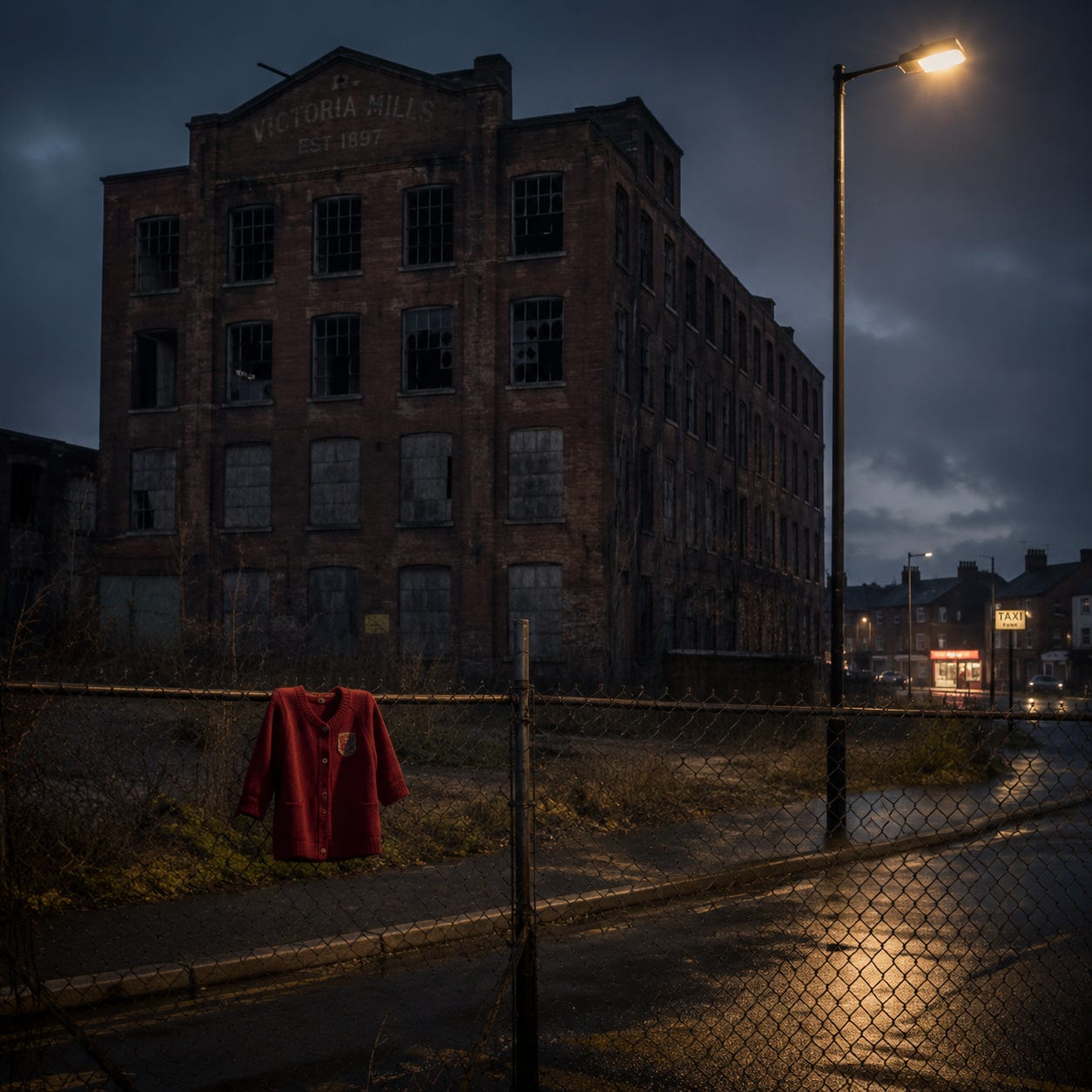
I. The Girls No One Wanted to See
Between the late 1990s and the early 2010s, a series of British towns exposed a pattern of group-based child sexual exploitation that had been missed, minimized, or mishandled for years.
The first thing to say is not that the men were Pakistani.
The first thing to say is that the victims were children.
In Rotherham, the independent inquiry chaired by Alexis Jay estimated that at least 1,400 children were sexually exploited between 1997 and 2013. The abuse included grooming, rape, trafficking, threats, abduction, violence, intimidation, and organized sexual exploitation. Many of the children were already known to social services. Some were in care. Some were treated by authorities as troublesome, promiscuous, unreliable, or difficult before they were treated as victims. The system had a category for their disorder before it had a category for their violation.(Rotherham Metropolitan Borough Council, Jay Report)
The methods were not mysterious.
Adult men approached girls with food, alcohol, drugs, rides, gifts, flattery, shelter, attention. They offered affection to children who had already been half-abandoned by family, school, care systems, class, or the state. They gave them lifts. They gave them cigarettes. They gave them alcohol. They gave them somewhere to go when home was dangerous or empty. They learned which girls could disappear for a night without anyone urgent enough looking for them.
Then the kindness changed shape.
The girls were raped. They were threatened. They were moved between cars, flats, houses, takeaways, taxi routes, and town centers after dark. Some were passed between men. Some were trafficked to other towns. Some were assaulted when they resisted. Some were told their families would be harmed. Some were told no one would believe them.
Often, the men did not need to hide completely. Their power came from partial visibility. The girls were seen in cars. They were seen outside takeaways. They were seen drunk, frightened, missing, bruised, pregnant, infected, silent, hysterical, disbelieved. Mothers complained. Care workers knew fragments. Police heard names. Social workers saw patterns. Hospitals treated consequences. Taxi ranks and night-time economies carried rumors.
The crimes were not invisible.
They were insufficiently interrupted.
Rotherham became the emblem, but it was not the only place. Rochdale, Oxford, Telford, Derby, Oldham, and other towns exposed related patterns of group-based exploitation. The cases differed. The offender networks differed. The victims differed. The institutional failures differed. But the national wound became recognizable: vulnerable girls, often working-class and already known to agencies, were exploited by groups of adult men while public institutions failed to act with the urgency required.
In several British towns, specific British Pakistani, often Mirpuri or Kashmiri-origin, male networks were disproportionately visible in a particular form of group-based sexual exploitation, while public institutions failed to confront the ethnic, cultural, class, gendered, economic, and network patterns honestly.
Ethnicity matters here not because ancestry explains crime, but because institutions cannot protect children from networks they refuse to describe.
Culture can help explain a pattern.
It must never excuse a crime.
The scandal began as crime. It became national disgrace because the crimes were visible enough to stop, and still continued.
The men committed the crimes.
Public institutions preserved the conditions by failing to act.
II. The False Category
The word Muslim is doing too much work.
It is asked to describe belief, ancestry, civilization, immigration status, family discipline, geopolitical identity, racial suspicion, census classification, religious practice, state ideology, and sometimes the silence of people who no longer believe but cannot safely say so.
That is not a category.
It is a collapse.
If Muslim means a religion, then it must include the possibility of conscience. A person must be able to enter, remain, reinterpret, doubt, criticize, or leave. Without that possibility, the word does not function as faith. It functions as inheritance. It becomes a label placed over the child before the child has had the chance to become a person.
A child is not born Muslim in the way she is born with lungs.
She is born into a family that may call itself Muslim.
Whether that word becomes her faith, her memory, her wound, her rebellion, or nothing at all must belong to her.
This is not a semantic complaint. It is a political and moral one.
When British institutions, journalists, activists, bureaucrats, or demagogues say “the Muslim community,” they often pretend to be describing something real. But there is no single Muslim community. There are Muslims, Muslim-background people, Islamic institutions, national diasporas, ethnic enclaves, sectarian traditions, secular minorities, ex-Muslims, converts, Shia, Sunni, Ahmadis, Ismailis, Arabs, Iranians, Pakistanis, Somalis, Turks, Bosnians, Kurds, Malaysians, Albanians, Nigerians, and people who have nothing in common except that British bureaucracy and media language place the same word over them.
The phrase “the Muslim community” is not a description.
It is a management device.
It lets the state deal with spokesmen instead of persons. It lets institutions ask elders what “the community” thinks. It lets mosque committees, ethnic brokers, religious intermediaries, and self-appointed representatives stand in for women, children, dissenters, atheists, sexual minorities, secular sons, frightened daughters, and people who are publicly compliant but privately gone.
Iran exposes the fraud inside the category. On paper, Iran is one of the most Islamic states in the world: a Shia theocracy, ruled through clerical institutions, law, compulsion, and the memory of revolution. Yet precisely because Islam became the machinery of state power, millions of Iranians have become secular, anti-clerical, privately atheist, culturally Persian before they are religious, or spiritually exhausted by the official faith imposed in their name. To call them simply “Muslim” is not description. It is erasure.
Lebanon is not Saudi Arabia. Saudi Arabia is not the UAE. Iran is not Pakistan. Pakistan is not Turkey. Turkey is not Bosnia. Bosnia is not Somalia. Shia history is not Sunni history. Persianate civilization is not Gulf tribal monarchy. Urban Tehran is not rural Mirpur. A secular Iranian immigrant is not a Deobandi cleric. A Lebanese Christian is not a Saudi Wahhabi. A British Pakistani surgeon is not a taxi-rank predator. A Muslim-background atheist is not the mosque that would condemn him.
The word collapses all this and then asks politics to be intelligent.
It cannot be.
The word Pakistani also fails if treated as one moral object. Pakistan contains elite urban professionals, military families, secular intellectuals, Shia minorities, Ahmadis, Ismailis, Barelvis, Deobandis, Pashtuns, Punjabis, Sindhis, Baloch, Muhajirs, Kashmiris, rural poor, feudal worlds, cosmopolitan diasporas, patriarchal kinship structures, and young people who want nothing to do with any inherited authority.
Pakistani identity contains radically different social types: the surgeon, the student, the secular daughter, the Shia professional, the Ahmadi businessman, the rural cousin imported through marriage, the mosque elder, the taxi-rank predator, the feminist lawyer, the ex-Muslim son.
To make them one thing is to abandon thought.
The same is true of immigrant. An individual professional immigrant who enters through education, language, employment, credentialing, and conscious civic participation is not the same social phenomenon as low-wage chain migration from a rural, kinship-governed, patriarchal community into a deprived town. Both are human beings. Both have dignity. But they are not the same policy event.
Bad categories produce bad politics.
They allow denial on one side and collective blame on the oth…