We all remember September 11th. We remember where we were when we first heard the news, the images we watched over and over, and the incomprehensible knowledge that thousands of people had begun an ordinary Tuesday morning and would never return home. We remember the horror of that day because remembering September 11th has become part of our collective history.
Recently, I was inspired to remember what happened when September 11th became September 12th.
We woke up the next morning grieving together, and something remarkable happened among us. People lined up for hours to give blood. Firefighters, police officers, construction workers, medical workers, volunteers, and ordinary citizens worked side by side. Restaurants fed rescue workers. People searched for the missing, made signs, passed out water, donated supplies, checked on neighbors, called family members, and comforted complete strangers. Across the country, people found ways to help because helping one another suddenly felt like the most important thing we could do.
For those first days afterward, we joined.
I keep returning to that word because joining feels different from unity. Unity can sound like an ideal we aspire to, whereas joining is something we actually do. It’s a choice. It asks us to reach beyond ourselves and recognize that whatever happens to one of us matters to the rest of us.
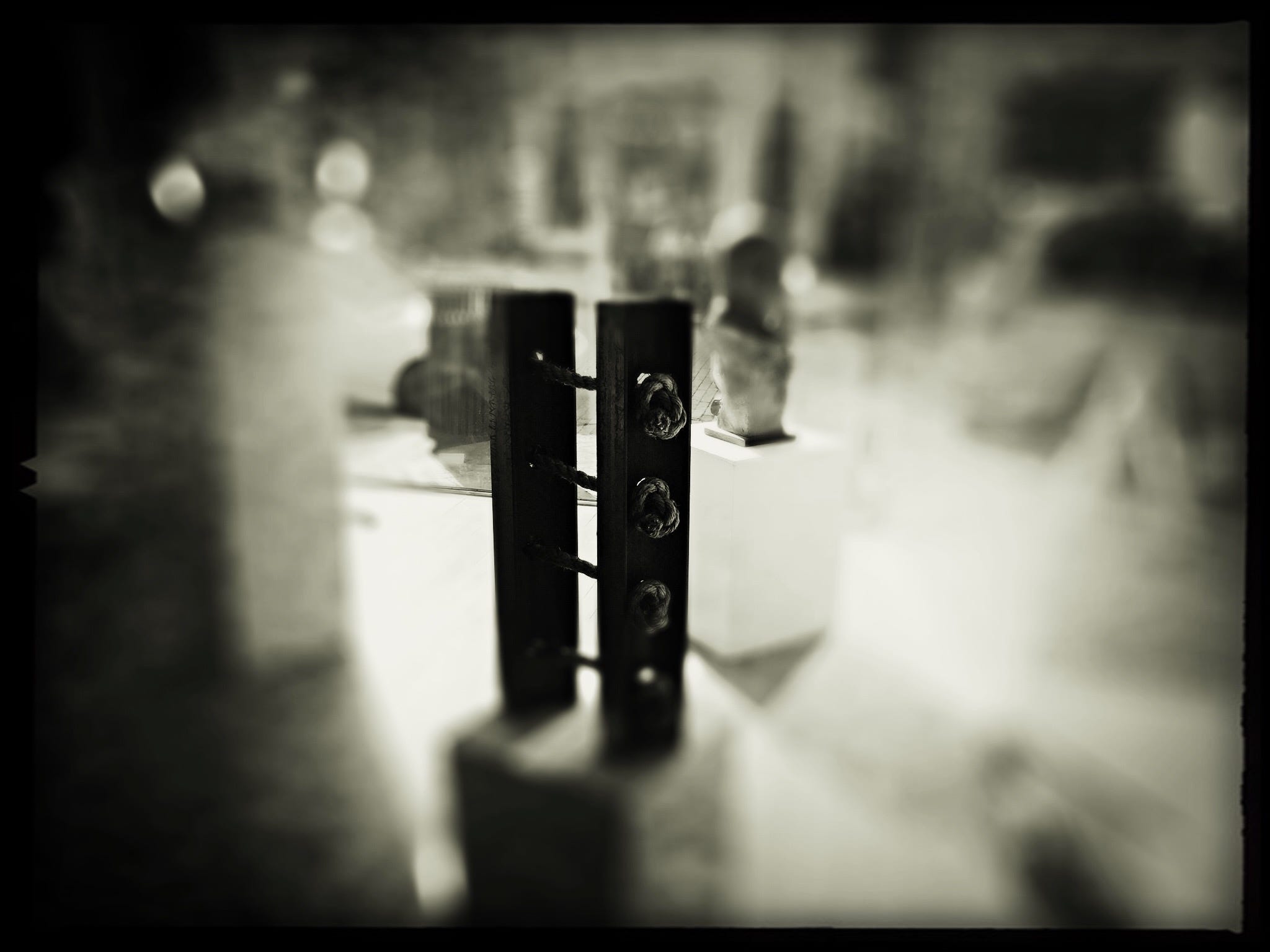
Perhaps that is why I have been thinking about a sculpture I created in 2013 called 9/11. I rarely talk about this piece, mostly because I feel it speaks for itself. It has a solemn and reverent presence, for sure. When I look at it, I see something there that feels as much about September 12th as about September 11th.
Two lengths of steel stand beside one another, connected by thick rope that forms the rungs of a ladder. The rope passes through holes in the steel and is secured with large knots whose fibers and frayed ends remain completely visible. In gallery language, I might say the tension between those materials matters: the rigidity and weight of steel joined by something fibrous, tactile, and meant to bind one thing to another.
The ladder exists because the two sides are joined.
In this ladder, I see us.
I see people connecting with one another through acts of care, generosity, courage, and Love. I see people reaching out to strangers because someone needed them, and in those moments, that was reason enough. Whatever ordinarily separated one person from another seemed to matter far less than the human being standing in front of them.
There is something about the knots that feels especially important. They are large and exposed, and the rope bears all the evidence of being tied by hand. The connection itself becomes part of what we are asked to look at. Those knots are doing exactly what knots are meant to do: they bind separated things together and, in doing so, they make them stronger through joining.
That is the part of September 12th I want to remember.
September 11th showed us how suddenly the world could change. September 12th revealed something about ourselves. Faced with enormous grief, we instinctively reached for one another. We helped people whose names we would never know. We recognized another person’s suffering as worthy of our attention, our hands, our time, and our care.
Maybe September 12th deserves a place in our collective memory for precisely that reason. It gave us a glimpse of who we are when the divisions between us lose their importance, and a complete stranger becomes, very simply, one with us.
Twenty-five years later, I find myself wishing we could remember that part more often. We are living through a time when division has become part of the daily language of our lives. We sort ourselves into sides. We have become frighteningly accustomed to seeing human suffering and first asking who those people are, where they come from, what they believe, or which side they belong to. Somewhere along the way, compassion itself seems to have acquired conditions.
Around the world, people are living through wars that ask one human being to regard another as an enemy. Here at home, contempt has become increasingly comfortable in our public conversation. We hear people reduced to labels, entire groups spoken of as though they were somehow less deserving of dignity, and cruelty defended because it has been directed toward the “right” people. Perhaps most painfully, we are becoming accustomed to it.
And yet September 12th reminds me that we know another way of being with one another. We have lived it. For those days, we understood that another person’s grief could matter to us simply because they were human. We understood that helping a stranger required no agreement, allegiance, or similarity between us. Before we knew someone’s politics, religion, nationality, or beliefs, we knew they were hurting. And that was enough. We understood, perhaps more clearly than we usually do, that beneath every difference lies something far more fundamental.
We belong to one another.
That understanding is at the heart of my sculpture. Those two buildings will never exist again, but they remain together in our collective memory. In the sculpture, two steel forms rise side by side. The rope joins them, rung by rung, transforming their parallel forms into something else entirely. Their connection creates the ladder.
On September 12th, we joined. And for a brief moment, we remembered that we are one.