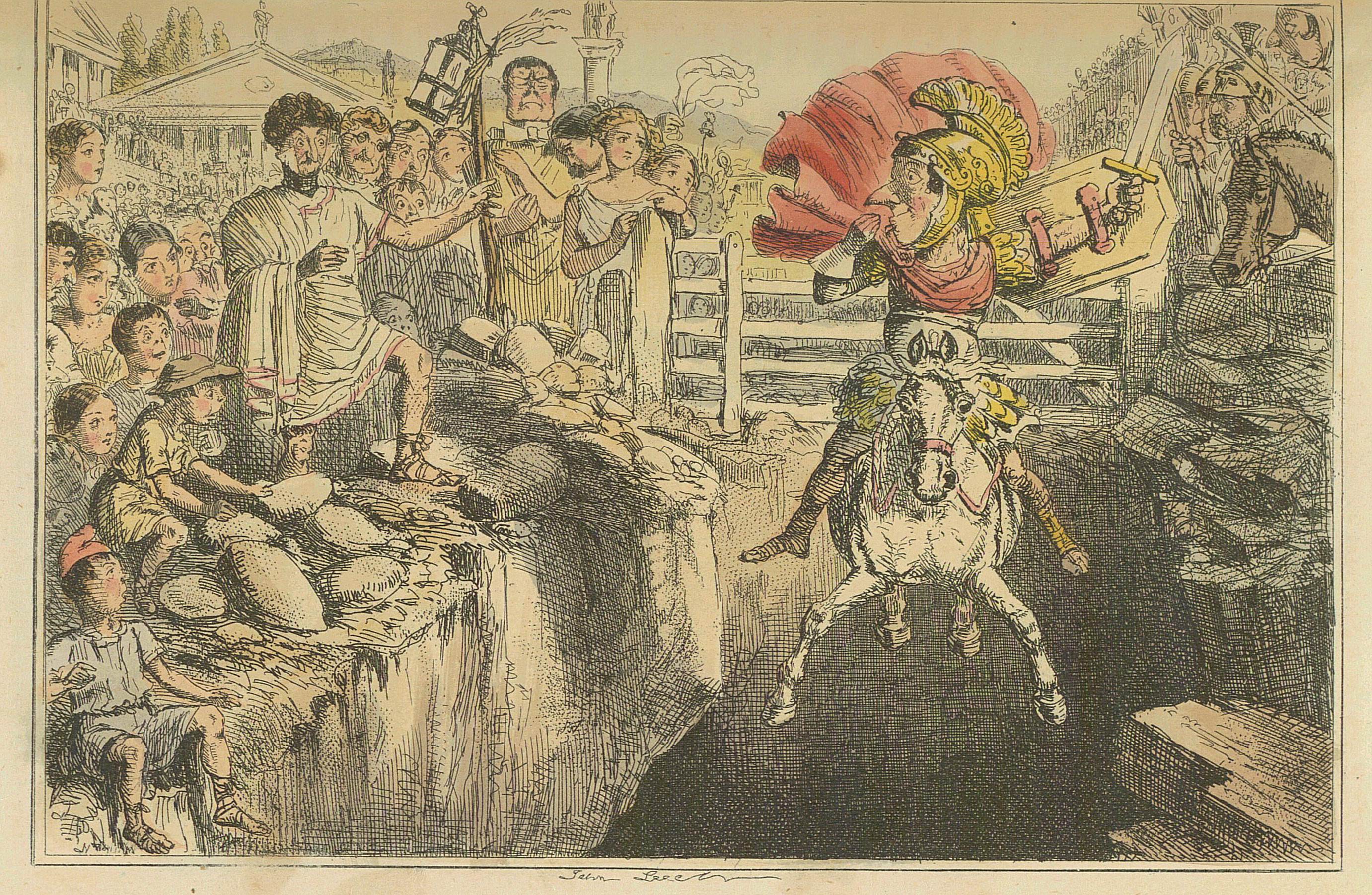
We’ve all heard by now that this is the time of monsters. The story about the government deporting a father while his daughter was deployed to kill people for that very government should remind us all that empires crumble, and this is how.
There is a recurring rule in history. When an empire begins to decay, whether by malice or negligence, it ceases to care for the very people who sustain its power. Some have described fascism as imperialism turned inward. At that point, decline becomes inevitable. Armies go unpaid. Officers forget what they’re supposed to be upholding. Service is rewarded with neglect or even outright contempt from those they’re supposed to be serving. These are signs that the system’s cohesion is dissolving from within.
Thanks for reading! Subscribe for free to receive new posts and support my work.
This pattern appears again and again. In the Roman Empire, unpaid and overstretched legions grew disloyal and fragmented. In the Ottoman Empire, the once-elite Janissaries became demoralized and politicized as the state failed to maintain discipline and purpose, which led to a series of rebellions that ended up tearing the empire apart. In the Spanish Empire, repeated bankruptcies left soldiers undersupplied and mutinous, which led to its gradual decline by financial and military exhaustion in the face of nationalist rebellions in the colonies. And in the Russian Empire, the breakdown of morale among troops and officials under the strain of war helped bring about total collapse and the establishment of the Union of Soviet Socialist Republics based on Marxist Communism, an entirely new form of government the likes of which the world had never seen.
The lesson repeats with almost mechanical certainty. Once an empire neglects those who defend and administer it, it begins to lose not just battles, but its inner coherence. From that point on, decline is no longer a distant threat but an unfolding reality.
But what is the new world? Who is struggling to birth it?
I recently listened to an interview by religious studies scholar Jeffery Kripal, where he said something like, “You can look at Netflix and see a thousand visions of the future, but they’re all negative, they’re all dystopias.”
Kripal, in The Superhumanities, argues that the humanities have been “lobotomized” by stripping out the extraordinary elements of human experience—visions, precognition, mystical states, leaving a narrow, depressing, and overly political view of humanity. He contends that this secular flattening reduces humans to mere data points, ignoring the “vertical dimension” of consciousness, where altered and transcendent experiences provide first-person knowledge of reality. Kripal calls for a “superhumanities” that reclaims the transformative and ecstatic power of literature, art, and intellectual history, treating them as amplifiers of consciousness. By acknowledging these “impossible” or extraordinary aspects of humanity, the humanities can move beyond the purely materialist and political frameworks, embrace utopian and visionary possibilities, and restore a richer, more imaginative understanding of human potential. Kripal urges putting the “weird” back on the table, integrating the immanent and transcendent to fully honor the fantastic dimensions of human life.
In many ways this is what I have tried to do with my dissertation and research on the intersections of enchanted Spiritualism and radical socialism, focusing on Andrew Jackson Davis, John Murray Spear and others.
But we need a utopian imagination now more than ever. The old world IS dying. A new world WILL be coming. The time is now to start building the next one. That starts with utopian imagination.
Edward Bellamy’s Looking Backward (1888) provides a vivid historical example of the power of utopian imagination that Kripal argues the humanities have largely abandoned. In Bellamy’s novel, a man from the late 19th century falls asleep and awakens in the year 2000 to find a society transformed. Industrial production has been collectivized, wealth and labor are equitably distributed, and social harmony has replaced competition and poverty. Bellamy’s vision offered concrete inspiration for rethinking social, economic, and cultural structures.
The book sparked the creation of the Nationalist Clubs, a network of organizations dedicated to spreading Bellamy’s ideas and exploring ways to implement them. Some of these groups even attempted small-scale experiments, establishing utopian colonies such as Kahweh, which sought to live out Bellamy’s principles in practice—communal property, shared labor, and social equality. While most of these experiments ultimately failed due to economic pressures and logistical challenges, they demonstrate the tangible power of imaginative vision to mobilize real-world action.
Ursula K. Le Guin’s The Dispossessed continues this project, depicting an anarchist society that tests the limits of human cooperation, labor, and social equality. It offers readers a chance to inhabit these worlds and experience the structures firsthand as lived possibilities in their imagination. Le Guin offers what she herself called an “ambiguous utopia.” Anarres, her fictional utopian world, is not a nightmare to be escaped, nor a paradise to be idealized. It is a living experiment, full of tensions, contradictions, and ongoing struggles. Conflict arises not from a monolithic tyrant, but from the difficulty of sustaining freedom in practice. The Dispossessed does something dystopian fiction rarely attempts. It treats the future not as a field of moral and social experimentation rather than a cautionary tale. It invites the reader to inhabit a world where better arrangements are possible, while refusing to deny the effort, discipline, and self-critique required to make them real.
That tension mirrors the internal dynamics of horizontal protest movements. In Occupy encampments, for instance, participants attempted leaderless assemblies, consensus decision-making, and shared resources. Like Anarres, these spaces revealed both the beauty and the fragility of cooperation without coercion. Le Guin helped people feel what such a society might be like from the inside, not as an abstract theory but as a daily practice full of friction. Movements like Occupy were not just reacting against capitalism. They were experimenting, often in real time, with forms of life that rejected centralized authority. Occupy’s famous insistence that “another world is possible” is almost a paraphrase of Le Guin’s literary project—showing that different social arrangements are not only conceivable but habitable, even if imperfect.
Le Guin herself articulated the deeper philosophical stake in one of her most widely cited lines:
“We live in capitalism. Its power seems inescapable—but then, so did the divine right of kings.”
That comparison reframes political reality as historically contingent rather than metaphysically fixed. Just as the doctrine of the divine right once appeared natural and eternal until it collapsed under pressure, so too can contemporary economic systems be imagined otherwise.
We remember Aldous Huxley for Brave New World while forgetting his constructive visions. Cultural memory prefers warning over possibility, dystopia over utopia, because dystopias feel urgent and plausible while utopias feel distant and unreal. We remember Aldous Huxley for Brave New World while forgetting that he spent the last decades of his life trying to articulate a constructive alternative. His final novel, Island (1962), was written deliberately as a counterpoint to Brave New World. Where the earlier book was a warning, Island was intended as an offering: a thought experiment about what a humane and spiritually integrated society might look like.
The novel follows Will Farnaby, a cynical Western journalist who is shipwrecked on the fictional island of Pala in the Indian Ocean. At first he arrives as a kind of emissary of the outside world’s values—profit, extraction, and geopolitical intrigue. But as he recovers on the island and encounters its people, he gradually discovers that Pala has developed a radically different civilization. It is not technologically primitive, nor anti-scientific. Instead, it attempts to harmonize modern knowledge with spiritual insight, ecological restraint, and psychological well-being.
Huxley imagines a society organized around several striking principles. Education integrates science, the arts, meditation, and emotional self-understanding, aiming to cultivate whole human beings rather than merely efficient workers. Children are raised partly through “mutual adoption clubs,” giving them multiple mentors and social supports rather than isolating them within nuclear families. Economic life is decentralized and cooperative, designed to avoid the extremes of wealth and poverty that characterize industrial societies. Politics operates through participatory councils rather than rigid hierarchies.
Perhaps most distinctive is Pala’s emphasis on consciousness itself. The culture encourages mindfulness, contemplation, and psychological honesty. Huxley imagines carefully guided rituals using what the novel calls “moksha-medicine”—a psychedelic sacrament intended not to pacify people, as the drug soma does in Brave New World, but to deepen awareness and spiritual insight. Technology and pharmacology exist in both novels, but their social purpose is reversed. In the dystopia, they are tools of control; in the utopia, they are tools of awakening.
In this sense, Island reflects the philosophical direction of Huxley’s later life. Through works like The Perennial Philosophy and The Doors of Perception, he became increasingly interested in the convergence of science, mysticism, and psychology. The society of Pala embodies that synthesis: Buddhist mindfulness, Western science, ecological stewardship, sexual freedom, and democratic cooperation woven into a single cultural fabric. The goal is a deeper form of human flourishing—clarity of mind, compassion, and a sense of unity with the larger web of life.
Yet even this utopia is fragile. As the story unfolds, Pala faces pressure from external powers eager to exploit its resources and from internal factions attracted to the wealth and militarism of the surrounding world. The novel ends with the island on the brink of invasion, suggesting that enlightened societies must continually defend themselves against the gravitational pull of greed and domination.
This tension reveals something important about Huxley’s constructive vision. Unlike naive utopias, Island does not claim that a perfect society could permanently escape the darker tendencies of history. Instead, it proposes a cultural direction: a society consciously designed to cultivate awareness, cooperation, and ecological balance. The tragedy of the novel is not that such a society is impossible, but that the world around it may not yet be ready to sustain it.
Mark Fisher captures this condition with stark clarity in Capitalist Realism: we can imagine the end of the world in vivid detail, yet even modest changes to our economic and social systems remain nearly unimaginable. Francis Fukuyama’s The End of History and the Last Man gave this blockage a political vocabulary, presenting liberal capitalism as the final horizon of human development. Together, they describe not just an ideology but a felt limitation—a quiet foreclosure of possibility in which the future appears as repetition, management, or collapse, but rarely as genuine transformation.
For Fisher, this was not simply an intellectual problem; it was an existential and cultural one. Capitalist realism operates by colonizing desire and expectation. It trains us, often unconsciously, to treat alternatives as unrealistic, unserious, or already failed. Even our rebellions are pre-contained, expressed through styles, consumption choices, or cultural gestures that leave underlying structures intact. The result is a strange inversion: we are surrounded by constant change—technological upgrades, cultural churn—yet experience a deep stasis at the level of social imagination.
This is why Fisher became increasingly interested, especially in his later, unfinished project Acid Communism, in recovering moments when this imaginative barrier briefly dissolved. Acid Communism was not a call for escapism, nor merely a reference to psychedelia in the narrow sense. It was Fisher’s attempt to name a historical and experiential opening—most visible in the late 1960s and early 1970s—when large numbers of people felt that a different way of living was not only possible but already beginning to emerge.
In this framework, “acid” points to an expansion of consciousness, a loosening of rigid perceptual and social habits. “Communism” points not only to economic reorganization but to shared life, collective joy, and the dismantling of alienation. Fisher was interested in how music, spirituality, experimental communities, and political movements once converged to produce a sense that work, time, gender relations, and social hierarchy could all be reimagined. The tragedy, in his view, is that this opening was closed—absorbed, commodified, or suppressed—before it could fully articulate itself.
What matters is that Fisher does not abandon utopia; he relocates it. Rather than treating utopia as a distant blueprint, he begins to see it as something immanent in experience—glimpsed in moments of solidarity, creativity, or altered awareness. These are not complete systems, but signals, fragments of a different world breaking through the present one. The task is to connect these fragments, to translate fleeting experiences into durable social forms.
For Kripal, mystical insight, psychic phenomena, and visionary states expand the boundaries of what we consider real. For Fisher, similar expansions, whether through art, collective action, or altered consciousness, loosen the grip of capitalist realism and reopen the field of the possible. Both suggest that imagination is not mere fantasy but a mode of perception, a way of apprehending realities that have not yet stabilized into institutions.
New Thought is know for a simple axiom: Thoughts shape reality. Our spiritual faculty of imagination is what shapes the reality we know. Human beings are meaning-makers, capable of perceiving, envisioning, and enacting worlds that do not yet exist. Utopian fiction, mystical experience, and visionary thought do more than entertain. They train us to see possibilities, to rehearse alternative societies, and to expand the range of what we can recognize as achievable. Our current systems may make modest change seem impossible, and capitalist realism tells us the world we have is the world we must accept. Yet history shows that when humans collectively dare to imagine the extraordinary, whether in Bellamy’s Nationalist Clubs, or Le Guin’s anarchist moonm those visions ripple into material practice.
The task before us is urgent. We can no longer afford the intellectual flattening that ignores the transcendent, the ecstatic, the impossible. By allowing our thinking to stretch beyond the limits of conventional reality, we prepare ourselves to act in ways that reshape the material world. The humanities, literature, philosophy, and the mystical all become instruments for change when they reconnect us with the superhuman, the enchanted, the radically possible. In this sense, the very act of imagining is political, moral, and practical. To envision a better world is already to take the first steps toward building it, and the time to start is now.
Thanks for reading! Subscribe for free to receive new posts and support my work.