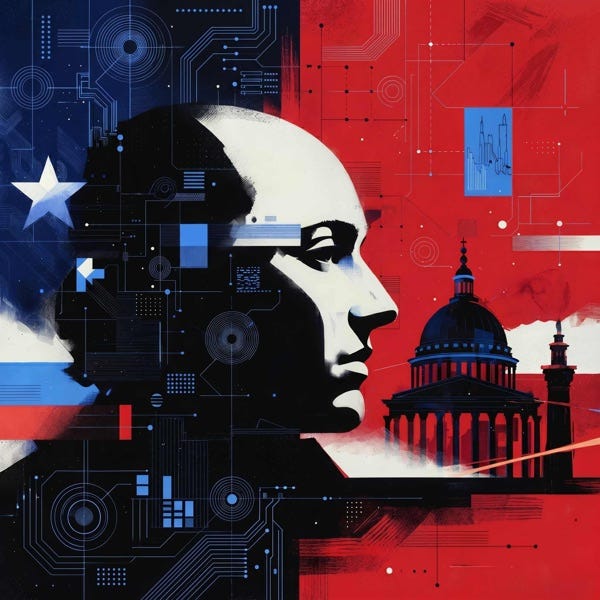
This is the episode where the inheritance stops being philosophy and starts becoming politics — and the episode that closes the first arc of the series. It opens at Runnymede in 1215, where a defeated King John sealed a charter he meant to break and broke within ten weeks, and which nonetheless outlived him by eight centuries to become a foundation stone of the principle that even the highest power is bound by law. From Magna Carta’s clause 39 the episode moves to Henry de Bracton and the doctrine that the king is under the law because the law makes the king, and to the medieval conviction that law is discovered rather than merely commanded — the foundation on which all constitutionalism rests. The center of the hour is Thomas Aquinas: the fourfold hierarchy of eternal, natural, human, and divine law; the universal and rationally knowable natural law that Jefferson would echo in “the Laws of Nature and of Nature’s God”; the doctrine that an unjust law is no true law, traced forward to Martin Luther King’s Birmingham jail; and Aquinas’s careful, institutional account of resistance to tyranny. Marsilius of Padua supplies an early theory of popular sovereignty — with the honest warning that popular sovereignty and individual liberty are not the same thing — and the canon lawyers supply the grammar of consent and representation. The episode confronts the scandal at the center of the natural-law tradition, that Aquinas taught universal natural law and also endorsed the execution of heretics, and answers three serious objections at full strength. It closes with a two-stage summit: a Liberty Lens applying the medieval inheritance to the present, and an extended Arc Summation walking the whole road from Athens through the medieval forge and into the marrow of the men who would meet at Philadelphia.
https://www.consequentialactions.com/
X: https://x.com/jkellick
Spotify:
#libertarianism #history #libertarian