Antigonish is a community people often celebrate for its welcoming small-town feel, its lineup of cultural events, and its strong sense of connection. But what does it mean to belong to an otherwise welcoming community when you can’t get into a building, cross a street safely, attend an evening event, or visit a friend’s home?
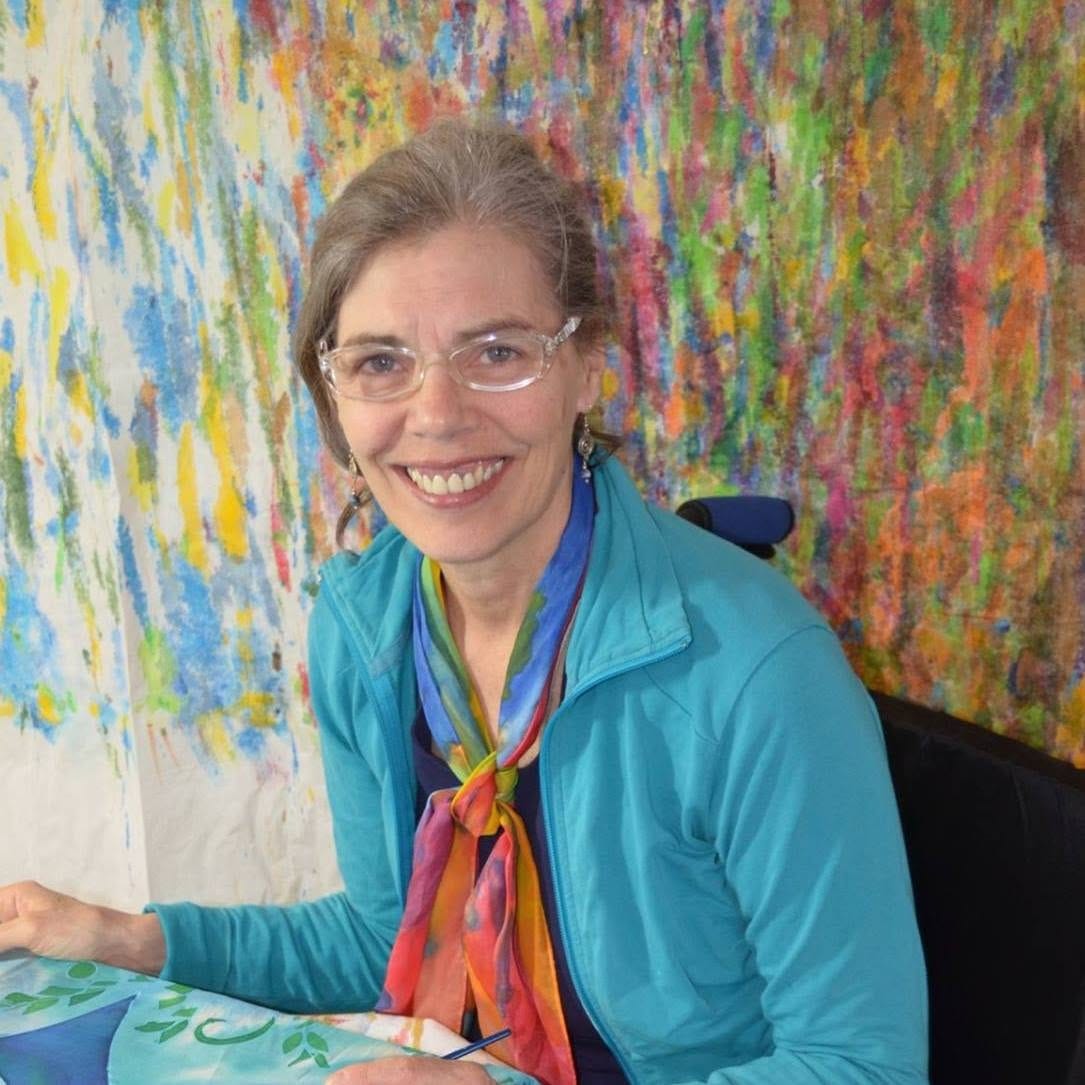
Justin and Anuj sit down with Anne Camozzi, a longtime Antigonish resident, artist, and disability advocate, to talk about what it means to live with a disability in a town that still has a long way to go on accessibility.
Anne arrived in Antigonish in 1979, intending to stay for just a year. She fell in love with the ocean, the natural surroundings, and the community, and has called the town home ever since. For years, she led an active life, travelling, working as a consultant, and enjoying outdoor activities. Then, in 2003, a serious illness dramatically changed her mobility. She gradually moved from crutches and a walker to a wheelchair, with each transition bringing new challenges and new adjustments.
But the physical and medical challenges were only part of the story. The town itself presented barrier after barrier. As Anne adapted to life with a disability, she also rediscovered her creativity through art and eventually became a persistent advocate for change—not just to improve her own circumstances, but to make life better for others.
A Town That Can Be Difficult to Navigate
Accessibility is often understood in simple terms: is there a ramp instead of a staircase? Anne explains that the reality is much more complicated.
A curb cut might be too steep for someone using a wheelchair to navigate safely. An “accessible” doorway might still be impossible to fit through. An elevator might require a key that visitors don’t have. A building might technically be accessible, but the route from the parking space to the entrance might not be.
Anne describes dangerous street crossings in Antigonish where she has had to stop, adjust her powered wheelchair, and maneuver onto the sidewalk while impatient drivers wait (or sometimes fail to wait). She has stopped using one intersection altogether because she considers it too dangerous.
These seemingly small design problems can turn an ordinary trip across town into a serious safety risk. Accessibility is more than just a ramp. It is the whole chain: the crossing, the curb, the entrance, the elevator, the washroom, and the journey home. If one link fails, the entire trip can become impossible.
The barriers extend beyond public buildings. Many private homes are inaccessible, which can severely limit social lives. Anne says there is only one private home in Antigonish that she can enter, because its owner built a ramp. When friends’ homes aren’t accessible, social gatherings have to happen somewhere else, or not at all.
For Anne, participating in community life can depend on whether a suitable venue exists, whether she can get there, and whether she can get home again.
Transportation Is About More Than Getting Around
One of Anne’s central concerns is transportation. She helped write the early grants that established Antigonish Community Transit, which she describes as one of the biggest victories for people with disabilities in the area.
She is also quick to defend the organization. Antigonish Community Transit, she says, works incredibly hard with limited resources and has made an enormous difference in her life. The problem is that the service cannot meet the full range of community needs.
Rides often need to be booked in advance, making spontaneous trips difficult or impossible. And there is no option for evening transportation. “There is no transit in Antigonish on any weekday … on any weekend on any holiday after 5:00 PM at night,” Anne notes. “And that’s when all the activities in this community take place.”
What’s worse: If someone needs to get to an unexpected medical appointment or a ride home from the hospital after hours, accessible transportation may not be available.
Anne recounts situations in which an ambulance has been the only practical way to get where she needs to go, at a personal cost of around $300. The point is not that Antigonish Community Transit is failing; it is that a small nonprofit cannot reasonably be expected to fill every gap in a community’s transportation system.
Anne argues that accessible transportation should be treated as a municipal responsibility rather than left to an organization operating with limited funding and resources.
She points to Halifax, where accessible taxis have made it possible for her to participate in activities such as comedy nights and live music. Getting that service required advocacy through the human rights system, but the result has made a meaningful difference to her independence and social life when in Halifax.
For Anne, the issue is straightforward: people with disabilities have the same need to participate in community life as everyone else. Access to medical care matters, but so does the ability to socialize, attend events, go to the beach, and spend time with family.
Disability Can Be Expensive
The conversation also explores the financial realities of living with a disability. Anne explains that disabilities can make it harder to earn an income, while mobility equipment and other medical necessities can create substantial expenses. Some devices and supplies are not covered by insurance or MSI, leaving individuals to pay out of pocket.
These pressures compound one another. When people are already dealing with medical needs, housing challenges, and the costs of equipment, they have fewer resources available to advocate for change. Even participating in public meetings can be difficult when transportation and accessibility are barriers.
Anne is candid about the advantages she has had. She worked until she was 49, had some financial resources, and was able to sell a house to help fund her care. She also had an education, professional experience, and the ability to communicate publicly.
She sees herself as relatively fortunate—and recognizes that even with those advantages, she continues to encounter barriers. She uses her voice to advocate for a wider community, including people who may not have the same financial resources, energy, or opportunities to speak up.
Why People with Disabilities Must Be at the Table
A recurring theme in the conversation is Anne’s insistence that people with disabilities must be consulted when buildings, streets, and public spaces are designed or renovated.
“We know what works,” she argues. A project can appear to meet accessibility standards on paper and still fail in practice because a doorway is unusable, the route is poorly designed, or the parking arrangement makes reaching the entrance unsafe. A washroom may satisfy a technical standard but be impossible to reach along the route provided.
Anne describes years of advocacy around accessible parking in Antigonish, including the effort it took to secure a drop-off space on Main Street. She also raises concerns about parking at the library, while praising library staff for listening to accessibility concerns and taking action.
Her broader point is that accessibility cannot be an afterthought. The people who will use a space need to be involved from the beginning.
This is the principle of universal design: creating places and services that work for people with different ages and abilities. Thoughtful design can make spaces more usable for wheelchair users, older adults, children, and many others. Anne offers the example of a kitchen with counters at different heights, allowing a child, an older adult using a walker, and a wheelchair user to share the same space.
When accessibility is built into a project from the start, solutions can also be simpler and less expensive than retrofitting a space later.
Accessibility Is About Every Kind of Disability
Although much of the discussion focuses on mobility, Anne emphasizes that disability takes many forms. People may have vision or hearing impairments, invisible disabilities, or other needs that are not immediately apparent to others. Anne has visual and auditory disabilities herself, and points out that being disabled can mean facing several different barriers to being included.
There is no single checklist that can guarantee a space will work for everyone. The answer, she argues, is to ask people what they need and include a diverse range of experiences in decision-making.
Nova Scotia has legislated a goal of becoming accessible by 2030, and municipalities are required to have accessibility committees. But Anne questions whether committees are meeting regularly and moving recommendations forward. Having a committee or a policy is not enough if the work does not lead to meaningful change.
She also points to the experience of the COVID-19 pandemic. Disabled people had been asking for remote participation in meetings for years, but virtual options became much more common when people who were not disabled suddenly needed them too. The experience demonstrated that accessibility solutions are often possible when institutions recognize a need and make it a priority.
What Would a More Accessible Antigonish Look Like?
For Anne, improving Antigonish means making reliable, accessible transportation available beyond the limited hours currently served. It means safer crossings, accessible entrances, practical parking and drop-off options, and public spaces designed with disabled people rather than merely for them.
It also means recognizing that participation in community life is part of health and well-being. Being able to get to work or a medical appointment matters, but so does being able to go out with friends, attend a performance, or take part in an ordinary weekend activity.
Anne’s message is not that Antigonish has made no progress. She celebrates the creation of community transit, acknowledges the people who have listened and helped, and expresses gratitude for those who have worked to make things better. She gives particular credit to Antigonish Community Transit and to people who have taken accessibility concerns seriously.
But she believes the town and county need to turn good intentions into sustained action—and that governments must provide the resources needed to make access a reality.
Change Happens When People Speak Up
Anne believes meaningful change comes when ordinary people get involved, speak out, and insist that their communities do better. But she also makes clear that disabled people need to be invited to the table in the first place—and that participation must be possible in practice, not just in principle.
Anne’s story is one of advocacy but also personal transformation. An illness led her to rediscover art. She is now working on a book, encouraged by her medical team, about how a person can still have a life within severe constraints. It is not simply a biography or a book about disability, but a reflection on what it means to build a life around the things that remain possible.
Her decades of experience show how individual stories can expose problems a community has learned not to notice.
As the conversation closes, Anne reflects on the privilege of living in Canada and the importance of not taking democracy for granted. A democratic society depends on people being involved in their communities.
That idea is at the heart of this episode. Accessibility is not simply a matter of ramps, doors, or transportation schedules. It is about whether everyone has a genuine opportunity to participate—and whether a community is willing to listen when people explain what needs to change.
Anne’s challenge to Antigonish is a practical one: when planning a building, organizing an event, or making a decision about public space, ask who might be left out. And then invite those people to help shape the answer.
Because a community cannot truly welcome everyone if some of its members cannot get through the door.