Catherine MacPherson, the local food security coordinator with the Antigonish Community Fridge and Pantry, sat down with Let’s Talk Antigonish hosts Justin and Anuj on Christmas Eve to discuss the stark reality of hunger in our community and how residents are responding with compassion and creativity. The Community Fridge, operating since August 2022, is addressing the growing food insecurity problem in our town through accessible, dignified community support—no questions asked, no judgment given.
The statistics are sobering: Nova Scotia leads all Canadian provinces in food insecurity, with 28.9% of residents unable to reliably access adequate food. Perhaps most surprisingly, a quarter of those accessing emergency food services are employed.
“I really think it’s just the cost of living has risen so much and wages haven’t met it,” MacPherson explained. “Disability payments, social assistance—those payments haven’t matched the price of inflation. They’ve been stagnant for years.”
The Community Fridge model offers a simple but revolutionary approach: two accessible locations where anyone can drop off or pick up food, 24 hours a day at the Farmers Market location, with no registration, no monitoring, and no policing. The motto is straightforward: “Take what you need and give what you can.”
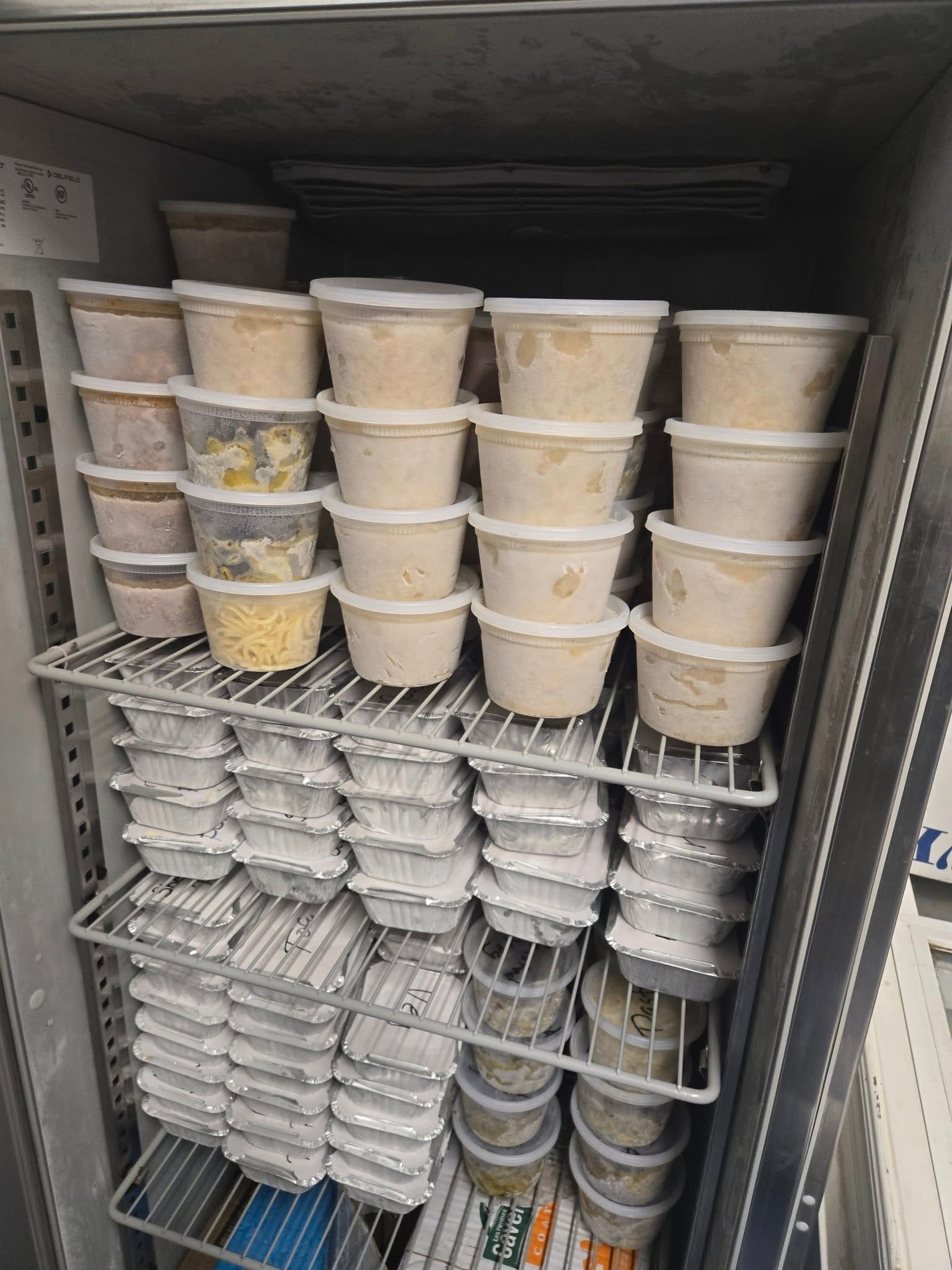
Unlike the traditional food bank, which requires registration and limits access to once every three weeks, the Community Fridges provide immediate food access. One fridge operates outside the Antigonish Farmers Market in a red shed 24/7, while another sits inside the People’s Place Library and is accessible during operating hours. Both are stocked with basics like milk, cheese, bread, and vegetables, as well as canned goods and frozen soups and meals.
MacPherson painted a vivid picture of who relies on these services: “I met one person who is unhoused, living somewhere in the town under a structure. I met a single mom on disability with a lot of kids. I meet seniors on fixed incomes. One man going through chemo who can’t afford the meal replacement drinks he needs. Single men who’ve been laid off. A construction worker in work boots, working 12-hour days, caught between paychecks with nothing in his fridge.”
The operation runs on $500 weekly in purchased groceries, split between both locations by volunteer shoppers who hit the stores three times per week. But community donations far exceed that amount, with residents regularly dropping off items from their own cupboards.
A partnership with Sodexo at St. Francis Xavier University has proven particularly impactful. The campus food service now packages unused cafeteria food—everything from biryani to mashed potatoes—into one-pound containers that are frozen and distributed through the fridge program. Weekly pickups yield 200 to 350 portions of perfectly good food that would otherwise be thrown away.
“When we fill up the fridge and freezer on a Saturday, if I go back the next day to check, most of that stuff is already gone,” MacPherson noted.
Key Insights from the discussion:
* Food Insecurity Affects Everyone: Among those using the fridge are employed people, nurses, single parents, seniors, people on disability, and individuals experiencing homelessness. Food insecurity doesn’t discriminate, and employment doesn’t guarantee food security.
* Dignity Through Design: The 24/7 access with no registration or monitoring removes stigma. People can access food privately, at any time, without explaining their circumstances to anyone. This design intentionally centers human dignity.
* The Distribution Problem: “There is so much food out there. It’s really a distribution system. It’s also a government policy decision that is keeping people food insecure.” The problem isn’t scarcity—it’s access and affordability.
* Community Generosity Multiplies Impact: While the program budgets $500 weekly for groceries, community donations significantly expand what’s available. The fridges rely on grassroots support to function.
* The Greedy User Myth: Initial concerns about people “abusing” free food proved unfounded. What appears as one person taking “too much” is often someone distributing to their community. “If you’re there taking it, it’s because you need it for some reason.”
* Beyond Emergency Food: The initiative has expanded to include a community soup gathering every two weeks at the Farmers Market, where volunteers prepare hot meals and freeze portions for the fridges. The goal: ensure something is always available.
* Food as a Human Right: MacPherson repeatedly emphasized this principle, using #FoodIsAHumanRight on social media. This framing shifts the conversation from charity to rights and dignity.
* The Ripple Effect: Volunteer Judy from St. Vincent de Paul Society goes beyond, delivering meals to seniors’ complexes and households on fixed incomes.
* Growing Need, Limited Capacity: The greatest challenge is space and resources. MacPherson believes Antigonish needs a daily hot meal service, but the current program relies on volunteers with limited storage and kitchen access.
* The Bigger Picture: This isn’t just an Antigonish problem. One Toronto food bank went from serving 135,000 people weekly to 1 million in a single year, highlighting a national crisis.
The program started when the Antigonish Coalition to End Poverty secured a grant from Nova Scotia’s Department of Communities, Culture, Tourism and Heritage. DeCoste Interiors donated the first fridge, and the Farmers Market provides free space and electricity. A separate grant enabled the library location in early 2023.
MacPherson’s own journey began with a surprisingly common “first world problem”—too much food in her household. A friend’s offhand suggestion to start a food pantry led her to that fateful September 2022 meeting, where she’s been involved ever since.
The program welcomes donations of any kind: food dropped at either location, e-transfers to AntigonishCommunityFridge@gmail.com, or volunteer time coordinated through their Facebook page, “Volunteers for the Antigonish Community Fridge.” They cannot accept meat due to safety concerns, but milk, cheese, bread, yogurt, canned goods, and packaged foods are always needed.
As the holiday season approached and usage spiked in December, MacPherson’s message remained simple: “Just keep on donating. See the people in your community and realize that it doesn’t matter who they are. They could have a struggle no matter what their income. And when it comes to food, food is a human right.”