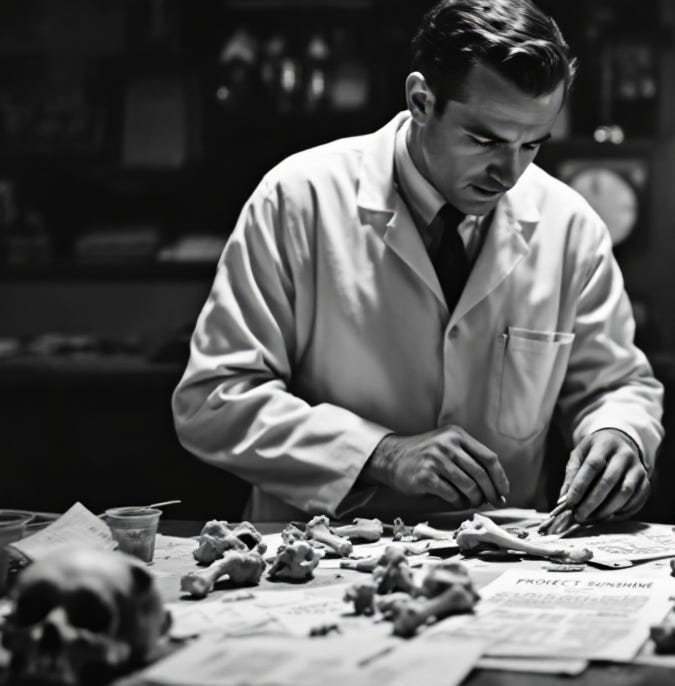
When the US government needed human tissue to study radiation, they turned to systematic collection of infant and child remains without parental consent.
Project Sunshine represents one of the most bizarrely named and ethically disturbing programs in Cold War history—a secret government operation that collected human remains, particularly from deceased infants and children, to study nuclear fallout effects without families' knowledge or consent. Operating from 1953 through the late 1950s, this Atomic Energy Commission program created a global network spanning 26 collection sites across multiple continents, where respected scientists, including Nobel Prize winner Dr. Willard Libby, casually discussed "body snatching" as patriotic service while developing elaborate bureaucratic systems to normalize what amounted to institutionalized grave robbing.
The program's cheerfully inappropriate name masked a dark reality: researchers systematically harvested bone samples to measure strontium-90 absorption, using cover stories about natural radiation studies to deceive medical professionals and grieving families alike. Though the research contributed valuable scientific knowledge that helped inform the 1963 Partial Nuclear Test Ban Treaty, Project Sunshine serves as a haunting reminder of how crisis thinking can distort ethical boundaries. It also transformed brilliant minds into participants in practices that, decades later, seem not just morally questionable but almost surreally incomprehensible. Sunshine serves as a cautionary tale about the dangerous intersection of national security fears, scientific ambition, and institutional secrecy that resonates powerfully in our current era of technological and existential uncertainties.
Let’s listen in as Nathaniel Sheppard narrates this tale on my behalf, shall we?
-Daniel P. Douglas