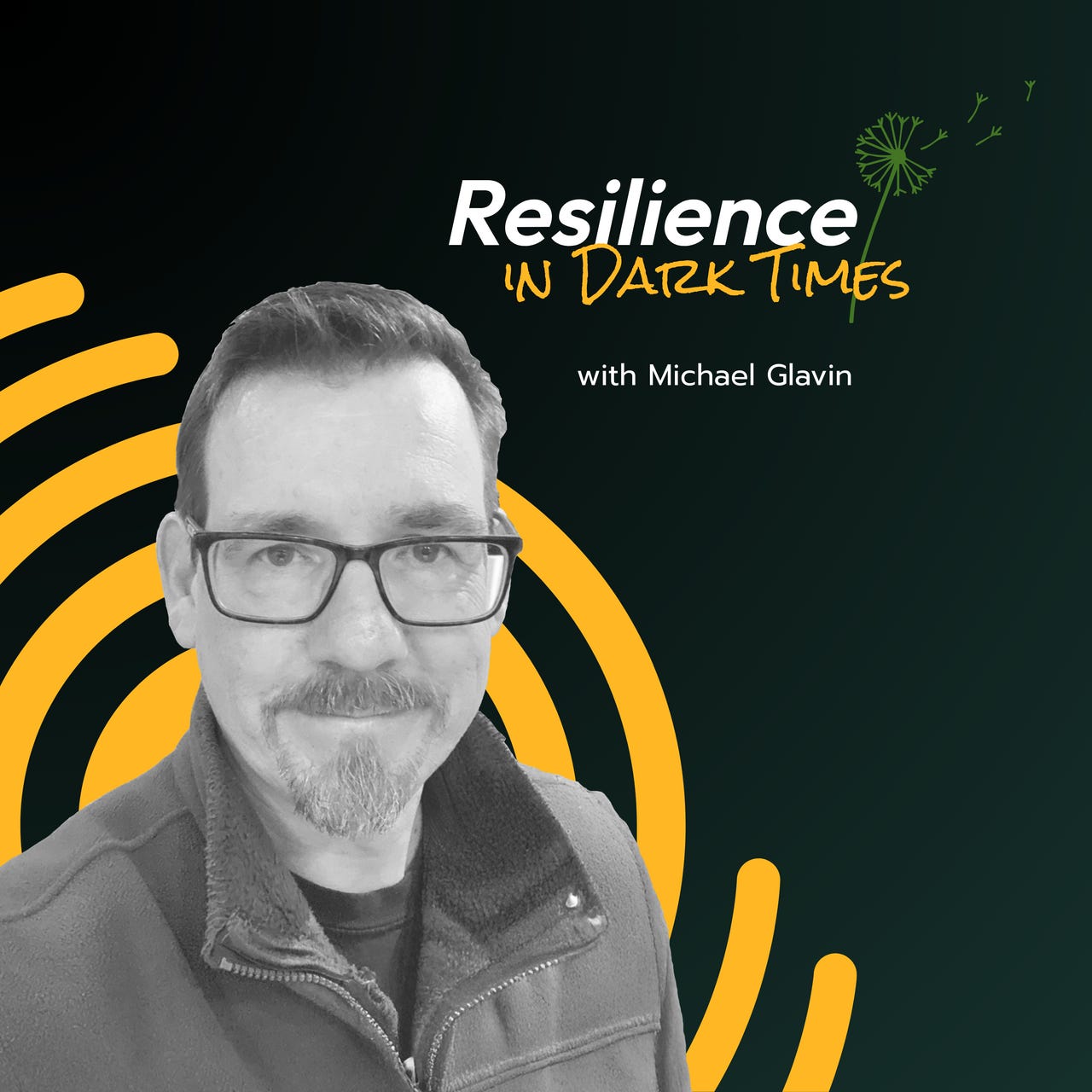
Intro:
Are you spending way too much time reading about negative news? Is it causing you to feel anxious, loose sleep, feel dread, and despair? Before you can build up your resilience, you need to stop frying your nervous system. In this episode, we’ll share the secret to stop doomscrolling once and for all.
Topic to be discussed:
In this podcast episode, Michael Glavin discusses how your nervous system has been hijacked and how to get it back.
Summary:
* What is doomscrolling?
* Can you quit doomscrolling like you quit smoking?
* Types of attention and how social media grabs it
* Social media, fear, anger, and authoritarianism
* Getting off the social media wheel of suffering
Show notes:
What is doomscrolling?
Doomscrolling is not just scrolling through social media … All that can be a time-suck, and that’s an issue in its own right, but doomscrolling is when you spend too much time on negative news, which causes you to feel anxious, angry, sad, or depressed.
Michael Glavin
It is a tough cycle, because the way that doomscrolling makes you feel often causes you to doomscroll more: you feel anxious and angry, so you seek more information, find more of the same bad news, and feel worse.
Doomscrolling is not good for your mental and emotional well-being, but it can still be difficult to stop, even though you know it’s bad for you. In some ways, it’s like smoking, and Michael has found that quitting doomscrolling is in some ways like quitting smoking.
Can you quit doomscrolling like how you quit smoking?
Essentially, yes.
Once you understand that cigarette addiction means outsourcing your inner equilibrium to cigarette companies - and that you must keep buying and smoking their products just to feel 'normal' again - it becomes easier to stop.
There is no pleasure or reward, just sitting in withdrawal, and only feeling better when you smoke. It’s a zero-sum game where you always lose. This is the same as doomscrolling.
I had to wait until the nicotine was out of my system to feel normal again. Allen Carr’s book so profoundly shifted my perspective that it made me never want to smoke again … My hope is that I can do that for you in terms of doomscrolling. Michael Glavin
Types of attention
We live in a nearly unlimited information age where we have access to so much that gets published every second, but what is limited and finite is our attention.
When we spread ourselves too thin and our attention spans too far, they shorten, and we become anxious and frantic.
What we pay attention to over our lifetimes is what our life consists of … Technology companies … are best understood as “attention companies”; they monetize our attention, and they do this by selling advertising space to get in front of our eyeballs. Michael Glavin
There are three types of attention:
1 - Voluntary: Reading a book in a cafe
2 - Involuntary: A glass shatters in the cafe, immediately distracting you and grabbing your attention
3 - Social: Attention directed towards or received from others
These are discussed in more depth in Chris Hayes’ book linked below.
Social media and authoritarianism
Maria Ressa, a Nobel Prize-winning journalist, wrote an important book linked below on social media and authoritarianism.
The core problem for Ressa is the platform design and business models of social media platforms. Like Chris Hayes, she talks about how social media platforms are built for engagement and time-on-site, but she goes further to talk about content and its emotional engagement.
Michael Glavin
It is a fact that emotionally engaging content keeps us on the site longer, and it also becomes what we share more of. What engages us the most are the three following things:
* Fear
* Anger
* Hate
The platforms and their algorithms prioritize emotionally-laden content because it drives engagement, which in turn drives revenue. This creates a feedback loop where distressing content is amplified.
Michael Glavin
We get stuck in the doomscrolling cycle because our brain releases dopamine and cortisol when we find some, which leads us to seek more negative news. This is the social media-generated wheel of suffering. So, how do we get off this wheel?
Getting off the social media wheel of suffering
Dr. Lucy Hone is a resilience researcher who has experienced tragic loss, and she wrote an important book on resilience.
She shares the three things that resilient people do when tragedy strikes:
* They accept that suffering is part of life, rather than asking, “Why me?”
* They pay attention to what is still good in life. This is called “benefit-finding.”
* They focus on what they can control, even in overwhelming circumstances.
Dr. Hone would consciously ask herself, “Is what I’m doing right now helping or harming me?” … This gets back to our transformance drive ... our ember of resilience that [we] have inside [of ourselves]. I want you to get in touch with that inner voice, that inner guidance, that inner direction. Take a pause and ask yourself, “Is this helping me right now?”
Michael Glavin
This simple question can help you redirect your behavior and choose your next actions intentionally. This simple question broke the vice of doomscrolling for Michael: “Right now, who is in control of my nervous system, me, or Donald Trump?”
When our nervous systems are being taken over by authoritarians, we inadvertently do their bidding. We spread the infection to uninfected others.
Michael Glavin
When you doomscroll, your nervous system has been taken over by the social media platforms. They want you to mindlessly scroll through their apps and generate wealth for them, which distances you from living intentionally - because that is your ember.
Take back your agency, regulate your nervous system, and fan your ember instead of falling into their trap, which causes your connection with yourself and others to fizzle out. So, don’t be a zombie cicada!
Books mentioned in this episode:
Allen Carr - Allen Carr's Easy Way to Stop Smoking
Chris Hayes - The Sirens' Call: How Attention Became the World's Most Endangered Resource
Maria Ressa - How to Stand Up to a Dictator: The Fight for Our Future
Dr. Lucy Hone - Resilient Grieving: Finding Strength and Embracing Life After a Loss That Changes Everything
Useful links:
Podcast website: resilienceindarktimes.com
“A fungus is turning cicadas into horny zombies — but don’t panic” WBEZ, Chicago
'Zombie' Parasite Cordyceps Fungus Takes Over Insects Through Mind Control | National Geographic
The Last of Us | HBO Max
Practice website: dcctherapy.com