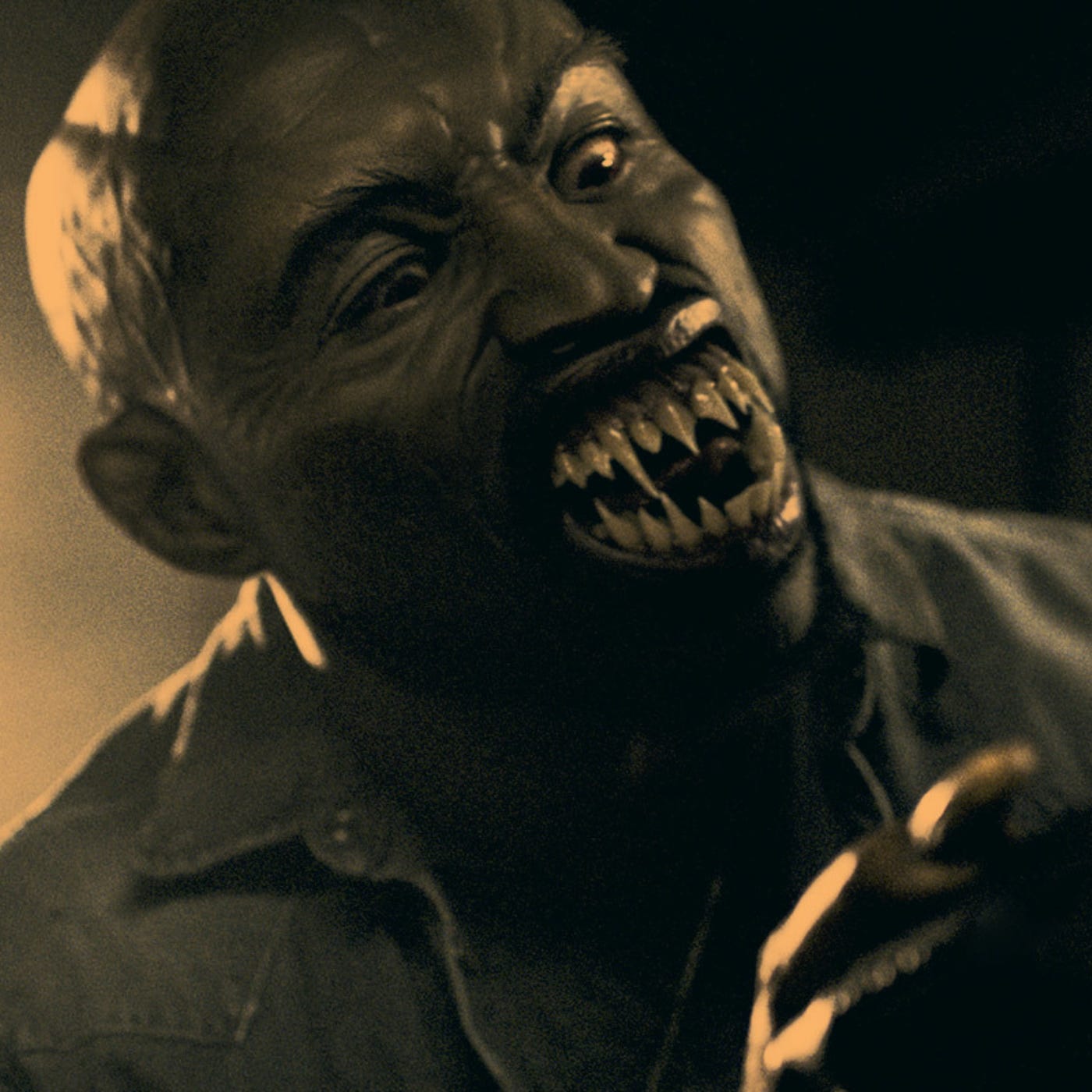
We’re headed back to Atlantis this week to continue asking: if vampires are figments of the Gothic imagination, why do so many authors insist on examining them under a microscope? If our nightmares haunt us with fears of the unknown, what exactly do we gain from the paragraphs on paragraphs of exposition that tell us exactly how those monsters came to be? In other words, have sci-fi vampires been defanged (and are they just compensating with their big, nasty teeth)?
In this episode, Hannah and Rebecca dive deep into the history of the mad scientist as brought to us by Mary Shelley and Universal Pictures, unpack the link between 20th-century B-films and the atomic bomb, and consider whether vampire-as-plague works better as a metaphor than a plot device. Hannah is traumatized by weird-ass ant brain fungus, Rebecca is scarred by having to discuss I Am Legend yet again, and they both demand to know what the hell a “nano” actually is.
Come vamps, join us around the campfire.
Major Spoilers:
* The Strange Case of Dr. Jekyll and Mr. Hydeby Robert Louis Stevenson, 1886
* Abbott and Costello Meet Frankenstein, directed by Charles Barton, 1948
* Ultraviolet, directed by Kurt Wimmer, 2006
Other media mentioned in this episode:
Fiction
* Frankenstein: or, The Modern Prometheus by Mary Shelley, 1818
* The Family of the Vourdalak by Aleksey Tolstoy, 1839
* Carmilla by Joseph Sheridan Le Fanu, 1872
* Dracula by Bram Stoker, 1897
* I Am Legend by Richard Matheson, 1954
* Anno Dracula by Kim Newman, 1992
* Argeneau by Lynsay Sands, 2003-2025 (series)
* The Passage by Justin Cronin, 2010
* V Wars: A Chronicle of the Vampire Wars edited by Jonathan Maberry, 2014
* Prince Lestat and the Realms of Atlantis by Anne Rice, 2016
Film
* Nosferatu: A Symphony of Horror, directed by F.W. Murnau, 1922
* Dracula, directed by Tod Browning, 1931
* Frankenstein, directed by James Whale, 1931
* The Wolf Man, directed by George Waggner, 1941
* House of Frankenstein, directed by Erle C. Kenton, 1944
* House of Dracula, directed by Erle C. Kenton, 1945
* The Vampire, directed by Paul Landres, 1957
* Nosferatu the Vampire, directed by Werner Herzog, 1979
* Nadja, directed by Michael Almereyda, 1994
* From Dusk Till Dawn, directed by Robert Rodriguez, 1996
* Blade, directed by Stephen Norrington, 1998
* Shadow of the Vampire, directed by E. Eilas Merhge, 2000
* Dracula 2000, directed by Patrick Lussier, 2000
* Blade II, directed by Guillermo del Toro, 2002
* I Am Legend, directed by Francis Lawrence, 2007
* Daybreakers, directed by Michael Spierig and Peter Spierig, 2009
* Morbius, directed Daniel Espinosa, 2022
* Nosferatu, directed by Robert Eggers, 2024
* Van Helsing, directed by Stephen Sommers, 2004
TV
* The Vampire Diaries, 2009-2017
* The Strain, 2014-2017
* V Wars, 2019
* Midnight Mass, 2021
* Wednesday, 2022-2025
Additional Reading
* Catherine Pugh, “The Deathbird of Disease: Count Orlok and the Monstrous Virus,” in Nosferatu in the 21st Century, 2022
Liked this episode? You’ll also like…
The Hottest Newest Oldest Vampires: Nosferatu, Sinners, and AMC’s Interview with the Vampire
How Many Vampires Does it Take to End the World?
From Egypt to Atlantis: How Vampires Explain Their Origins
Want more vampire content in all your feeds?
Follow us @vampirecampfirepod on Instagram and TikTok for podcast updates & vampire memes.
Find us on Letterboxd and Goodreads for a peek at what we’re consuming next.
Consider becoming a paid member of our Substack to get bonus episodes — the first one is available now!
This episode was written, recorded, and produced by Rebecca Glazer & Hannah Spiegelman
Note: We’re an affiliate of Bookshop.org and earn a small commission if you purchase through our links — allowing you to support indie bookstores and an indie podcast at the same time!