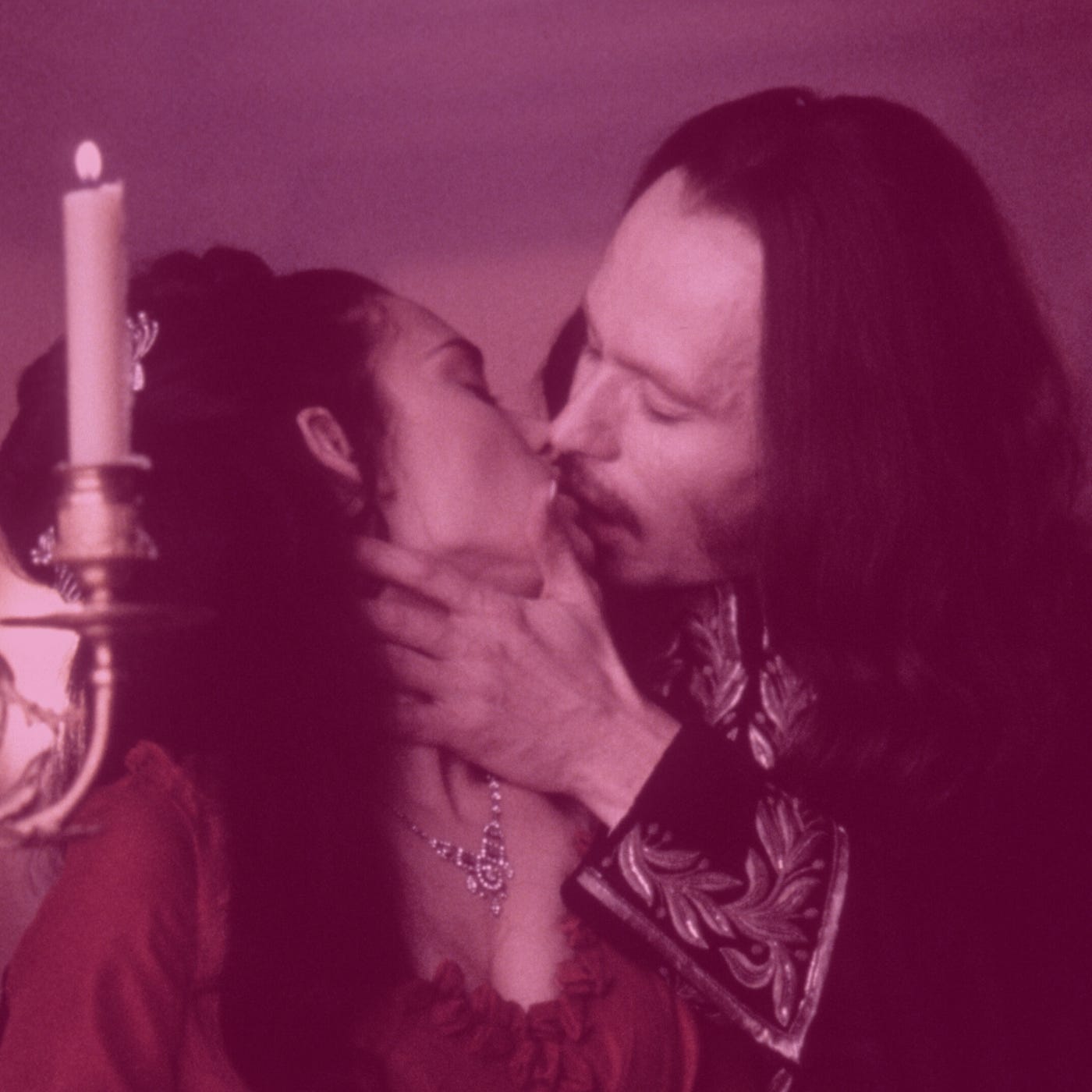
A new year brings us a new season of Vampire Campfire along with a new Dracula adaption! This take on the tale is explicitly romantic, which begs the question: when did Bram Stoker’s 19th century classic turn into a love story? Rebecca and Hannah dig into the family tree of Dracula adaptions to unpack the layers on layers of intertext, question if they themselves are the crazy ones, discuss why writers made these changes, and rant about CGI gargoyles.
Come vamps, join us around the campfire.
CW: sexual assault, pedophilia, suicide
Major Spoilers:
* Dracula by Bram Stoker, 1897
* Blacula, directed by William Crain, 1972
* Bram Stoker’s Dracula, directed by Francis Ford Coppola, 1992
* Dracula Untold, directed by Gary Shore, 2014
* Dracula: A Love Tale, directed by Luc Besson, 2025
Other media mentioned in this episode:
Fiction
* I Am Legend by Richard Matheson, 1954
* Blood Orange by Karina Halle, 2022
Film
* Nosferatu: A Symphony of Horror, directed by F.W. Murnau, 1922
* Dracula, directed by Tod Browning, 1931
* Dracula, directed by Terence Fisher, 1958
* Dracula, directed by Dan Curtis, 1974
* Nosferatu the Vampyre, directed by Werner Herzog, 1979
* Dracula, directed by John Badham, 1979
TV
* Dark Shadows, 1966-1971
* Dracula, 2013
Theater
* Dracula by Hamilton Dean, 1924
* Dracula by John Balderston, 1927
* Dracula by Hamilton Dean and John Balderston, 1977
Non-fiction
* In Search of Dracula: The History of Dracula and Vampires by Radu Florescu and Raymond T. McNally, 1972
Additional Reading
* Hollywood Gothic: The Tangled Web of Dracula from Novel to Stage and Screen by David J. Skal, 1990
Want more vampire content in all your feeds?
Check out our Pinterest to capture the aesthetic of this episode.
Follow us @vampirecampfirepod on Instagram and TikTok for podcast updates & vampire memes.
Find us on Letterboxd and Goodreads for a peek at what we’re consuming next.
This episode was written, recorded, and produced by Rebecca Glazer & Hannah Spiegelman
Note: We’re an affiliate of Bookshop.org and earn a small commission if you purchase through our links — allowing you to support indie bookstores and an indie podcast at the same time!