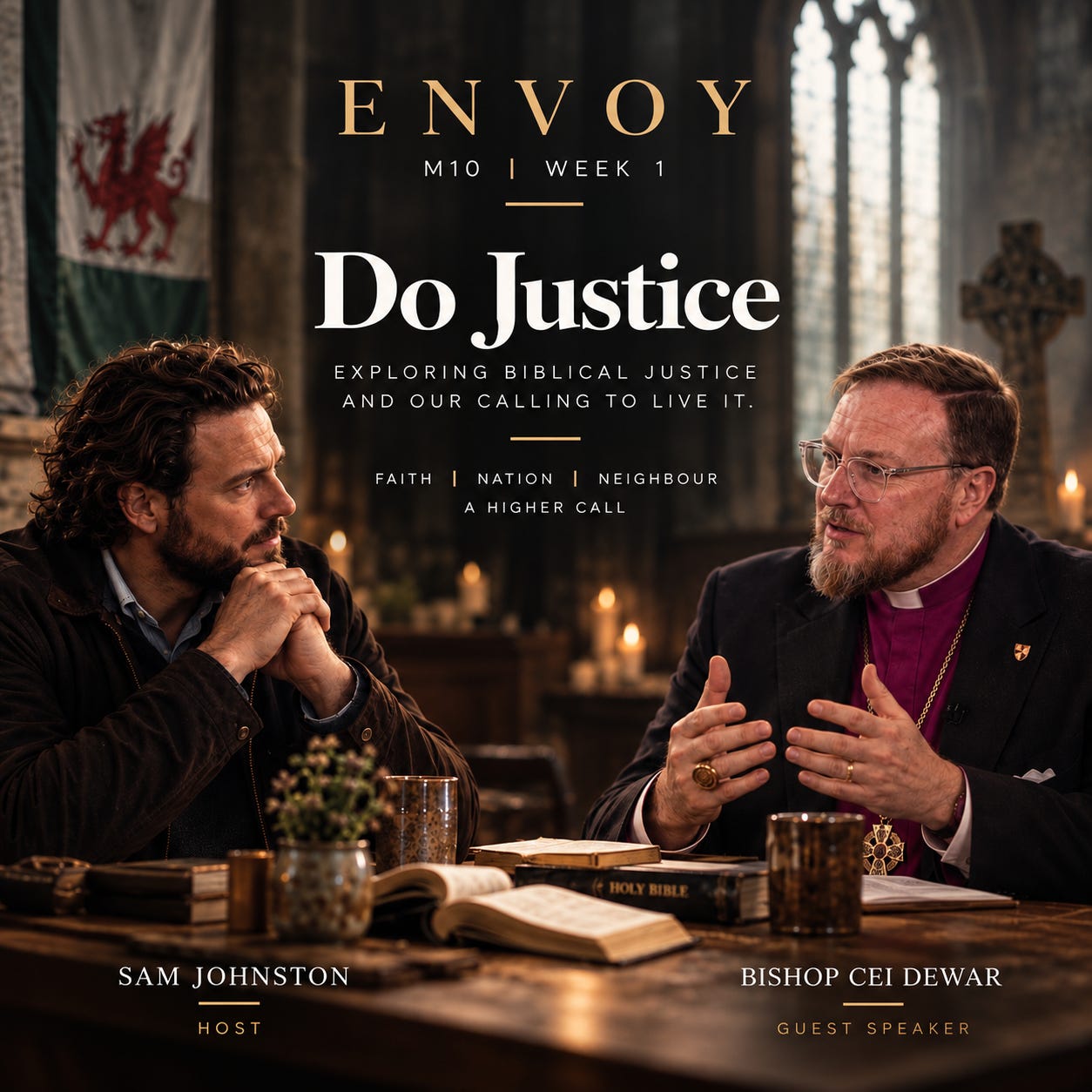
Month 10 - Justice & Mercy | Week 1: Do Justice
Anchor Scripture
“He has told you, O man, what is good; and what does the LORD require of youbut to do justice, and to love kindness, and to walk humbly with your God?” - Micah 6:8 ESV
This week, Bishop Ceirion H. Dewar FSHC joined us for our Rally Point Call to explore what biblical justice means and how we practise it as followers of Jesus. We worked through seven questions from the group, moving from the character of God to the everyday choices we make in our homes, churches, workplaces, and communities.
Get the full M1 W1 dispatch below:
Our anchor was Micah 6:8, which calls us to do justice, love kindness, and walk humbly with our God. Here are the main insights from each question.
1. How should Christians define justice biblically rather than culturally?
Bishop Cei began with God’s character. Justice means acting according to what is good, true, righteous, and impartial in His sight. It includes defending vulnerable people, confronting wrongdoing, and recognising every person’s God-given dignity.
He particularly challenged selective justice: we cannot demand fair treatment for people we sympathise with while denying it to those we dislike. Our convictions must be tested against Scripture, including when that challenges our preferred political position.
Takeaway: Ask what God says, and apply that standard consistently.
2. Why must justice, mercy, and humility remain together?
Bishop Cei warned that separating them distorts our response to wrongdoing. Justice without mercy can become vengeance. Mercy that refuses to confront wrongdoing becomes an excuse for inaction. Without humility, we become self-righteous.
He brought us back to the cross, where sin is taken seriously and mercy is extended to sinners. Remembering our own dependence on grace helps us defend those who have been harmed while remaining willing to seek the offender’s repentance and restoration.
Takeaway: Confront wrong with the humility of someone who also needs forgiveness.
3. What does doing justice look like in ordinary Christian life?
His examples were deliberately practical: paying what we owe, defending someone being gossiped about, refusing to repeat allegations we haven’t verified, and treating the cleaner with the same dignity as the chief executive.
He also spoke about noticing elderly neighbours, protecting children, feeding hungry people, and speaking for someone who has no voice in the room. Sometimes justice involves lovingly telling someone that what they’re doing is wrong.
Takeaway: Begin by examining how you treat the people immediately around you.
4. What can the early church teach us about caring for the vulnerable?
Bishop Cei emphasised that the early church built practical care into its shared life. Drawing on Acts, he pointed to believers sharing resources and the apostles responding when widows were overlooked in the daily distribution.
His challenge was that compassionate opinions must lead to compassionate action. Churches should consider how their time, resources, and relationships provide meaningful help for people in need.
Takeaway: Make care a regular part of church life, with people and resources committed to it.
5. How did Jesus hold truth and compassion together?
Bishop Cei used Jesus’ encounter with the woman caught in adultery to illustrate mercy alongside a call to leave sin behind. Jesus resisted her destruction while still taking her actions seriously.
For the church, that means recovering the ability to love someone deeply and speak honestly about what is wrong. Compassion must not become avoidance, and truth must be communicated with love.
Takeaway: Seek the person’s good in both what you say and how you say it.
6. How should Christians respond when a political movement identifies a genuine injustice?
Bishop Cei urged discernment. We should acknowledge a real injustice even when someone we distrust identifies it. But recognising a problem does not make every proposed remedy right.
He encouraged us to examine both the claim and the solution against Scripture, human dignity, responsibility, mercy, and humility. He also stressed that the church must hold every political side accountable, because our ultimate allegiance belongs to Jesus Christ.
Takeaway: Assess each issue honestly without handing your conscience over to a political party.
7. What is one practical step we can take this week?
His answer was simple: “Start with one person.”
Ask God who He has placed within your reach. Help a struggling family, defend someone being unfairly spoken about, forgive an offence, or apologise for something you’ve said. Bishop Cei shared that he had recently needed to make an apology himself.
Then repeat that faithfulness tomorrow. His closing encouragement was to stop waiting until we can change the whole world and begin making a difference in someone’s life.
Takeaway: Choose one person and one concrete act of justice or mercy this week.
SNEAK PEEK | MONTH 10, WEEK 2 - LOVE MERCY
Anchor Scripture:
“Be merciful, even as your Father is merciful.” - Luke 6:36
Next week, we’ll continue our Month 10 study by looking at what it means to love mercy.
We’ll explore mercy as part of God’s character, how Jesus embodies it, and why Christian mercy is never weakness, compromise or the avoidance of truth.
The question is simple:
Do we only value mercy when we receive it, or have we become people who love to give it?
I’m glad you’re here.
Let’s run the race - Eyes Up, Chin Up!
Grace and peace,
Sam Johnston
Youtube Channel | Spotify | Instagram | Free Christ-Focused Business Course