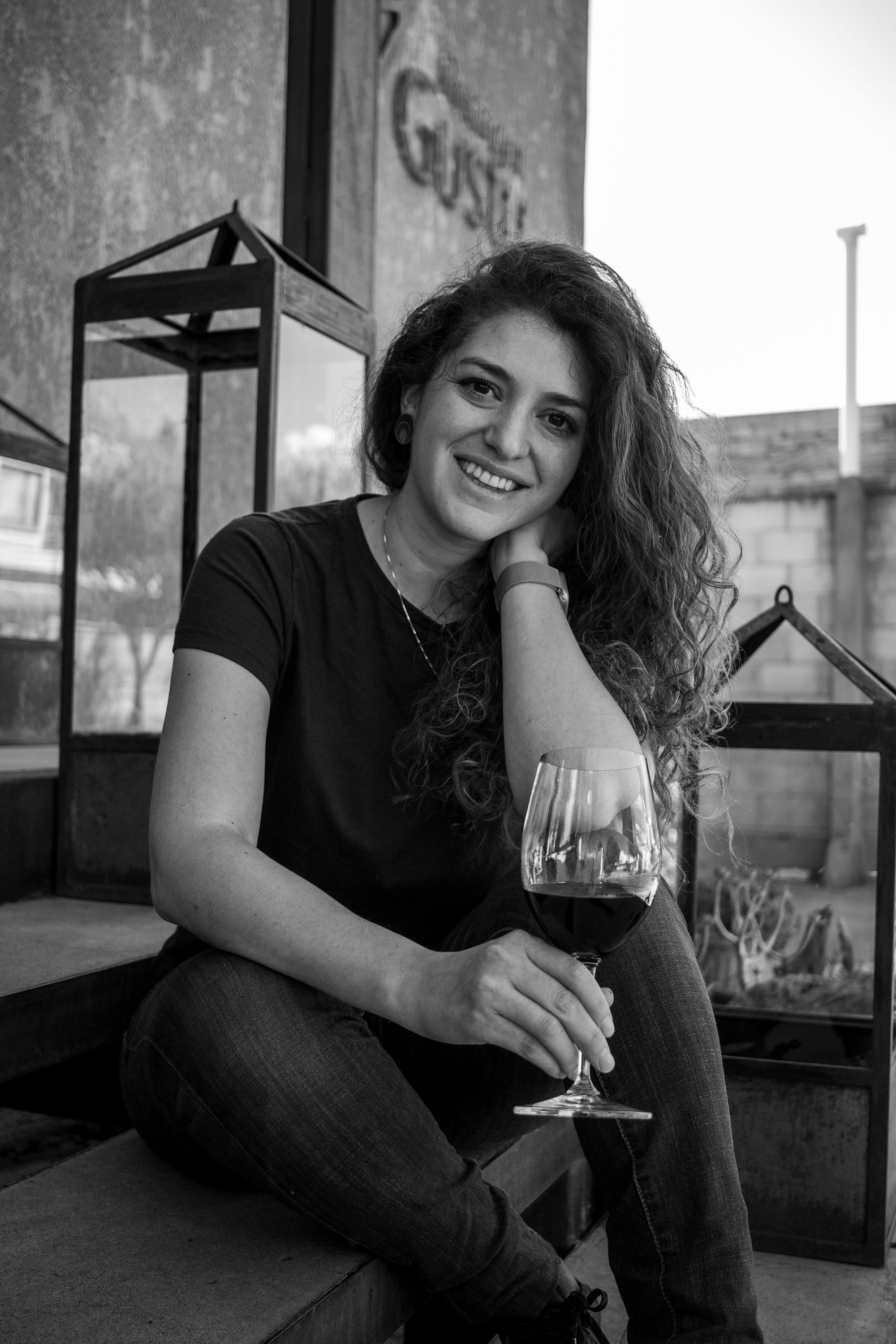
Andrea Moscoso-Weise, the restaurant manager and beverage director of the restaurant Gustu in La Paz, Bolivia. Born in the highland town of Cochabamba, Moscoso was trained as a sociologist, and during the pandemic created a digital platform there called De Raíz, which connected artisan producers of vegetables, wine, beer and other foods with the public. Later, after a meal at Gustu, she dropped what she was doing and decided to move to La Paz for an internship at the restaurant. When her internship was up and she was about to return to Cochabamba, she was offered a job at the restaurant and she has been there ever since.
Did you know you can also listen to the New Worlder podcast on Apple podcasts, Spotify, and most other podcast sites?
In our discussion, we talk a lot about wine. Bolivia has a burgeoning wine scene. You may have heard our interview with Jardin Oculto’s Nayan Gowda, but Bolivia has some incredible wines, especially the ones coming from old vines and criolla varieties. The sommeliers of Gustu have been one of my primary means of being introduced to new Bolivian wines since the restaurant opened. First it was Jonas Andersen, who now actually runs a wine shop called Folkways beside the train station in Croton Falls north of New York City and its wonderful. I went there the other day actually and it’s by far my favorite area wine shop, plus they do nationwide deliveries if you need a a good natural wine purveyor. Then there was Bertil Tøttenborg, who now lives in Brazil but is still active in the Latin American gastronomy scene. And now Andrea is there and it’s a really exciting moment, so there was lots to talk about her.
We also talk about this pull this particular restaurant has on people. I’ve been going there since Gustu has opened and I have felt it every time I have been there. It has a way of taking someone in and bringing out the best in them. If you ask anyone that has ever worked there will probably tell you that. We spoke with chef Marsia Taha about it in an earlier interview. The restaurant has such a purity in what they are trying to do, in a way that is hopeful and real. And what they do is far more than just a restaurant, but have inspired culinary and human development in Bolivia in everything the long arms of gastronomy touch, and that’s a lot of places.
New Worlder is a reader-supported publication. To receive new posts and support my work, consider becoming a free or paid subscriber.
Gustu was started with funding from Claus Meyer’s Melting Pot Foundation. Meyer is a well-known chef in Denmark and famously founded Noma, so media coverage of Gustu tends to attribute a lot to Meyer. Every once in a while there is a story that comes out that tries to paint the restaurant as neo colonialism because a Danish person helped establish it. There was a story like that about Gustu written by a writer in Alicia Kennedy’s newsletter after this interview was recorded and that’s why I’m bringing it up now. I think the writer wanted to say that you cannot get to know a culture’s food just by eating at fine dining restaurants and I completely agree with that. However, it was framed in such a way that they used the specific case of Gustu as an example of all of the wider systematic problems surrounding fine dining in developing countries. To make that case, there were a lot of assumptions and other inaccuracies about what Gustu is and how they work. Here’s the thing: Gustu completely breaks the mold.
For one, there was something that was extremely important that got overlooked in this story: Gustu is run by an entirely Bolivian staff. Many of them are indigenous and come from rural backgrounds. I think in the story of Gustu, way too much media attention has been paid to Meyer and anything to do with New Nordic food. I think it was an easy narrative when they opened 10 years ago because it gave a restaurant in Bolivia instant credibility for both local and international media. It got them to pay attention and it got people in the door, which was necessary to make this very unlikely experiment work. From what I have personally seen, Meyer has been pretty hands off of the entire project since the very beginning. Kamilla Seidler and Michelangelo Cestari, who are not Bolivian, helped launch the restaurant as chef and manager with an otherwise almost entirely Bolivian staff. The work they did in not just building logistics for the restaurant, but listening and engaging with local concerns and issues, was remarkable and should be applauded. The restaurant has had a couple of foreign sommeliers, but as soon as there was someone able to take over those positions that was Bolivian, they did. Marsia has been the head chef for a while now and continues to do incredible things, not only the kitchen but in the quiet leadership outside of it that never gets enough attention. Sumaya Prado, a communications director and administrator, has been there since the beginning and has fought tooth and nail to keep Gustu moving forward in the most honest and transparent way possible. Meyer and others from the Melting Pot Foundation have been there for guidance when asked for it. No one in Denmark has ever made money off of Gustu. All profits have stayed in Bolivia and have been reinvested into the employees and rural communities. So to say it has not been a project run by Bolivians is completely misleading.
To be fair, I pointed this out to Kennedy and she made a note of it in a follow up. She also responded that “it’s important to ask questions about who’s setting the standards by which we define a “best” restaurant, why we need to create the “next great culinary destination,” and whether the vision of New Nordic needs to be spread around the world.” I think these are fair questions and I ask them all the time. I especially wonder about why tourism and outside validation is overemphasized in Latin America, and I also routinely question international ranking bodies trying to define regional gastronomy. I think it’s important to think about why they need to be asked, though in this particular case it’s a distraction from what Gustu’s actual goals have always been.
The article also pointed out problems with language being used in stories written about Gustu, which I would also agree with. I think there was a moment in Latin American gastronomy, about ten years ago, around the time the Latin America’s 50 Best list was launched, where food media was trying to define what was happening in Latin American gastronomy and was using phrases like “elevating a cuisine” and “discovering ingredients.” Obviously, you cannot elevate a cuisine. Adding fine dining techniques to heritage ingredients doesn’t make them better or the best. They are just another variation of using them, which can sometimes lead to important things. Also, no one is discovering anything that has been in use for centuries. The same goes for Machu Picchu, by the way. Hiram Bingham may have been the first outsider to encounter it, but there were people farming there at that time. That’s a bit of a sidetrack, but still, this language was mostly being used by the media which was trying to put into words what was happening and trying to understand how fine dining in this region fit with the rest of the world. It was just sloppy writing in most cases; a lack of understanding of what was actually happening.
So, what has been going on over the past 10 to 20 years in the region? Without going too deep into it, rapid development and globalization was and is happening, a lot of it tied to international trade agreements. These things have had a tremendous effect on traditional food systems, which were already being disrupted by a number of other things. The gastronomic heritage of the last millennia was and still is being lost. Extremely rapidly. The diversity of what farmers are growing becomes narrower every single day. This is because of changing markets, because of …