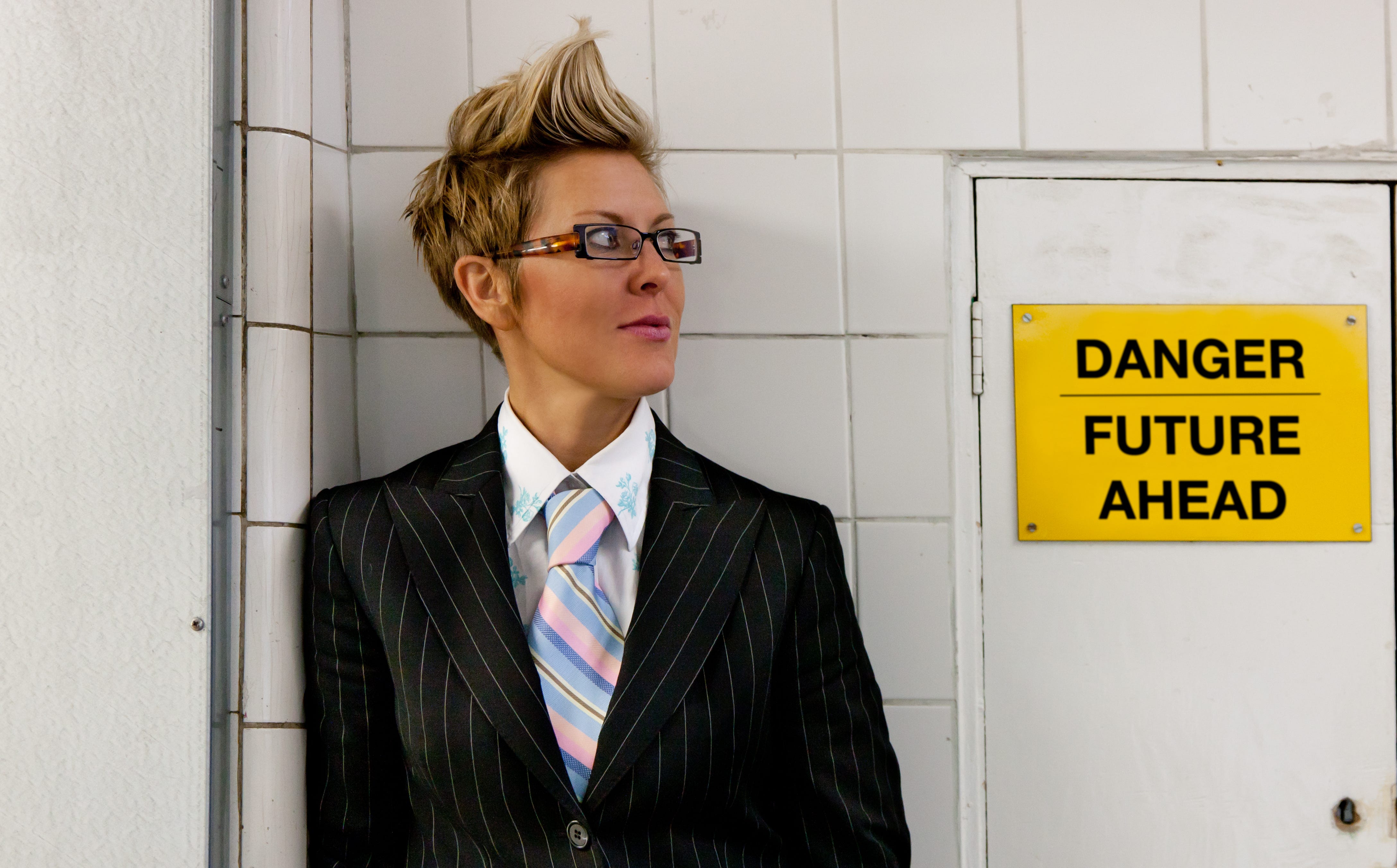
It underpins our society and the way that we live, the way we share. We commune, it's cultural, it's religious, it's societal. It's everything that we do. But it's also - as I say - just dinner. And so it has lots of meanings and it has, in some ways, no meaning at all.
In this episode, fellow adventurers, we’re exploring the future of food, glorious food.
I talk to food futurologist Dr Morgaine Gaye about her trend forecasting that supports innovation at global brands like Unilever, Mondelez and Mars. Our conversation is wide-ranging and lively - you’ll hear Morgaine’s rarely-shared predictions for future themes in our food, find out how she became a futurologist, confront what Dr Gaye believes will be an extended period of disruption and unearth newer, clearer connections between fashion, technology, geopolitics and broad societal change.
I hope you enjoy our conversation and take something away that you can apply in your life and in your conversations :)
Please shout with any feedback you have, and if you liked the podcast, do give us a rating - I truly appreciate it.
Onwards!
WM
Links
Credits
* Lorne Armstrong of Fathom XP for the introduction
* Ross Breadmore for continued support and ideas
* Lee Rosevere for intro music
Automated transcript
Will McInnes 03:10
I was thinking before this, it would just be brilliant. To get a sense of your story. Like how, how did you get to being a food futurologist? You don't like this question!
Dr Morgaine Gaye 03:25
Oh, goodness, this is the hard. This is the hardest of all questions, really, I think like most people, they end up doing a job that they didn't expect to be doing. And I also believe that the thing that we think about trying to avoid is the thing that we draw to us. And definitely, as a teenager, might you know what this the only subjects I really hated at school was what we used to call home economics, which was sort of cooking and sewing and I really didn't like it at all, and I had some horrible disasters that really, were soul destroying in the cookery class where I ended up with the largest 10 on everybody else got the tins first for the Victoria sponge, I got the I got I got the 10 that was too big. So my Victoria sponge never met in the middle. And it was just like a thin wisp of emptiness in the middle and it was, I mean the whole thing itself must have been less than a centimetre thick. It was a poor link like a pancake. And I didn't even take it home was just horrible. So so those are those sorts of food experiences. And my mother was a butcher and my father was a bodybuilder who a power lifter actually and used to sort of want to bulk up so would be eating baby food has calories back in those days and all of the things that you could do to gain weight so there's a lot of I found mealtimes with the family really stressful. I didn't like it. I was always forced to eat things I didn't want to hear I just food was just for me, not a pleasant space. And I definitely remember thinking that is definitely not a place. I want to go Don't want to be involved in food whatsoever and low and low Here we are. But I do think that really my title food futurologists is a little bit of a red herring because the food part does make people think that I am eating my way around fabulous restaurants in the world or know a lot about cooking or, and really that is the very small end of the wedge of what I do, which is a lot more, I suppose, anthropological or distich trend forecasting. So I'm looking at lots of other things in order to forecast and think about future scenarios. And food is is the biggest part because of course, it underpins our society and the way that we live the way we share. We, we commune, it's cultural, it's religious, it's societal. It's everything that we do. But it's also it is also as I say, it's just dinner. And so it has lots of meanings and it has, in some ways, no meaning at all. So it's So food really is this like I said this small part of it.
Will McInnes 06:03
I love it. Oh this is gonna be such a good conversation. So because as you say food is so universal and it has so much power and and yet at the same time as you brilliantly put it it's just dinner How did you go from that fabulous sort of set up and the wispy Victoria sponge and into the world of trend forecasting and tell us tell us a few, just a little bit of the some of the steps that that or the way that you When did your way to to where you are now.
Dr Morgaine Gaye 06:36
I think, of course when you look back you see the connections we all do. And at school even during this time of my appalling cooking, I will I was doing things that like school pop psychology age 12 was, I would with my friends, I would say to them for them not to buy sweets and ice cream with their pocket money. Say that just imagine that you don't have these sweets. In fact, if you take this five minutes of your time when you've eaten those sweets, or buy the sweets, eat the sweets as five minutes of your life. Let's condense those five minutes, pretend that you've had those sweets, and then you've saved that money. I wrote, for me, it was like genius. So, I was sort of trying to get my friends to live in a future space. And think about things differently. So so in that way, I was probably slightly doing what I'm doing now and friends now who've sort of seen what I do probably much later on, because I'm not in touch with them have said, Oh, you will like that at school of that's the sort of stuff that you were you were at school, used to wear really weird clothes unlike anybody else. And it wasn't that I was sort of a social outcast. But that possibly I was slightly they used to say you're ahead of the curve. I don't know that for sure. But that's what they were. So that would be what they'd sort of say. So I suppose that somewhere inherently, I had this idea that time is important, and we can, and we, as human beings can think about time in a different way and position ourselves in a different future. And then life moved on. And I guess that after many different trials of things that I thought I would do, because I thought I would be an artist, I didn't want to have a job which would leave me on my own, I wanted something that would connect with people. And I couldn't figure out how to do that in an art form that would also give me a living. So I wasn't very astute at sort of putting those things together. And I think that it really the kind of the icing on the cake of how I became this is a really dear, this is a real terrible cover blow. But my friend who obviously knew that I had these different qualities that's called different qualities at this point, as she was making a progress Which is somewhere Google Hubble somewhere for BBC Worldwide, and it was about the future. And it was called business 2025, which is still the future. There's a it was a long, long time into the future at that point, as opposed to five years. And they needed an extra expert on the show. And on the show, they had some serious sort of older men who for me, I mean, I was at that point in my probably early 30s. And there were men on there who were in their late 50s. And they seemed a lot older than me at that point, I sort of low hairless and things like that. And, and they were these are experts in the future of tech and the future of other things. And she said, I'd like to sit on this panel, here are the six topics. You've got two days to think of a proposition about these six topics into into 2025. And what you what your personal opinion about this future is. And then I went on the show, and they gave me a title and the title was futurology. Just so that was the beginning of that, really is that she gave me a title. And I thought, okay, I can I can do that. And I held my own against these guys. And I just thought, well, maybe I couldn't I can do this. I don't know. That's sort of it. Rather,
Will McInnes 10:17
it's a great, it's a gr…