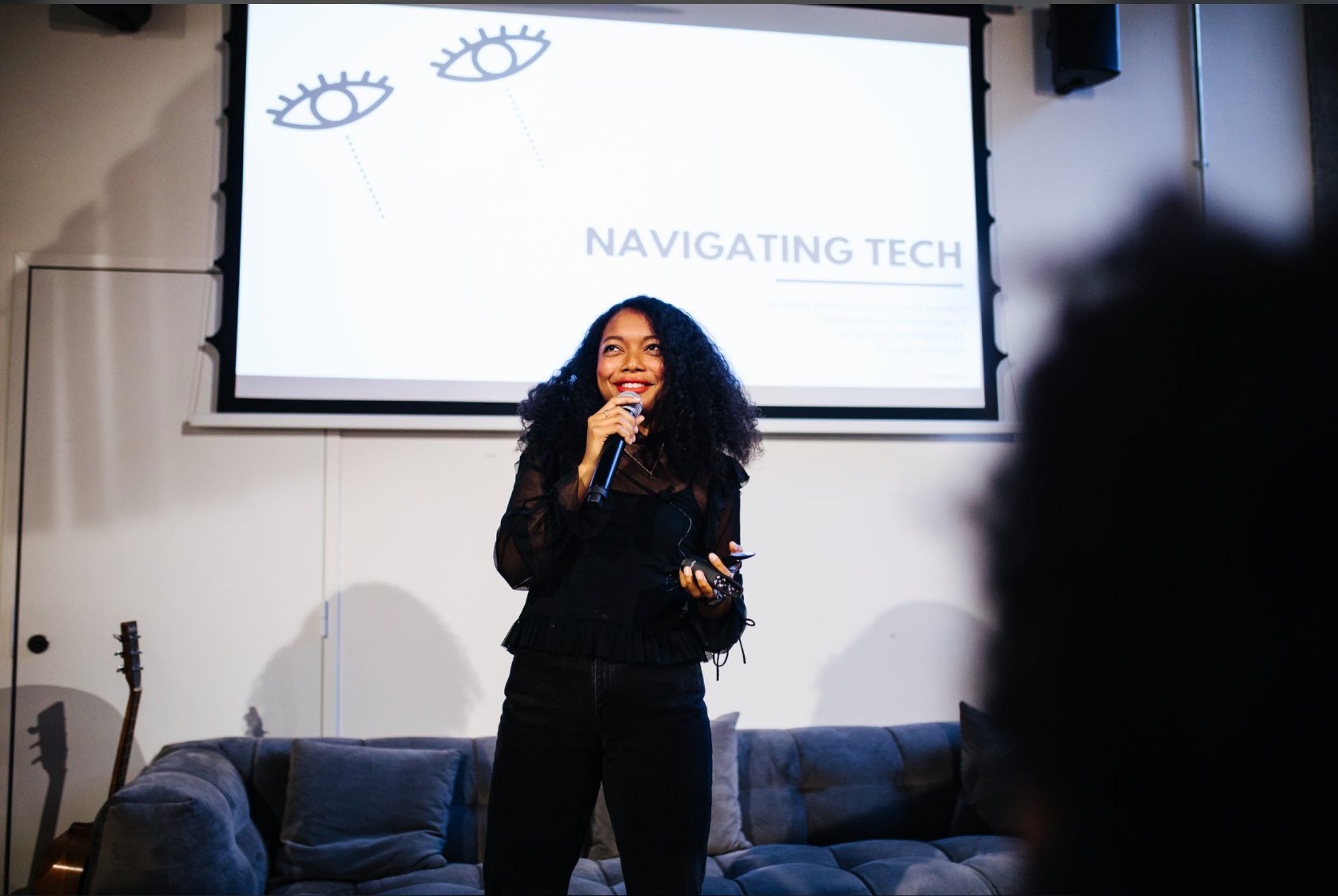
Today our special guest, my colleague and Forbes ‘25 Black Business Leaders To Follow’ Abadesi Osunsade, directs our attention towards an amazingly powerful, personal and precious capacity - our empathy.
‘What are the limits of empathy and compassion, and can we overcome them?’
Aba is VP of Global Community & Belonging at Brandwatch, host of the highly brilliant Techish podcast and CEO of Hustle Crew. Sourced from her hard work and bitter lived experiences having to fight for fairness and equity in the tech community, Aba’s framing question for our discussion gets to the very heart of a whole world of pain we’re experiencing today. It also opens the door to considering perhaps our largest scale opportunity as a species: greater empathy.
In 2020, I can’t think of a more timely and important topic.
When you look at the headlines, when you doom-scroll your social media, perhaps when you walk around your neighborhood or city center, what could the world look like if expanded our individual and collective empathy? Would we need to fight so hard for Black Lives Matter and #metoo? Would the onus be so squarely on those oppressed? Would there be a need for drug policy reform or gender pay gap measures? Would we be treating the planet and its living creatures in the way that we do?
And in the workplace too how can we find the capacity and tools to better empathize? Amongst pandemic, with frontline working in PPE and office jobs now Zoom-meetings-only, with trying to be a good citizen, family member, partner, worker, and stay healthy while the economy judders and everything is disrupted. With a global recalibration happening, a climate crisis burning?
Tune in - I promise you that the breadth of Aba’s knowledge and reading, the clarity of her point of view and the energy of her delivery will command your attention.
Links
* Abadesi on Twitter
* Hustle Crew - a career advancement community for the underrepresented in tech
* Techish podcast with Michael Berhane
Credits
* Lee Rosevere for music
Automated transcriptWill McInnes 00:01Aba Hello. Abadesi Osunsade 00:03Hey, how's it going? Will McInnes 00:05Good. How are you? Abadesi Osunsade 00:06Yeah, I'm really good. Thanks. Looking forward to our convo. Will McInnes 00:10Absolutely. So we've recently started working together. Abadesi Osunsade 00:14Yeah, colleagues Will McInnes 00:16colleagues. So good to say Good to have you on board and to be working together. I'm love your energy and everything you're about. Abadesi Osunsade 00:23Thank you. Yeah, it's also think I'm in like week, nine now or 10. It's going going very quickly. But it's awesome. Will McInnes 00:30And for those that don't yet follow you on Twitter, you're kind of chronicling the journey.Abadesi Osunsade 00:37Even filming offendWill McInnes 00:39me see, me too. So on Twitter, you are, I haven't got your Twitter handle here.Abadesi Osunsade 00:48@abadesi. My first name lastWill McInnes 00:51name. That's like getting the domain name. That's like, you've gotAbadesi Osunsade 00:56I do also have Abadesi.com. So yeah, IWill McInnes 00:59yeah. So @ ABADESI, and I, before you joined brandwatch. But when we were talking about it, I started listening to your amazing Techish podcast. And was just inspired by how you and your co host, Michael, just the energy I was I was doing. At the time, I'd be pedalling away on a bike or an indoor bike, like going up a hill or something. And it was just funny, lively, and caustic moments at times appropriately. So just capturing like, the, the tech news of the day or the week, and there's been, there's been so much isn't there?Abadesi Osunsade 01:49Yeah, there has been too much. I think it's really interesting, like reflecting on tech news, when might you yourself have been a victim of the negative trends that are sort of like playing out in the industry, whether that's, you know, the fact that Michael and I chose to bootstrap partly because we wanted to build a sustainable business, but also because it's black founders, it's so hard to access capital, and then finding out that there's like some closed beta in Silicon Valley, that's just raised 10 million with 2 million of that going straight into the founders pockets. And you're like, wait a closed beta. So how is that proven itself? So yeah, I think as we report on stories, through the lens of our experience and our identity, it can get quite emotional, because there's some really personal moments where you're like, Ah, so I see that there are exceptions to the rules out there.Will McInnes 02:36Big exceptions. And it's been a kind of delight in a weird way, although perhaps the circumstances are different to how we wish they were, but to see Techish rise up, like you're, you've built a community, and that's really obvious in social media. And then to be featured, I think you were featured by Apple on the homepage of their podcasts or something like top business podcasts or something.Abadesi Osunsade 03:06It's amazing. It's incredible. I mean, like all things kind of like a company or a piece of art is like super analogous to all of those things where it starts as an idea in your head. And suddenly, it's something real, that's actually one of the first things I took two jobs to co brandwatch about, because it's just like, Yeah, one day, you have an idea. And then, you know, x months or years later, it's like a thing out in the world. But yeah, like when you use hashtags on Twitter, which I do all the time, I'm not sharing about that, just to see what people are saying, or, and it really resonates with folks who are very interested in tech or participating in tech, but are frustrated with the dominant narratives in tech. You know, they're frustrated with this, like, you know, either like squeaky clean image of like building the future, or this like super like homogenous face of what tech represents people like Mark Zuckerberg, people like to face loss. And it just shows I feel like the trajectory of of tech and how it's grown, that there was an appetite for this perspective, and this voice, and I'm really, really glad that we can deliver it. And it's amazing to also see the number of other like black tech podcasts and other sort of like marginalised and underrepresented groups in tech also stepping out and having a voice because I think we really, really need to if we want things to, you know, be more representative of society in general.Will McInnes 04:20Hundred percent agree. And before we dive into this incredibly interesting question that you've set, and I've written down and I'm absolutely loving the look of it. And before we get into that, I think there's one other lens that the listeners should know, which is, you're also running hustle crew. Yes. Tell us a little bit about that.Abadesi Osunsade 04:43So hustle crew is social enterprise that's been going for over four years now. It was actually started off the back of my own feelings of exclusion in tech. I'd been quite oblivious to double standards around men and women's experience of startups or black and white people's experience of startups until I found myself on their seats. I have like quite a lot of like microaggressions. And just really problematic behaviour that was like impacting my ability to do my job, I was in a commercial role trying to build partnerships expand this app and other regions. And it just kind of came to a head when I quit this job with no next move plan and started to think long and hard about why I had quit and what I wanted to do next. And I felt very strongly that I wanted to do something around increasing representation in the industry, I sort of reflected on the fact that every boss, I'd had didn't look like me, I'm like, What did that mean for, you know, when I was experiencing things that were happening because of how I looked like that was a serious problem. So I got that's how hustle crew started just as a community for the underrepresented in tech to effectively be a netwo…