Playlist
* The Wish - Dave Townsend - 2:51
* To Drive the Cold Winter Away - Martin Simpson - 1:45
* The Houses of Winter - Peter Mayer - 4:25
The Wish (aka The Trees Are All Bare)The lyricsof this song derive from a poem written by Thomas Brerewood of Horton, Cheshire who died in 1748. It was part of a series about the seasons. When that poem was first set as a song is unknown. The earliest dated reference to music for it is by a “Mr. Lockhart” in 1813 but that tune is not documented. Sung versions spread and became folk-processed into many variants all across England under many names such as The Turn of the Year, When the Trees Are All Bare, and The Timid Hare. There are also many broadsides (printed lyrics sheets) in the Bodleian Library and in other archives. It was clearly very popular throughout the 19th century.
The song faded from usage during the early 20th century. The melody was unknown until it was discovered in that living archive of English folk music known as the Copper Family. The Coppers have lived in the small village of Rottingdean in rural Sussex since the 16th century. They sang an orally-transmitted repertoire of old English songs together in a rustic harmony style.
The Copper’s repertoire of obscure old songs first caught the attention of collectors of traditional songs in the late 19th century, and a new generation of song-catchers came to them during the 1960s to find ones that previous collectors may have missed. Sure enough, cousins Bob and Ron Copper were still singing the old songs, and among them was this variant of The Trees Are All Bare, which they called simply the Christmas Song.
The song is sung here by the scrupulously authentic heritage musician and folksinger Dave Townsend accompanying himself on the concertina. It is from the Oxford Waits and Mellstock Band’s now out-of-print album Hey for Christmas, released in 2000, where the song is called The Wish. As always, Dave Townsend tells about the song’s background in his liner notes.
The melody he uses is the one sung by Bob Copper, but the lyrics are from an old broadside dated April 1794 which is more similar to the original poem. It also includes the original second verse, which is rarely included in other variants. (As the author of this website has noted; “The people who kept this song alive presumably knew that peasants rarely had the chance to be inactive, and they had more sense than to be outdoors on a freezing cold day.”)
The lyrics for this version are:
When the trees are all bare, not a leaf to be seen,And the meadows their beauty have lost.When Nature’s disrobed of her mantle of green,And the streams are fast,And the streams are fast, fast bound with the frost.
Whilst the peasant inactive stands shivering with coldAs fleet the winds northerly blowAnd the innocent flocks run for ease to the coldWith their fleeces all,With their fleeces all, all covered with snow.
In the yard when the cattle are foddered with strawAnd they send forth their breath like a steam.And the neat-looking dairy maid finds she must thawFlakes of ice that she finds,Flakes of ice she finds, that she finds in her cream.
When the birds to the barn door come hovering for foodAnd with silence they rest on the spray.And the poor timid hare in vain seeks the woodsLest her footsteps her course,Lest her footsteps her course should betray.
Heaven grant in this season it may be my lot With the nymph whom I love and admireWhilst the icicles hang from the eaves of my cotI may thither in safety,I may thither in safety retire.
To Drive the Cold Winter Away The tuneis even older than The Trees Are All Bare: It is well documented that it dates back at least to the 17th century and lyrics for it are also found in a number of printed broadsides from that time, the oldest being dated 1625. It has a more-than-common variety of lyrics and titles, which are indications of extensive evolution through oral learning and polishing by many generations of singers, but all express a similar sentiment that the way to drive away cold winter is by filling the season with goodwill and festivities.
Remember, the latter 17th century was the time when the observation of Christmas had been banned by both Parliament and the Church of England, but exuberant celebration of midwinter (not Christmas as such!) was continued in public mainly by young rowdies.
Its melody is known because John Playford set it down in his dance tune-book The English Dancing Master, published in 1651. His name for it is When Phoebus did Rest, which presumably was the opening line of one of the more wide-spread variants. This simple-but-elegant cello rendition is by Martin Simpson and is from a 2000 album called Beautiful Darkness. If you want to try singing along there are many versions of the lyrics available online (for example, from here.)
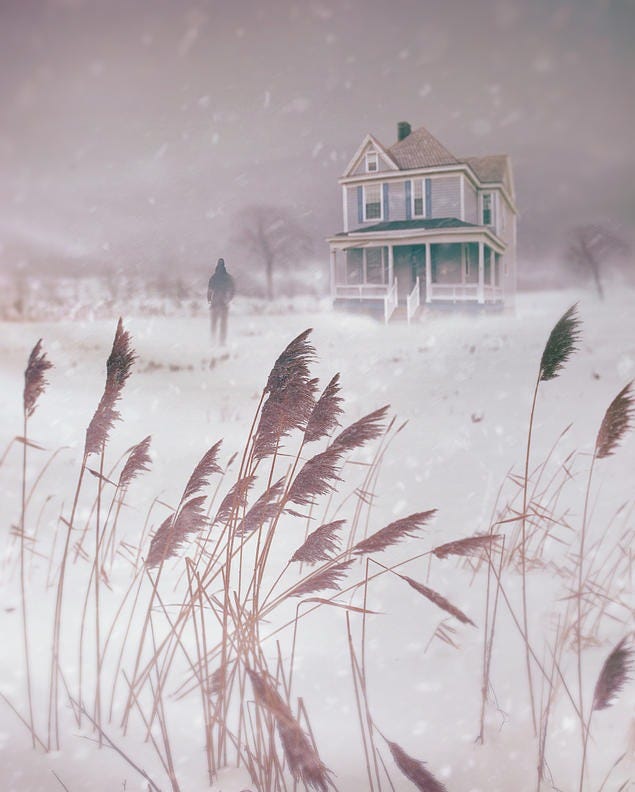
The Houses of Winter This is a relatively new song, written by singer-songwriter Peter Mayer who lives in Stillwater Minnesota, not far from where I spent every July as a child and where I lived during my high school years. It is from his self-published 2005 album Midwinter (which might be the best midwinter music album that I have in my entire collection!) He does not include any information in his liner notes or on his website about the source of inspiration for this song, but I guess it is pretty self-explanatory.
The houses of winter stand in a rowWith chimneys that billow and windows that glowThey play out their scenes for the snow drifts and icy streets at nightInside they are clearing their dishes awayWatching the news and recounting the dayAnd reading their children stories before their bedtime
And when the rites of the evening are doneThe lights in the windows go dark one by oneUntil the inhabitants all fall asleepAnd the houses of winter become houses of dreams
And they tend their fires with care And whisper a prayer For their dreamers’ safe-keeping As the cold blows wind at the doors And hangs icicle swords Where his captives are sleeping
The houses of winter stand in the coldFending off blizzards and murderous lowsBiding their time till they breathe in the April breeze againHarboring lives with their walls and their roofsWatching like mothers watch over their broodsWakeful as monks meditating before the day begins
And in the darkness, before the day startsThey ponder the purpose in their furnace heartsAnd hope that the people for whom their hearts burnWith love, the long winter, will love with their own hearts in turn
And they tend their fires with care And whisper a prayer For their dreamers’ safe-keeping As the cold blows wind at the doors And hangs icicle swords Where his captives are sleeping
And Orion holds court in the sky And night owls fly above frozen rivers And dreams, like chimney smoke rise From behind the closed eyes In the houses of winter