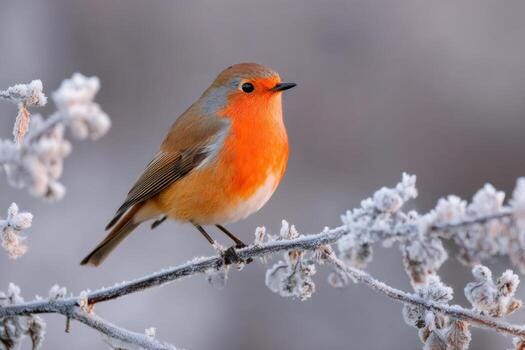
[Notes: Today’s posting of Wee Robin’s Yule Sang and its backstory is a perfect example of the principle that work expands to fill the time available for its completion. It proves that I have had a lot of time to spare since I completed this year’s mailouts well ahead of schedule. I said on Christmas that that would be my last music posting of the year, but that doesn’t prevent me from giving you this spoken word one. (But don’t speculate that there will be another surprise tomorrow - there won’t be.)
Also, last year I rather enjoyed writing my “reminiscence” essays documenting my intentions, processes, and lessons learned from each year’s musical compilations. Even though I know that part of my writing is much more for my own satisfaction than for you readers, below the information about this spoken word track I will do the same about my compilation of this year’s series of songs, tunes, research, and musings.]
Wee Robin’s Yule Sang
This story was collected by Robert Burn’s biographer Robert Chambers in about 1850 when he was working on his four-volume The Life and Works of Robert Burns. Chambers apparently did not include the story in that work. But he did publish it soon thereafter in an expanded edition of his already-massive folklore collection Popular Rhymes of Scotland (which had first been published in 1826).
The story came from the poet’s youngest sister Isabella (1771–1858), known as Isbal by the family, who said that this was one of the stories that her brother Rabbie had made up to entertain his younger siblings when he was about 20 years old and the family lived at Lochlea Farm. That would have been between 1777 and 1784, when Isbal was 6 to 13 years old. She was almost 80 years old when she recited the story for Chambers. Her married name was Isabella Begg.
Chambers interviewed Mrs. Begg several times between 1847 and 1850 as he compiled what he intended to be a definitive collection of Robert Burns’ writings. By that time Robert Burns (1759-1796) was widely recognized as having been Scotland’s greatest poet, and any newly-discovered work by him, even juvenilia and with questionable provenance, was considered to be an important discovery.
Isabella was a useful and important source of information for Chambers, even though some of the factual information that she gave him in those elder years later proved to be incorrect. She said that she was telling the story as she remembered having heard it from her brother, but since she had been a the mother of nine children herself, and was a teacher during much of her life as a widow, she had probably told the story many times herself over the years.
There is no other source for this story, and since it is neither a poem nor a song but was told as children’s storytelling when he was quite young, it is not typical of Burns’ later work. Some Burns scholars suspect that while the story itself probably originated from her brother, Isabella may well have changed the wording over time to suit her own storytelling style. You can judge for yourself whether this is fine storytelling for children regardless of who may have written it.
Soon after Chambers published the story in his large hardcover collection of Popular Rhymes, in 1860 the story was republished (with attribution to Chambers) by Griffith and Farran individually in an illustrated book under the name The Robin’s Yule Song, who described the story as being “by Robert Burns as retold by Isabella Burns”.
The idea of a European robin (which are much smaller than our North American ones) marrying a wren was already and old scenario, first found in literature from around 1400. In the mid-18th century, when Isbal says she leaned the story from her older brother, the Mother Goose stories were very popular, and one of those was a long poem (that is usually presented in much-shortened form) entitled The Marriage of Cock Robin to Jenny Wren. The story attributed to Robert Burns is basically an alternate backstory for that marriage.
This rendition is by Scottish folksinger Alistair McDonald and is from his 1996 album Honest Poverty. I don’t have that album (I got the recording from YouTube) and can’t find McDonald’s liner notes that might indicate his source for the words online. But, except for a slightly abridged beginning and end, they appear to be either from the Chambers volume, the 1860 illustrated single-story booklet, or from subsequent inexpensive chapbooks that were published by Edinburgh’s non-profit Saltire Society whose objective is to preserve Scottish culture. In 1908 a booklet with this poem was published with the same title that Alistair McDonald gives to this recording - Wee Robin’s Yule Sang. Perhaps that is a minor variant that he is reciting here.
By the way, if anyone recognizes the tune that accompanies this story please let me know what it is; I’d like to include that information here. [Update: Thank you to Denis Donnelly and Beth Skala for recognizing that this seems to be the same melody as When Johnny Comes Marching Home. After having that pointed out I did a little digging into that song’s history and found out that, by way of a pub song that was popular in America at that time, it is the an old Scottish and English tune John Anderson, My Jo for which Robert Burns wrote one variant of its lyrics. For more info about the tune and its earlier history, see here and here.]
I got this text of the 1860 Griffith and Farran booklet from the story’s Wikipedia entry, and the etchings by “W.F.F” and glossary that appeared in that same book from Google Books.
THERE was an auld grey Poussie Baudrons, (Pussy cat) and she gaed awa’ down by a water-side, and there she saw a wee Robin Redbreast happin’ on a brier; and Poussie Baudrons says: “Where’s tu gaun, wee Robin?” And wee Robin says: “I’m gaun awa’ to the king to sing him a sang this guid Yule morning.”
And Poussie Baudrons says: “Come here, wee Robin, and I’ll let you see a bonny white ring round thy neck.” But wee Robin says: “Na, na! grey Poussie Baudrons; na, na! Ye worry’t the wee mousie, but ye’se no worry me.”
So wee Robin flew awa’ till he came to a fail fauld-dike (Turf wall enclosing a field), and there he saw a grey greedy gled (Kite) sitting. And grey greedy gled says: “Where’s tu gaun, wee Robin?” And wee Robin says: “I’m gaun’ to the king to sing him a sang this guid Yule morning.”
And grey greedy gled says: “Come here, wee Robin, and I’ll let you see a bonny feather in my wing.” But wee Robin says: “Na, na! grey greedy gled; na, na! Ye pookit (pluck, strip) a’ the wee lintie (Linnet), but ye’se no pook me.”
So wee Robin flew an’ till be came to the cleuch o’ a craig (Face of a rock) and there he saw slee Tod Lowrie (Mister Fox) sitting. And slee Tod Lowrie says: “Where’s tu gaun, wee Robin?” And wee Robin says: “I’m gaun awa’ to the king to sing him a sang this guid Yule morning.”
And slee Tod Lowrie says: “Come here, wee Robin, and I’ll let ye see a bonny spot on the tap o’ my tail” But wee Robin says: “Na, na! slee Tod Lowrie; Na, na! Ye worry’t the wee lammie; but ye’se no worry me.”
So wee Robin flew awa’ till he came to a bonny burn-side, and there he saw a wee callant (boy) sitting. And the wee callant says: “Where’s tu gaun, wee Robin?” And wee Robin says: “I’m gaun awa’ to the king to sing him a sang this guid Yule morning.”
And the wee callant says: “Come here, wee Robin, and I’ll gie ye a wheen grand moolins (some crumbs) out o’ my pooch.” But wee Robin says: “Na, na! wee callant; na, na! Ye speldert the gowdspink; but ye’se no spelder me.”
So wee Robin flew awa’ till he came to the king, and there he sat on a winnock sole (Window sill) and sang the king a bonny sang. And the king says to the queen: “What’ll we gie to wee Robin for singing us this bonny sang?” And the queen says to the king: “I think we’ll gie him the wee wran to be his wife.”
So wee Robin and the wee wran were married, and the king, and the queen, and a’ the court danced at the waddin’; syne he flew awa’ hame to his ain water-side, and happit on a brier.
And here is a retelling (not a translation) of the story in an 18th century Mother Goose style of English by Carolyn Sherwin Bailey that was posted here:
Once upon a time there was an old gray Cat and she was down by the waterside when the trees and ground were white with snow. And there she saw a wee, wee Robin Redbreast hopping upon a branch, so Cat said to him: “Where are you going, Robin Redbreast, this frosty Yuletide weather?”
Then the wee, wee Robin said to the Cat, “I am going to the King to sing him a song this good Yule morning.”
And the gray Cat replied, “Go not yet. Come here, Robin Redbreast, and I will let you see the bonny white necklace I wear around my neck.”
But the wee, wee Robin said, “No, no, gray Cat. You may show the bonny white necklace that you wear around your neck to the little mice, but not to me.”
Then off flew the wee, wee Robin until he came to a wall of turf and there he saw a greedy Hawk sitting and watching to see what small birds passed by. And the greedy Hawk called to him and said, “Where are you going, Robin Redbreast, this frosty Yuletide weather?”
Then the wee, wee Robin said to the Hawk, “I am going to the King to sing him a song this good Yule morning.”
And the greedy Hawk replied, “Go not yet. Come here, Robin Redbreast, and I’ll let you see a bonny green feather that I wear in my wing.”
But the wee, wee Robin said, “No, no, greedy Hawk. You have pecked all the tiny birds but you’ll not peck me.”
Then off flew the wee, wee Robin until he came to a hollow in the hillside and there he saw a sly Fox sitting. The sly Fox saw Robin and called to him, “Where are you going, Robin Redbreast, this frosty Yuletide weather?”
Then the wee, wee Robin said to the Fox, “I am going to the King to sing him a song this good Yule morning.”
And the sly Fox replied, “Go not yet. Come here, Robin Redbreast, and I will show you a bonny spot on the tip of my tail.”
But the wee, wee Robin said, “No, no, sly Fox. You may show the bonny spot on the tip of your tail to the lambs but not to me.”
Then off flew the wee, wee Robin until he came to a little shepherd Lad sitting beside his cot. The little shepherd Lad saw Robin and called to him, “Where are you going, Robin Redbreast, this frosty Yuletide weather?”
Then the wee, wee Robin said to the shepherd Lad, “I am going to the King to sing him a song this good Yule morning.”
And the shepherd Lad replied, “Go not yet. Come here and I will give you some crumbs from my pouch.”
But the wee, wee Robin said, “No, no, little shepherd Lad. You caught the goldfinch but you’ll not catch me.”
Then off flew the wee, wee Robin until he came to the King, and he sat down upon a plowshare just outside of the King’s window, and he sang him a pretty song because it was such a good Yule morning.
The King was very much pleased indeed and he said to the Queen, “What shall we give the wee, wee Robin Redbreast for singing us such a pretty song?” The Queen thought and thought and at last she decided. “I think we will give the wee, wee Robin Redbreast a wee Wren to be his wife,” the Queen said to the King.
So the wee, wee Robin Redbreast and the wee Wren were married and the King, and the Queen, and all the court, and the whole countryside danced at their wedding. And after the wedding the two flew home to the Robin’s own waterside.
There is a more recent retelling of the story in modern English called The Wee Robin’s Christmas Song. It was written by Jennie Ellis Burdick, but personally I think that in the context of Scotland, whether in the late 18th century, when Burns wrote it or in the mid-19th century when his sister Isbal recalled it for Robert Chambers, the word “Yule” might better be translated as Hogmanay, or New Year’s Day since that was the only allowed core festive day for the midwinter holiday season during those times.
On the other hand, celebration of both Christmastide and Yuletide (in the pre-Christian sense of it being an auspicious time of year) were both strictly forbidden by both the Scottish Kirk and by Scottish laws. Those prohibitions were strictly enforced, and in both cases even a minor violation of the prohibition was considered to be a sacrilege. So I suppose those two markers markers of Midwinter do have something in common. And note that the above Glossary from the 1860 booklet of Wee Robin’s Yule Sang defines Yule as being “the name given to Christmas”.
I’ll include a whole essay about the banning of Christmas in Scotland and among Scots abroad in next year’s Bill’s Midwinter Music postings. It was different and much more long-lasting than the prohibitions in England and New England (even though it had similar unintended consequences.)
Reflections on this year’s Sampler-making
This year, I am proud and happy to say, was the most problem-free year I’ve had for this project since my transition from CDs to this emailed “musical Advent calendar” format. I think I’m finally adjusting to the new medium, and getting the right balance for it as a satisfying and enjoyable annual seasonal creative binge
I developed over 20 annual Christmas and Midwinter music Samplers when they were in a CD format, and I got quite well adjusted to that medium. It presented obvious challenges and opportunities for arranging a full 80 minute compilation, often on a particular theme. It also put the task into a particular time-frame. I wanted to get my CD “Christmas cards” into the mail by the beginning of December. So all of the planning, music selection and writing, - the creative parts of the project - were usually done in September through November, and in a couple of years the creative part was done even earlier in the seasons.
In my first few years of the new “musical Advent card” era I sometimes got my timing off kilter. There is far less of the dull drudgery, but I often found myself doing the creative work much closer to the hard deadlines of each day’s postings because I kept getting side-tracked by the fun stuff like rushing down research rabbit holes. That creates a certain adrenaline rush excitement, but also stress.
This year, I had been generating ideas all year, and began doing final selections and writing in early November. By the end of that month I had well over half of the days’ postings ready to go except for final wordsmithing. By mid-December I was still well ahead of the deadlines and I could scale my creative binge back to a very relaxed pace (which is what enabled this bonus posting.)
Separate from the seasonality of the project, this medium calls for other creative differences from producing 80 minute CDs. There is no reason for each day’s listening experience to be cohesive with the day before it, or the day after. Gone is any rationale for an annual theme, and as I hope you have experienced, even individual day’s sets don’t need to be thematic for the music to sound pleasing together.
I am very happy with this year’s 7-10 minute length target, and I’ve done a great job of sticking within my self-imposed ten-minute limit. Not counting the intended double-set on Christmas Day, I only went overtime once, and that was 10:02 on the Winter Solstice.
Besides the length of the sets, you may or may not have noticed a few other changes in my format this year. Whenever possible I tried to track down the lyrics online for every song, and sometimes adjusting them to how they were sung in the rendition they accompany. Sometimes that was easy, and sometimes it could be rather time-consuming. Hopefully that can make these postings more enjoyable for you, and useful for people who stumble upon my posts while doing their own research about these seasonal songs and tunes. (One of my objectives is to leave a lasting legacy in that regard.)
I also put time into searching online for a thematic image for each day’s posting – usually a painting – and telling you it’s source. But that was at the expense of not spending time searching for pictures of the performers or composers of the music. I’m not sure if that was a good trade-off. This year I listened again to my previous years’ postings, and I often found that I liked seeing pictures the singers and musicians. (I usually tried to find photos of them near the approximate age when the recording was made.) I will be reconsidering this for next year, but finding such photos can be time-consuming. I would appreciate your feedback on the matter.
Looking toward the future, I’ve made a few enquiries and people seem to agree that they would prefer that I return to middle-of-the-night mail-out times, enabling listening to the music at the start out the day for those who want to do that. That also better fits my metaphor that this music is a vaccine immunizing you from the shopping mall Christmas music that you will inevitably encounter later in the day.
In addition to this bonus mail-out, I’ve already used the time I saved by getting ahead of schedule this year to develop a chronological list of all of the renditions that I have posted online here, along with brief statements about the kind of information that accompanies them. (Creating an alphabetized index would be tricky since so many of the songs and tunes have alternate names, and titles in various languages.)
The searchable list was mainly intended to be for my own use in music selection, to avoid inadvertent repetitions, and to assist me in finding my past research findings. I also have another list of the topics of my essays, and essay-length music notes. I will post them here for you to use on my archive/blog when I have the lists ready.
So, as you can see, I’m already looking forward to posting this kind of music again next year.