Playlist
* The Abbots Bromley Horn Dance Lisle Kulbach 1:07
* I Am Christmas John Conolly 4:35
* Joy to the World The Mouldy Figs 1:43
Music notes
The Abbots Bromley Horn Dance is an ancient autumn dance that is still performed every year in the small Staffordshire village of Abbots Bromley. It is believed to descend from a pre-Christian stag-hunting ritual,and is considered by folklore scholars to be one of the oldest and most important survivals of community magico-religious ceremony in all of Europe. Musically, like many other songs and tunes related to other holidays this tune has migrated to being associated with Christmas and the Winter Solstice.
The event is performed in the dim twilight of evening by Morris dancers ceremonially engaging each other with the massive horns of reindeer. The antlers used in the dance these days are relatively recent replacements because the ones that the villagers had been using became too fragile. The old antlers have been scientifically analyzed as being British reindeer dating from before they became extinct in that country in the 12th or 13rd century.
This simple recorder version of the tune was played Lisle Kulback to accompany the opening scene for one of the early performances of The Christmas Revels, a Christmas pageant tradition that began in New York in 1957 but which is now held by local affiliates in several American cities. I got this recording from the CD version of the Revels’ first album; issued in 1978 which is called simply The Christmas Revels.
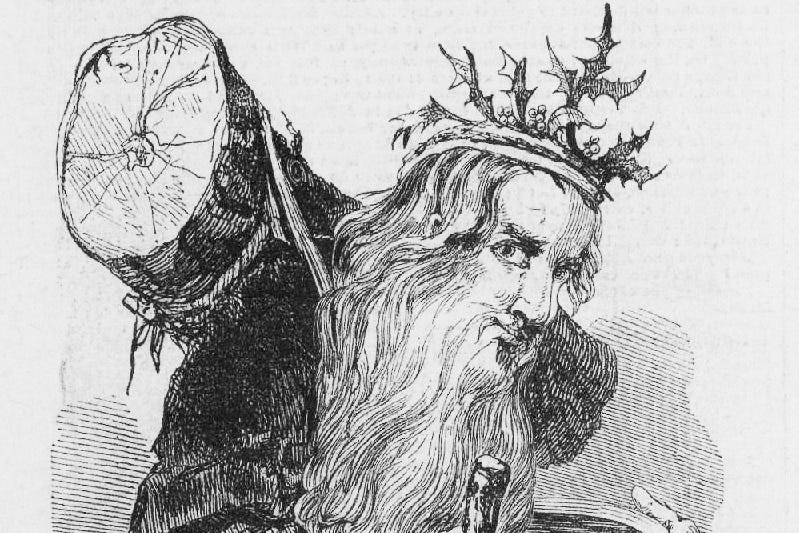
I Am Christmas was written by John Conolly and Bill Meek, with Meek credited for the haunting lyrics. John Conolly recorded it on his 2008 album The Grumpy Old Men of Old England, but I got it from this YouTube video that he posted at that time. I posted another rendition of this song on Dec 2, 2021 in which I give a bit more background information about the song.
Here are the lyrics:
I will sew a braid of gold on grey December’s ragged sleeveTeach the crabbed and jaded soul how to give, how to receiveFor rooms are thick with magic now, the tree its soft light throwingThe mistletoe, the holly bough, my age-old spell bestowing
For I bring stories by the hearth, delight in half-forgotten namesApple logs on fragrant fires with flick’ring faces in the flamesAnd as the year draws in its days and tired leaves are fallingI will brighten darkened ways where dusk is early calling
I am warmth and I am light, and I am kith and kin A candle in your longest night I am Christmas, let me in, I am Christmas, let me in
I can take the weary miles and weave a carpet to your doorGuide the dusty wand’rers home, safely to your side once moreAnd I can cheer the bitter days with tunes to set you singingMy standard in your heart I’ll raise, joy and comfort bringing
I bring churches all a-glow and carols on the midnight airColoured windows streaked with snow that gild the congregation thereFor young and old shall join and sing to mark the longest turningFrom one glad candle that I bring, ten thousand more are burning.
I am warmth and I am light, and I am kith and kin; A candle in your longest night, I am Christmas, let me in, I am Christmas, let me in [x2]
Joy to the World This version of the familiar carol tune was recorded by a St. Paul, Minnesota bar band called The Mouldy Figs, and is from their 1996 self-published album Have Yourself a Mouldy Little Christmas. It was sent to me as a Christmas present by a high-school friend. (Thanks Kingsley!)
The band members were Rick Anderson on Banjo, John Plomondon on fiddle, Adam Granger - guitar, Dave Faison on Bass, and the group’s leader, the late Jim “Fig” Field on washboard. The band is no longer active, but that is not surprising since in 2003 they issued an anniversary album called Never Trust a Band Under Thirty to celebrate having played together for 30 years.
The poem that became the lyrics for Joy to the World were written by “the father of English hymns” Isaac Watts. Authorship of the melody and arrangement is more complicated, and for a long time was been mis-attributed to either the great Baroque composer Georg Friedrich Handel or to the Bostonian banker and music director Lowell Mason, a leader in 19th century American church music. But recent research has pretty persuasively solved the mystery. If you want to know whodunit, go here.