The Harvard to Hitler Intelligence Conduit investigates the role of Ernst “Putzi” Hanfstaengl in facilitating Adolf Hitler’s rise to power through a sophisticated convergence of elite Anglo-American finance, cultural engineering, and intelligence operations. The podcast positions Hanfstaengl not as a marginal curiosity, but as a pivotal operative engineered to bridge high society and emerging fascism. It draws on documented relationships, financial transactions, and intelligence affiliations to construct a case for coordinated geopolitical manipulation rooted in elite strategy.
Elite Grooming and Transatlantic Insertion
Ernst Hanfstaengl was born in Munich to a German father and an American mother from a prominent family with ties to Franklin Delano Roosevelt. He graduated from Harvard in 1909, where he developed lifelong connections with classmates, including Roosevelt and revolutionary journalist John Reed. By 1911, he had established the American branch of his family’s fine art publishing house on Fifth Avenue. His clientele included J.P. Morgan Jr. and Belle da Costa Greene — power brokers at the heart of the American financial system. These associations embedded him within the elite circles that controlled vast swaths of Western capital, art, and influence.
World War I Context and Intelligence Placement
During World War I, Hanfstaengl remained active in New York despite being a German national. This operational freedom placed him in proximity to known German intelligence agents like Hans Heinz Ewers, a propagandist and espionage intermediary. At the same time, British operatives including Sidney Reilly and Aleister Crowley operated in parallel networks. Crowley’s confirmed role in British Naval Intelligence and his connection to occultist circles added an additional layer of clandestine control. The podcast identifies Ewers as a conduit linking Hanfstaengl to Crowley, embedding Hanfstaengl within a triangle of espionage, propaganda, and psychological manipulation.
Social Leverage and Cultural Integration
By cultivating high-level contacts on both sides of the Atlantic, Hanfstaengl functioned as a dual-national operative with access to American capital and European political extremism. His strategic value intensified when he returned to Germany and inserted himself into Hitler’s early inner circle. He brought cultural capital that the Nazi Party lacked. He introduced Hitler to upper-class circles in Bavaria, expanding the party’s base beyond working-class beer halls. His presence enabled Hitler to reach out to industrialists, media figures, and political influencers. This was not incidental. Hanfstaengl’s cultural background, Harvard education, and psychological sophistication were tailored to shape Hitler’s emotional responses and external persona.
Musical Manipulation and Emotional Programming
Hanfstaengl’s musical skill, particularly his ability to play Wagner and Harvard fight songs, gave him direct emotional influence over Hitler. According to the podcast, he played for hours, using music to excite, soothe, or direct Hitler’s moods. This emotional grooming occurred in private settings, often described as transformative moments for Hitler. The choice of music — Wagnerian heroism fused with American collegiate melodies — symbolized a cultural transference, suggesting an intentional blending of German mythos with American identity. This music programming created a private ritual where Hanfstaengl accessed Hitler’s unguarded psychological core.
Financial Catalyst and Party Preservation
During the hyperinflationary collapse of the Weimar Republic, the Nazi Party teetered on financial ruin. Hanfstaengl’s wife pledged her jewelry as collateral to secure a 60,000 Swiss franc loan — hard currency from a Berlin coffee merchant. That sum enabled the Nazis to pay salaries, rent office space, and print propaganda. It stabilized the organization during a crucial phase. This act positioned the Hanfstaengl family not as symbolic supporters, but as functional financiers. When the Great Depression struck, Hanfstaengl’s own business failed, and he transitioned into a salaried position within the Nazi headquarters, the Brown House. This embedded him deeper into the Nazi apparatus while shifting his financial dependency onto Hitler himself.
Wall Street Convergence and Industrial Re-armament
Hanfstaengl’s personal grooming role intersected with broader systemic flows of American capital into Germany. The podcast cites corporate partnerships in which American firms such as Singer Manufacturing repurposed German factories to produce machine guns, thereby directly contributing to rearmament in violation of Versailles Treaty restrictions. These moves reflected a calculated decision by American capitalists to treat Germany as a bulwark against communism and a lucrative investment arena. The concept of “political stability” became code for authoritarian governance that would secure assets and suppress labor.
Union Banking Corporation and the Bush-Harriman Syndicate
The investigation identifies Prescott Bush and Averell Harriman as financial intermediaries who managed the Union Banking Corporation (UBC), which served as a clearinghouse for the Nazi financier Fritz Thyssen. Thyssen authored the podcast “I Paid Hitler,” documenting his direct support. UBC’s executive structure included representatives from Brown Brothers Harriman, suggesting high-level coordination rather than passive investment. Eventually, UBC was seized under the Trading with the Enemy Act, but the seizure process avoided prosecuting its leadership. The omission underscored their strategic value to the American establishment during the emerging Cold War.
Schacht’s Proposal and Wall Street Endorsement
Dr. Hjalmar Schacht, the architect of Nazi economic policy, proposed a bond issuance backed by German monopolies. The proposal’s success depended on investor confidence in German “political stability.” John Foster Dulles, then a Wall Street lawyer and later U.S. Secretary of State, endorsed the plan and forwarded it to Thomas Lamont of J.P. Morgan. Dulles praised the plan, highlighting financial eagerness to support repressive regimes when fiscal returns aligned with investor expectations. The plan implied a readiness to tolerate authoritarianism to safeguard foreign capital and profit margins.
Strategic Imperialism and British Planning
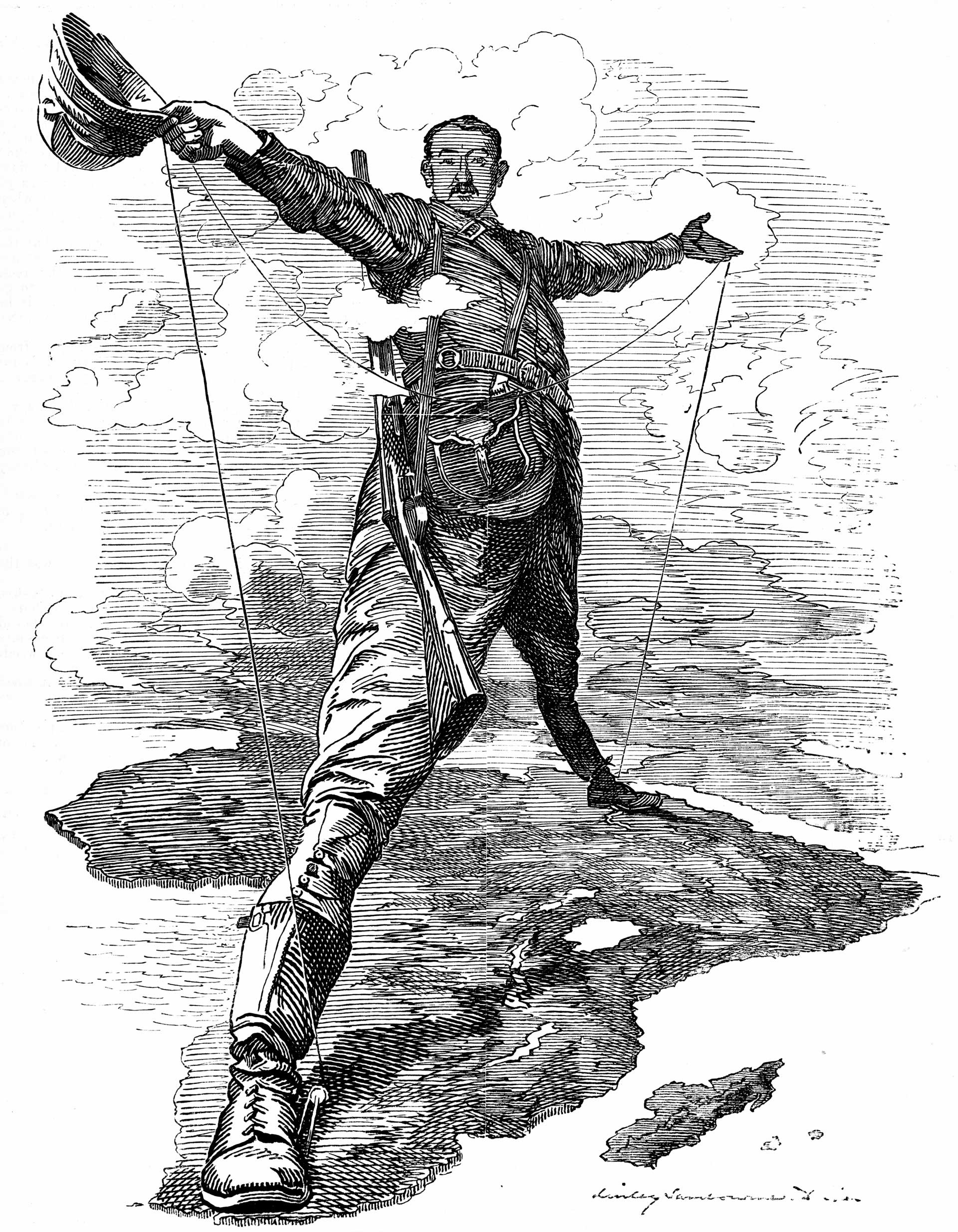
The podcast identifies a deeper geopolitical architecture behind these moves. The Rhodes-Milner Group, an elite British imperialist society, aimed to create a global network of Anglo-controlled territories linking Africa to India. The conquest of German East Africa during World War I was a step toward completing that Cape-to-Cairo corridor.
Lord Balfour and Lord Rothschild shaped policies to maintain imperial control using modern financial and bureaucratic tools. In this schema, Nazi Germany served a catalytic function: to destabilize Europe, ignite war, and trigger Anglo-American intervention that would justify global restructuring.
Putzi as a Groomed Catalyst
Hanfstaengl functioned within this imperial framework as a well-positioned asset. He cultivated Hitler socially and emotionally. He provided cultural leverage, financial stabilization, and transatlantic connection. When he began to criticize the Nazi regime in private conversations, he did so under the protection of his earlier intelligence affiliations. Unlike purged Nazi figures such as Ernst Röhm or Kurt von Schleicher, Hanfstaengl survived, fled, and cooperated with Allied interrogators. He was detained briefly and later used for intelligence analysis.
Survival and Postwar Utility
Postwar, Hanfstaengl lived in Britain and cooperated with historians and intelligence analysts. His interviews with John Toland in 1971 and earlier reports from 1942 underscore his long-term value. He profiled Hitler’s psychological traits and shared unique insights into his transformation. These contributions provided Western intelligence agencies with critical data on Nazi leadership psychology.
This Substack is reader-supported. To receive new posts and support my work, consider becoming a free or paid subscriber.
Function Over Fate
The podcast positions Hanfstaengl not as a passive witness, but as an architect of influence. His blend of cultural finesse, elite pedigree, and psychological engagement equipped him to engineer transformation at the top of a political movement. His orchestration of financial, social, and emotional leverage contributed to Hitler’s ascent and to the system that enabled it. These coordinated efforts suggest that high finance and long-range imperial planning operated through carefully placed agents, capable of altering the trajectory of history.
Geopolitical Consequences
The convergence of Wall Street funding, British imperial strategy, and Nazi militarism reshaped the global power structure. The ensuing war justified massive U.S. financial engagement in Europe, led to the creation of a permanent national security state, and enabled the dollar's dominance in the postwar economy. The Anglo-American alliance emerged strengthened, with centralized control over global capital flows, energy markets, and military influence. This result reflected strategic foresight rather than accidental alignment.
Modern Parallels
In its closing argument, the podcast asks what figures in today’s geopolitical theater might be groomed similarly — positioned through elite education, global finance, and cultural authority to serve as catalysts for systemic upheaval. The pattern it outlines — strategic insertion, grooming, leverage, and deployment — offers a framework for interpreting modern power dynamics.
By tracing the life and function of Ernst Hanfstaengl, the podcast offers a detailed case study in how elite networks produce historical catalysts, how financial flows map onto political outcomes, and how culture can operate as a covert instrument of power.
Thanks to the generosity of my readers, all my articles are available for free access. Independent journalism, however, requires time and investment. If you found value in this article or any others, please consider sharing or even becoming a paid subscriber, who benefits by joining the conversation in the comments. I want you to know that your support is always gratefully received and will never be forgotten. Please buy me a coffee or as many as you wish.
The Duke Report - Where to Start
My articles on SubStack are all free to read/listen to. If you load the Substack app on your phone, Substack will read the articles to you. (Convenient if you are driving).
Foundational Articles
* Do You Know the Difference between Liberty and Freedom?
* The Power Structure of the World
* A User’s Guide to Neuro-Linguistic Defense
Podcast (Audio & Video Content)
* Palmerston’s Zoo Episode 01 - Solving the Paradox of Current World History (9 Episodes)
* Oligarchic Control from the Renaissance to the Information Age
* The Grand Design of the 20th Century
* Bots React to Neurolinguistic Defense
SoundCloud Book Podcasts
I’ve taken almost 200 foundational books for understanding how the world really works and posted them as audio podcasts on SoundCloud. If you load the app on your phone, you can listen to the AI robots discuss the books on your journeys across America.
* The Duke Report SoundCloud Channel
Duke Report Books
* Over 600 foundational books by journalists and academics that never made the New York Times Bestseller list, but somehow tell a history we never learned in school. LINK