Somewhat similar to the pattern that we see at Pascha (and, indeed, Christmas is for us in many respects a mini Pascha—you’ll notice I’m wearing white), the Sunday after the great feast, we have a bit of a downer in terms of the Gospel reading. After Pascha, of course, we have the great and glorious joy of Pascha, and then we have Thomas Sunday, Doubting Thomas. This one is even more of a downer, really, when you think about the content of what we just heard.
So we’ve just had the birth of the king, the king of the Jews, whom the wise men came to worship, and now the current king of the Jews, Herod, decides that he’s going to kill him. It’s a pretty solemn contrast and kind of makes you think about, well, what this world is—well, was, but really still is—that Christ came into. Because Herod, in his paranoia and the horror of his action, really is, in many respects, a stand-in for all of the horrors of human civilization down through the centuries. A stand-in, really, for us.
One of the slight complicating factors in this story, at least in terms of how we tend to approach it, is the prophecy. Every time we have a prophecy, one of the big questions that comes up is free will. If God knows ahead of time that this is going to happen, and then he tells us ahead of time that this is going to happen, does that not mean that God made it happen? And this would be something pretty horrific if God made it happen, right? All of the infants, two years old and under in Bethlehem, are killed by Herod.
I think it’s important for us to then understand that prophecy is probably better thought of more like a parent who loves their child and says to their toddler, who is just starting to move around, “That stove over there is hot. If you touch that stove, you will get burned.” It’s a warning; it’s a prediction of what will happen. And then, of course, inevitably, the child toddles over to the stove and says, “Hmm. What’s going to happen? Ow! Why didn’t you tell me?” Well, I did tell you. Just because you have foreknowledge of something, it doesn’t mean you made it happen.
Again, I can look over and see my child across the room handling something, and I know exactly what’s going to happen. They’re handling it carelessly: it’s going to fall and it’s going to break. But, at least in terms of my own limited human abilities, there’s nothing I can do about it.
Here is where it gets a little more complicated, because there is something God could do about it, but at what cost? Because when God made us in his image, one of the great gifts that he gave to us—and, as Paul says, “the gifts and the calling of God are without revocation”—is the gift of free will, agency, and authority over the world that we live in.
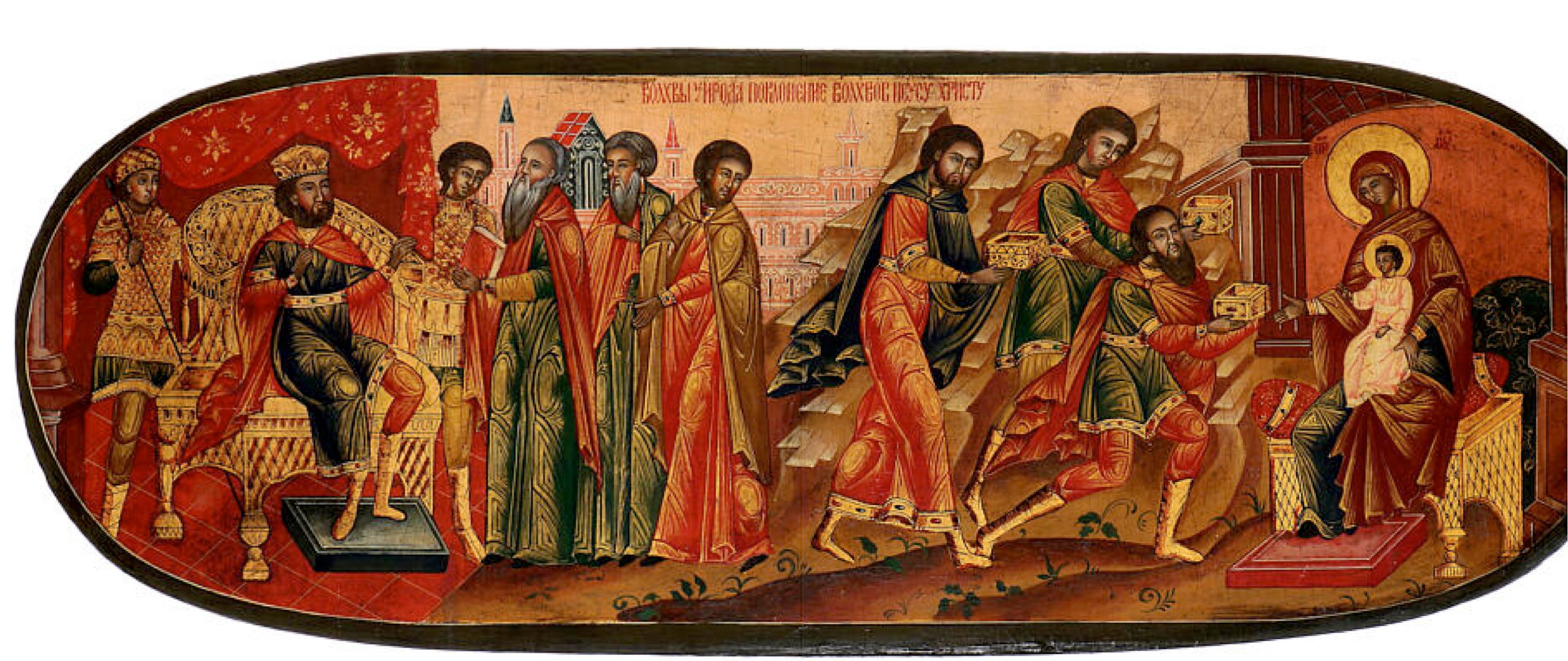
What we see here in this story is all of those gifts going wrong, being abused by Herod. And there’s also a contrast in this story: the three kings—well, the three wise men, actually—are kind of a beautiful contrast to what Herod is doing. Herod, of course, was the king of the Jews at the time, famously paranoid, and we see an example of this paranoia here. The wise men come from the east seeking him who is born king of the Jews. They come naturally to the capital, Jerusalem, and they ask where he is. These magi are ancient astronomers; they’ve seen a star in the east, which they see as a sign from God, and they spend months travelling to Jerusalem to honour the new king—they assume Jerusalem because that’s where the king of the Jews would be born, right?
Eventually they come to Herod, and he gathers his chief priests and scribes and asks them where the Messiah is to be born. And they quote the prophecy: “But you, Bethlehem, in the land of Judah, are not the least among the rulers of Judah. For out of you shall come a ruler who will shepherd my people Israel.” Herod then calls the wise men in to him, determines from them exactly what time the star appeared, and sends them to Bethlehem saying, “Go and search carefully for the young child, and when you have found him, bring back word to me, that I also may come and worship him.”
So they go off to Bethlehem, and they find the young child, thanks to the star, and they rejoice with exceedingly great joy. And they open their treasures to him and they present gifts to him: gold, frankincense, and myrrh. And if you know the old Christmas carol, then you know exactly what each one of those represents. They are recognizing him as king, as God, and as the one who is going to die for the world.
But then, of course, they are warned by God in a dream that they should not return to Herod, so they return by another way. Herod then finds out and is absolutely furious that his trick didn’t work, and he gives orders that every child two years old and under, according to the time determined by his conversation with the wise men, must be slaughtered. Fortunately, God does intervene, at least with Joseph, and maybe with more. According to tradition, John the Baptist gets caught up in this too, and this is why he ends up in the wilderness. But an angel of the Lord appears to Joseph in a dream, saying, “Arise, take the young child and his mother, flee to Egypt, and stay there until I bring you word, for Herod will seek the young child to destroy him.” So they get up and they leave.
It’s interesting, too, to think about what the implications of this are: God did not come down and directly intervene here. He didn’t cut off Herod’s free will. He didn’t even come and exert his power with his twelve legions of angels that Jesus said he could have sent to save him from the cross. Instead, Jesus experiences what it means to be a refugee. He’s already experiencing what it means to be helpless. Now he and his adoptive father and his mother are refugees in the land of Egypt, just like his people were. Again, he’s identifying with us, his people—with us, in our humanity, in every imaginable aspect.
But I want to focus our attention here on the horror, for a moment, of this terrible exercise of the gifts that God gave to Herod, and I want us to think about what that means for us. Herod, in this horrible, terrible action, exercises his free will. He freely chooses to issue this order. He also exercises his God-given agency: he has the ability to speak or not to speak, to give orders or not to give orders, and he chooses to give the order that he hopes will protect his kingship. And he uses his authority, which we would understand as his God-given authority as a ruler, in this unimaginably horrific way, which actually echoes the order of the Pharaoh way back when, when he gives orders that all the young children of the Hebrews be thrown into the Nile to make sure that his kingdom is safe.
And, when we stop and think about it, is this not also what we so often do, especially when we are motivated, like Herod, by fear and paranoia? We use our free will, but the choices that we make are often—especially when motivated by fear—bad choices.
And then our agency gets involved. I’m going to choose to do something with my life. Often it’s some form of addiction or some form of protective action or some form of—well, whatever it may be—where we turn and we actually engage our physical bodies in this choice that we have made with our spirits.
And then, even worse, we can get others involved in our sin, in our fear, in our self-centeredness.
Contrast this now with the wise men. They too made a choice. They saw a star in the east. They are using their God-given intelligence and abilities to read the heavens, and, as they see this sign that very clearly shows them that someone is born king of the Jews, they then undertake, they make the decision, they use their God -given agency over a sustained period of months to journey to find the one who is born king of the Jews.
And then, as they find him, what are they motivated by? They’re motivated by love of God, obviously, in terms of the quest. But, as they come into his presence, they’re motivated by joy. And in joy, they open their treasures to him. All that they are able to offer: gold, frankincense, myrrh.
This is what we are called to do. To not act out of fear. To not allow that paranoia, that self-preservation, that sense that I must preserve my integrity, I must preserve what I have, I must preserve my life at the cost of whatever may be around me, at the cost of the abuse of my own free will and agency. No. If we are motivated by love, and we act on that, we make our choices based on that, and we open our hearts, open our resources, open our time to love, honour, and joyfully worship God, that’s the end, our purpose. The end of that trajectory of love is joy.
We see the path of folly in Herod. We see the path of wisdom in the wise men. Let us exercise our God-given free will, and our agency, and our authority in the path of love to the destination of joy, to his glory, the glory of the Father and of the Son and of the Holy Spirit, now and ever and unto ages of ages.