In the name of the Father and of the Son and of the Holy Spirit. Amen.
Welcome back to Purify the Heart. I’m Pastor Zachary Courie, and today we continue our journey through the book of Exodus. Yesterday, we saw Moses struggle with doubt and reluctance, but God equipped him with signs and gave him Aaron as a spokesman. Today, Moses and Aaron finally confront Pharaoh with God’s command: “Let My people go.” But Pharaoh’s response is anything but hopeful.
Exodus 5
5 Afterward Moses and Aaron went and said to Pharaoh, “Thus says the Lord, the God of Israel, ‘Let my people go, that they may hold a feast to me in the wilderness.’ ” 2 But Pharaoh said, “Who is the Lord, that I should obey his voice and let Israel go? I do not know the Lord, and moreover, I will not let Israel go.” 3 Then they said, “The God of the Hebrews has met with us. Please let us go a three days’ journey into the wilderness that we may sacrifice to the Lord our God, lest he fall upon us with pestilence or with the sword.” 4 But the king of Egypt said to them, “Moses and Aaron, why do you take the people away from their work? Get back to your burdens.” 5 And Pharaoh said, “Behold, the people of the land are now many, and you make them rest from their burdens!” 6 The same day Pharaoh commanded the taskmasters of the people and their foremen, 7 “You shall no longer give the people straw to make bricks, as in the past; let them go and gather straw for themselves. 8 But the number of bricks that they made in the past you shall impose on them, you shall by no means reduce it, for they are idle. Therefore they cry, ‘Let us go and offer sacrifice to our God.’ 9 Let heavier work be laid on the men that they may labor at it and pay no regard to lying words.”
10 So the taskmasters and the foremen of the people went out and said to the people, “Thus says Pharaoh, ‘I will not give you straw. 11 Go and get your straw yourselves wherever you can find it, but your work will not be reduced in the least.’ ” 12 So the people were scattered throughout all the land of Egypt to gather stubble for straw. 13 The taskmasters were urgent, saying, “Complete your work, your daily task each day, as when there was straw.” 14 And the foremen of the people of Israel, whom Pharaoh’s taskmasters had set over them, were beaten and were asked, “Why have you not done all your task of making bricks today and yesterday, as in the past?”
15 Then the foremen of the people of Israel came and cried to Pharaoh, “Why do you treat your servants like this? 16 No straw is given to your servants, yet they say to us, ‘Make bricks!’ And behold, your servants are beaten; but the fault is in your own people.” 17 But he said, “You are idle, you are idle; that is why you say, ‘Let us go and sacrifice to the Lord.’ 18 Go now and work. No straw will be given you, but you must still deliver the same number of bricks.” 19 The foremen of the people of Israel saw that they were in trouble when they said, “You shall by no means reduce your number of bricks, your daily task each day.” 20 They met Moses and Aaron, who were waiting for them, as they came out from Pharaoh; 21 and they said to them, “The Lord look on you and judge, because you have made us stink in the sight of Pharaoh and his servants, and have put a sword in their hand to kill us.”
22 Then Moses turned to the Lord and said, “O Lord, why have you done evil to this people? Why did you ever send me? 23 For since I came to Pharaoh to speak in your name, he has done evil to this people, and you have not delivered your people at all.” (Exodus 5:1–23, ESV)
This is the Word of the Lord.
Thanks be to God.
Listen to the voice of Moses there at the end. He’s desperate. Suffering causes desperation in us; but Scripture is clear: God brings suffering with good purpose. St. Paul says in Romans 5:3, “we rejoice in our sufferings, knowing that suffering produces endurance, 4 and endurance produces character, and character produces hope, 5 and hope does not put us to shame,…”
One of the biblical ideas for suffering or tribulation relates the idea of being hemmed or pressed in on every side. When we’re in conflict especially, we may get that feeling like we’re trapped by an enemy, and there’s no getting out. It can be absolutely terrifying. Yet, it’s the good Lord who ultimately has us right where He wants us: unable to rely on ourselves or do anything but cry out to Him.
The Lord has chosen not to remove our sinful nature from us in this life, but to have us learn, by His grace, to deny it and rely on Him completely.
The good and gracious will of God comes out beautifully in this chapter if we trace back a few steps from the end. Moses is crying out to God, “why did you ever send me?” That was because the foremen of the Israelites were being forced by the Egyptian taskmasters to mistreat their own people. The foremen were being punished because Pharoah was feeling vengeful. Pharoah was feeling vengeful because Moses and Aaron asked him to let the Lord’s people go. And Moses and Aaron asked Pharoah to let the Lord’s people go because the Lord sent Moses & Aaron to deliver His people. Suffering is not proof of God’s absence; it’s the proof of God at work.
So where is Christ in all of this?
As Moses was sent to proclaim freedom to Israel, Christ was sent to set us free from sin. And just as Pharaoh resisted Moses, so too did the world resist Jesus. St. John the Evangelist tells us, “He came to His own, and His own people did not receive Him” (John 1:11).
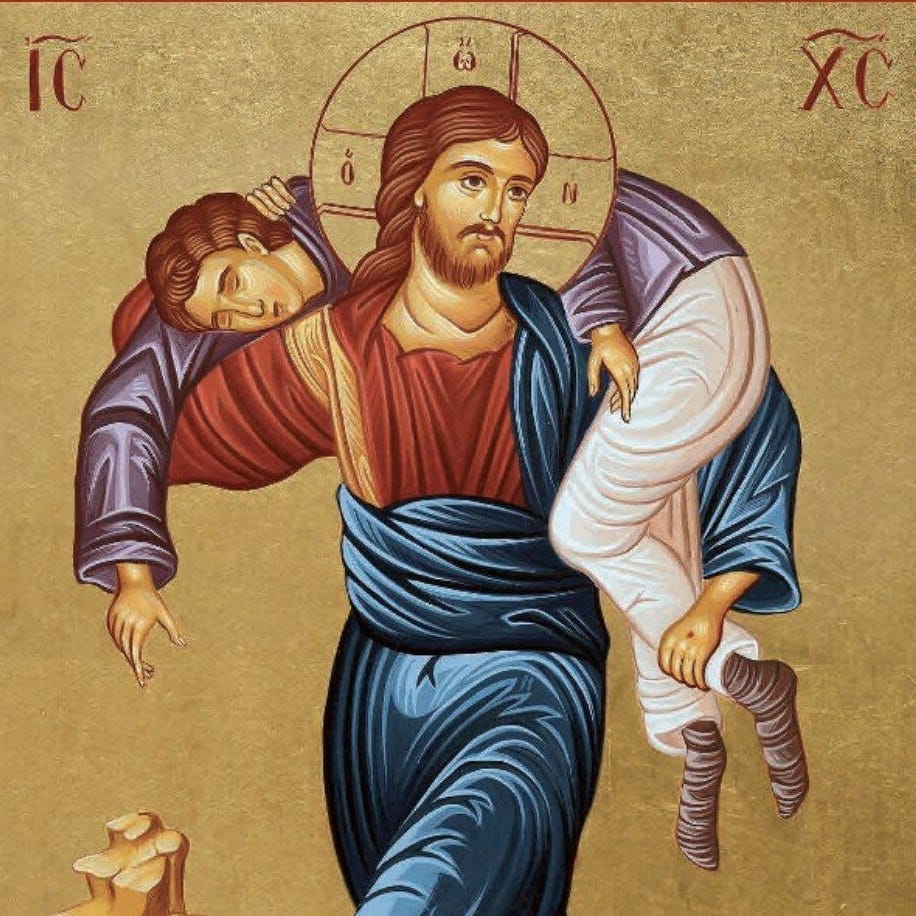
When Pharoah increases the labor of the Israelites and burdens them with an impossible task, we see the need for Christ. Jesus says in Matthew 11, “28 Come to me, all who labor and are heavy laden, and I will give you rest. 29 Take my yoke upon you, and learn from me, for I am gentle and lowly in heart, and you will find rest for your souls. 30 For my yoke is easy, and my burden is light.” (Matthew 11:28–30, ESV) But Christ the King didn’t relieve our burdens by making them vanish into thin air; instead He bore them as His own on the cross.
Finally, before Israel can be freed, they must endure suffering. Likewise, before Christ’s victory, He endured the cross. In Luke 9:23, “Jesus said to all, ‘If anyone would come after me, let him deny himself and take up his cross daily and follow me.” Apart from Christ, we can do nothing; but in Christ, we can do all things through Him who strengthens us.
Let us pray. Almighty and everlasting God, You despise nothing You have made and forgive the sins of all who are penitent. Create in us new and contrite hearts that lamenting our sins and acknowledging our wretchedness we may receive from You full pardon and forgiveness; through Jesus Christ, Your Son, our Lord, who lives and reigns with You and the Holy Spirit, one God, now and forever. Amen.
Thanks for joining me to Purify the Heart! Tomorrow, we’ll continue with Exodus 6, where God reaffirms His covenant promises to Moses and prepares to deliver His people with a mighty hand. Until then, grace be with you. Amen.