Today, Scott Anderson explains how Eisenhower got addicted to regime change—and why Trump is following the same pattern.
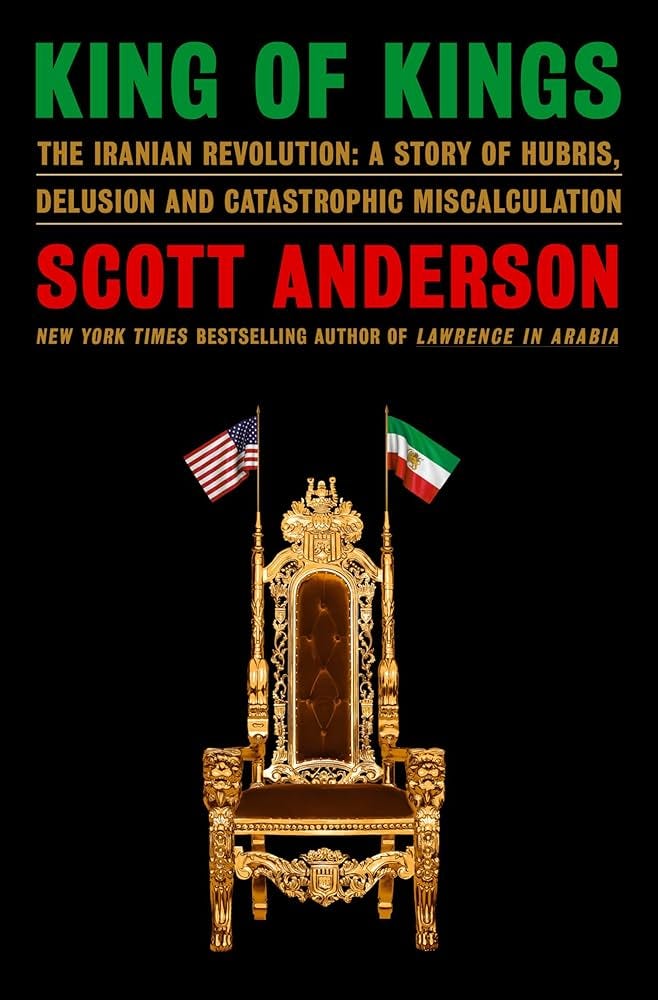
In a recent New York Times Magazine piece, Anderson traces how two early Cold War coups created a dangerous template. In 1953, the CIA overthrew Iran’s Prime Minister Mosaddegh by basically renting a mob. The following year, a ragtag mercenary army and a fake radio broadcast toppled Guatemala’s president. Two victories by bluff, costing little money and no American lives. Then Eisenhower tried the same playbook in various other countries—catastrophic failures nearly across the board. As Anderson shows, regime change becomes addictive: each intervention produces the crisis that justifies the next. And now Trump, having grabbed Maduro in Venezuela, has his sights on Iran and Cuba. Anderson also discusses his book King of Kings, about the 1978-79 Iranian Revolution that swept the Shah from power—a direct consequence of that 1953 American coup.
Scott Anderson is a veteran war correspondent and contributing writer for The New York Times Magazine. King of Kings: The Iranian Revolution, A Story of Hubris, Delusion, and Catastrophic Miscalculation won the 2025 Kirkus Prize for nonfiction.