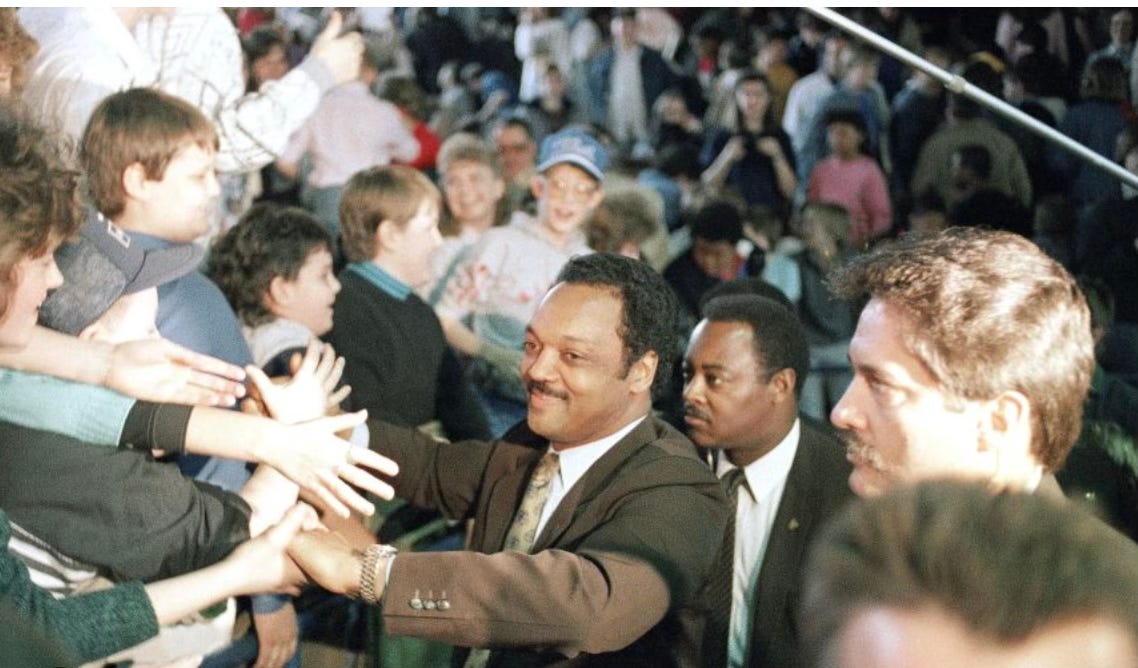
As tributes to Rev. Jesse Jackson pour in on the news of his passing at the age of 84, it is fair to say that he lived the American dream. As he said so often, he was the child of a teenage mother, who herself was the child of a teenage mother. He grew up in the segregated South and on the strength of his intellect, oratorical skills, hard work, and dedication, found himself - a young man in his mid-20s - working for Rev. Martin Luther King; and later, standing next to him on the balcony that fateful day when he was gunned down.
Jackson would go on to continue King’s work, run for president twice, and later serve as a global peacemaker, among many other things. By many accounts he single-handedly inspired a number of people who are serving in public office today; many of whom note his often recited poem “I am - Somebody” played a key role in inspiring their own careers in public service.
In these and so many other respects, he not only changed the lives of countless individuals, communities, and the nation itself, but the party whose nomination he sought twice and the U.S. presidency as well. The latter part of his legacy is not as well known. It often goes unheralded given the breadth of his work, but it shouldn’t, because the reforms he championed in the Democratic party had far-reaching impacts.
It is often said that in the absence of the organizing Jackson did for his long-shot 1984 presidential campaign, the Democrats would have never soared to victory two years later in the 1986 midterm. It also paved the way for Jackson’s even more serious presidential bid in 1988. That year he came in second in the Democratic primary to Michael Dukakis. In doing so, he beat out heavyweights, Al Gore, Dick Gephardt, Gary Hart, and others.
Even more importantly, these campaigns proved to be a pivotal part of the Democratic Party’s move away from the “winner-take-all” approach to delegate allocation; an approach which had for years disadvantaged minority candidates. Jackson pushed for reforms, calling for a proportional delegate allocation system to insure candidates who received at least 15% of the vote received a proportional share of delegates. The party ultimately implemented this change in 1992 and it proved critical in paving the way for the election of Barack Obama several cycles later,
The 2008 campaign pitted underdog candidate Obama against establishment-favorite Hillary Clinton. The changes Jackson pushed for allowed Obama to accumulate delegates even in states he did not win outright. While that cycle, Clinton won the popular vote narrowly, Obama was, as a result of the reforms Jackson advocated, able to rack up enough delegates to secure the nomination.
The New Realist is a reader-supported publication. To receive new posts and support my work, consider becoming a free or paid subscriber.