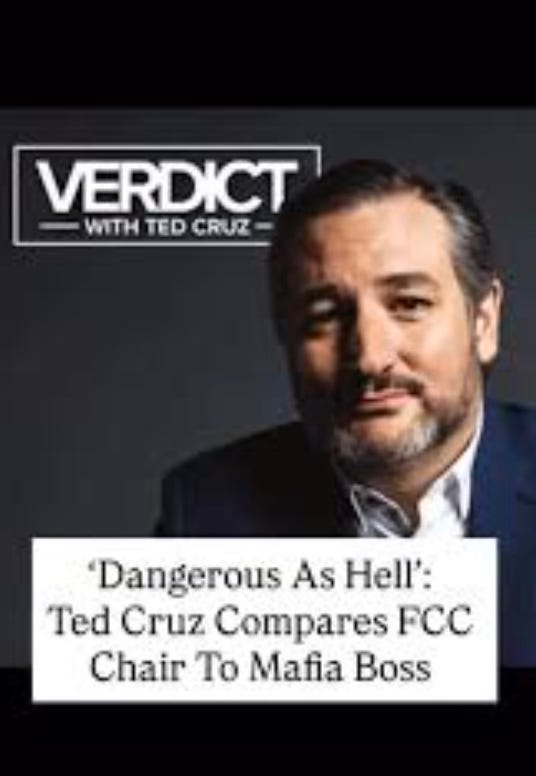
The FCC Chair’s comments regarding Jimmy Kimmel/ABC set off a firestorm of criticism, including from Senator Ted Cruz (R-TX) who described Brendan Carr’s remarks as “dangerous as hell.” On 19 September, I spoke with Kriti Gupta on Bloomberg’s Balance of Power about whether Kimmel’s suspension and Carr’s comments were a violation of the 1st amendment.
Some basics to keep in mind
The Right to Free Speech & Press are...
· protected by the 1st amendment
· liberties or freedoms we enjoy from government; they protect us from governmental attempts to coerce or suppress (not private entities)
· NOT absolute (they are limited, for instance, you cannot shout fire in a crowded theater)
· subject to interpretation by the Supreme Court and that interpretation can change over time depending on the Court’s makeup and a host of other factors
What Happened following Charlie Kirk’s horrific killing:
· The following Monday, Kimmel went on his late night show and said “We hit some new lows over the weekend with the MAGA gang desperately trying to characterize this kid who murdered Charlie Kirk as anything other than one of them, and doing everything they can to score political points from it.” He then joked about President Trump’s response to a reporter who asked about how he was coping with Kirk’s killing.
· The backlash following Kimmel’s comments was swift, particularly on social media
· That Wednesday, FCC Chair Carr went on podcaster Benny Johnson’s show to denounce Kimmel’s comments and said : "We can do this the easy way or the hard way...These companies can find ways to change conduct to take action on Kimmel or, you know, there's going to be additional work for the FCC ahead." Later Carr warned that others would follow Kimmel.
· Two of ABC’s largest affiliates, NextStar and Sinclair objected to Kimmel’s comments, saying they were offensive to many in their audience and as a result, they would pull his show from their airwaves. Later that day ABC, suspended Kimmel’s show indefinitely.
· The context in which this occurred is important. Last month NextStar announced its intention to acquire Tenga for $6B+, a purchase which would require both FCC approval and an FCC rule change (i.e., waiver or increase of the ownership cap).
· When asked about it on Friday in the White House, President Trump said he supported Carr’s comments
· But others in the GOP – such as Cruz – compared Carr’s actions to “mob tactics” and warned about the implications of government officials attempts to regulate content.
The Supreme Court’s view:
· In 1963 the Supreme Court decided Bantam Books v Sullivan, in which the question was whether a state commissions pressure on book distributors to remove “objectionable” material was a violation of the 1st amendment? In an 8-1 decision, Justice Brennan said that it was, arguing that while the government can try to persuade or encourage private entities to support its policy aims, it cannot use coercive methods to suppress speech.
· Since 1963 the Court has reaffirmed this decision
· Whether the Court continues to support this precedent going forward depends on several factors, including the makeup of the Court next time they grant cert in a challenge to Bantam