House Minority Leader Hakeem Jeffries (D-NY) refused to rule out more funding for the war in Iran on Sunday’s Meet the Press, saying only “we’ll cross that bridge when we get to it.”
Just a few days earlier, Rep. Debbie Wasserman Schultz (D-FL) told Bloomberg’s Joe Mathieu she would support an emergency supplemental request.
They are not alone, Sen’s. Dick Durbin (D-ILL), Chris Coons (D-DE), and Elisa Slotkin (D-MI) likewise refused to rule it out.
This is unfortunate. These Democrats should not try to split the difference on this. If they oppose the war, they should also oppose any request for additional funding.
After all, President Trump started this war unilaterally. He did so without consulting congress or informing the American people, without an authorization for the use of force, without discussion with any international bodies or our allies, and in violation of U.S. law, the constitution, and international law. And as a result of what he has done, seven American soldiers have been killed and many other injured, over 1,000 Iranians are reported dead, including almost 200 innocent school girls, most of the Middle East is under assault and thousands have been forced to flee their homes, not to mention we are facing what some describe as the biggest energy crisis in decades and a potential international economic calamity.
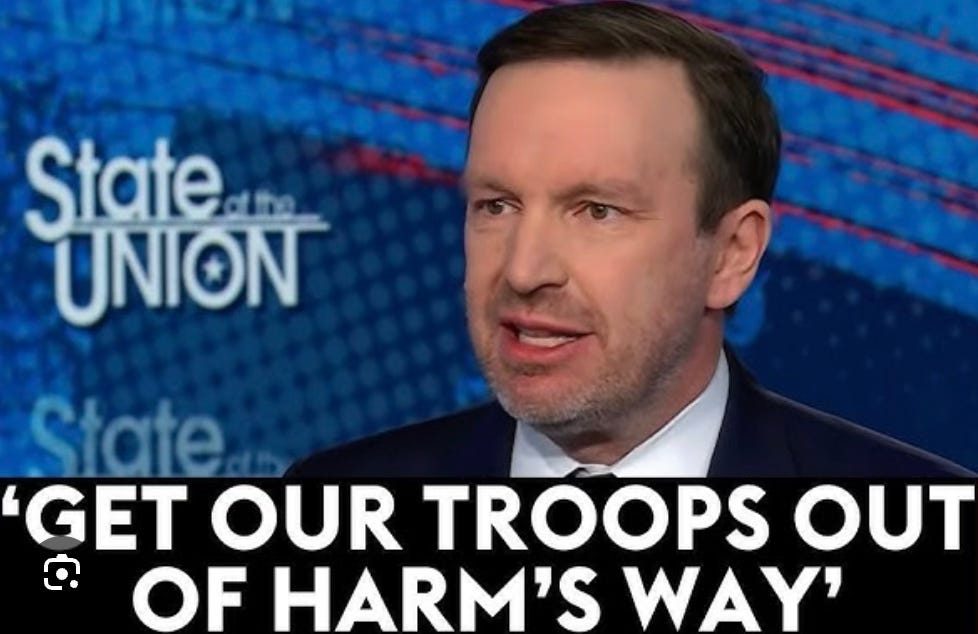
Under these circumstances, Democrats should meet any request for additional funding with an automatic and unwavering ‘no.’ And they should do so confident that, as Sen. Chris Murphy (D-CT) has argued, they are voting to support the troops by getting them out of harms way.
They should also do so confident that voting for the funding would only further embolden Trump in a war that is built on lies (such as the unsubstantiated claim that Iran was going to strike the U.S., so we had to act first) and that has no clear strategy or objectives. Moreover, they would be voting to fund a war which the president has boasted several times could end any day.
If that happens, the additional money would presumably be used to allow the president to follow his other whims and fancies, such as taking over Cuba. This is not as farfetched as it may sound. After all, even in the midst of the Iran war, the president and his close allies have been openly musing about regime change in Cuba.
The other day, Trump described Cuba as at the “end of the line” and suggested there may be a “friendly takeover” or an “unfriendly” one if required. His confidant, Sen. Lindsey Graham (R-SC), was even more blunt stating that the end of the Cuban regime is inevitable: “it is over, it’s just a matter of time.”
The New Realist is a reader-supported publication. To receive new posts and support my work, consider becoming a free or paid subscriber.