After all the talk amongst Democrats about generational change, three incumbents over the age of 70 successfully fended off challenges by much younger competitors during yesterday’s primary election in Massachusetts.
This includes, octogenarian Senator Ed Markey, who at age 80, not only defeated 47-year-old Rep. Seth Moulton but did so by more than 30%. At age 71, Rep. Stephen Lynch won a more competitive race against 39 year old Patrick Roath, clinching his 14th nomination for the 8th Congressional District. Likewise, Rep. Richard Neal, age 77, defeated 39 year old high school teacher Jeromie Whalen 54-46%.
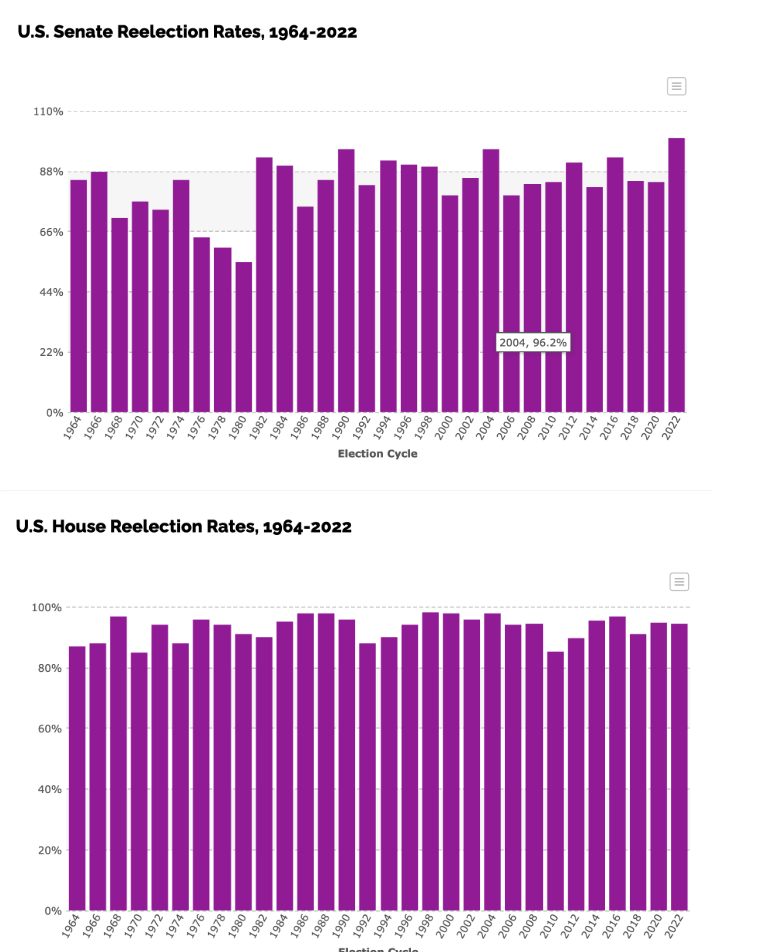
There are a number of factors that help explain these victories, including the fact that all three of the winners are incumbents up for re-election. Congressmen and women get a lot of heat, but one thing they tend to do well is constituent service, hence the consistently high incumbency re-election rate in the U.S. House and Senate.
As David Hubert notes and the date below show, over the “past twenty years, the lowest reelection rate for the House of Representatives was 85 percent, and the mean reelection rate is more than 94 percent. Reelection rates in the U.S. Senate are a bit lower, but still impressive.” All of which points to one of the many paradoxes of our system, while American’s do not give Congress high marks overall, they tend to approve of the job their own representative and senators are doing.
Setting aside the benefits of incumbency and the role of money in these campaigns,* both of which can explain victories such as these, is the issue of generational change to contend with. Like Joe Kennedy III before him, Moulton assumed Markey might be vulnerable given his advanced age, as well as the fact he had been in office since before either he or Markey’s previous primary opponent Kennedy, was born. As a result, Moulton focused little time on defining the Senator or differentiating the two on the issues. Instead, he chose to make the entire race about generational change and ended up getting clobbered in the polls.
*Note: Moulton outspent Markey on the air by at least two to one in the Democratic primary
The decision was an obvious strategic blunder. It also reflects a profound misunderstanding as to what many voters are looking for. Even in the wake of the 2024 debacle when age has been very much on the minds of so many Democratic voters, as the results in Massachusetts last night suggest, for many it is not primarily about the candidates age. Instead, it is about whether they share the concerns of younger generations, whether they are prepared to push hard for the issues they believe in, and whether they have the energy and vitality to take this fight to Washington?
The New Realist is a reader-supported publication. To receive new posts and support my work, consider becoming a free or paid subscriber.