The Arab Spring (2010-11) is often described as the first mass protest that went ‘viral.’ Previous protests had been caught on camera, but what made the events in Tahrir Square, Egypt and across Syria unique was the events were captured not by professionals, but citizens using mobile devices who were able to share the events in real time.
The Arab Spring laid the groundwork for the numerous other ‘viral’ protests that followed around the world, including the Ferguson Protests in 2014, Arab Spring 2.0 in 2019, George Floyd/BLM protests of 2020, No Kings Movement in 2025, Iran 2025-26 uprisings, and many others.
These cases demonstrate how impactful real-time documentation by the ‘person on the street’ can be in shaping public opinion, our collective futures, and governmental policy.
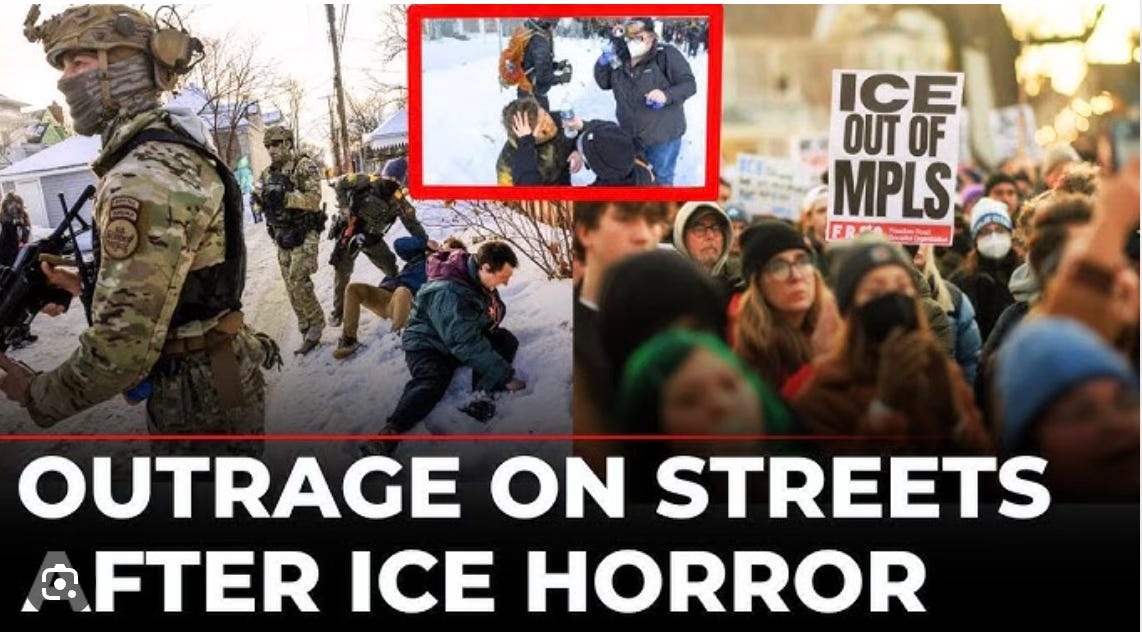
We have seen this most recently in the Anti-ICE demonstrations, particularly the imagery coming out of Minneapolis. Prior to the horrifying video of Alex Pretti’s murder, there was certainty in Washington DC that Congress would fund the government by the January 30 deadline. That all changed after video of Pretti’s killing at the hands of ICE agents was made public, following - as it did - just weeks after similarly horrifying video of the killing of Renee Good.
It was only after these videos went viral that congressional Democrats announced they would not fund ICE unless it was reformed. In an effort to keep the government open, Democrats agreed to work with Republicans to pass the eleven other appropriations bills and fund the Department of Homeland Security (DHS), which oversees ICE, on a two-week continuing resolution (CR).
The new deadline for funding DHS is this Friday. Democrats have released their ‘ICE reform demands,’ but there is little agreement between the two sides. As of today, it seems unlikely an agreement will be reached. This leaves Congress with two options (a) pass another CR to keep DHS open past Friday or (b) begin another partial government shutdown.
Whatever happens it is clear that the Trump administration has been overwhelmed by imagery of what a mass deportation crackdown actually looks like. As a result, their previous focus on border security has been replaced by images of American citizens being killed, protestors being ill-treated, government agents committing constitutional violations, and ICE agents raiding places of employment, worship, and schools.
Perhaps nothing signified the horrors of mass deportation than the pictures of little five year old Liam Ramos who was picked up by ICE agents as he returned home from school with his knapsack and bunny-hat on.
Like so many other images, the images of Liam speak to the human cost of this policy. As a result, they have been instrumental in not only temporarily freezing DHS funding but also providing Democrats with the ammunition they need to demand much needed reforms.