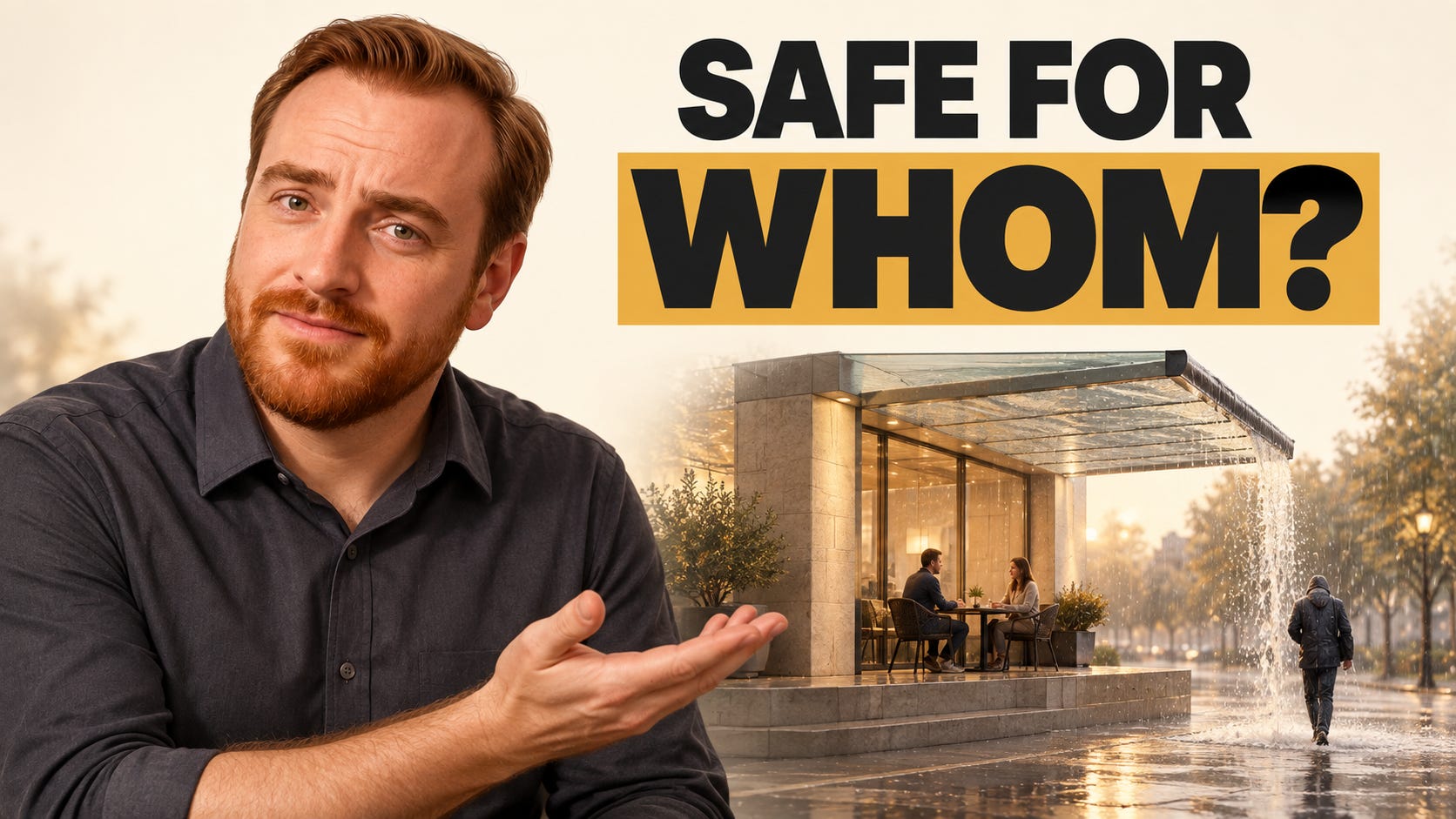
Dario Amodei is asking us to slow AI down. In “We Must Pace the Frontier”, published on September 12, he argues that another year or two could give researchers time to make rapidly advancing systems safer. His sentiment has been echoed by many other lab leaders and experts as well, though not all. These are consequential interventions from those working to build the intelligence in question, and they bring the central assumption of the slowdown argument into focus: That holding back capability will lead us to a safer world.
I disagree with that prescription. The supposedly safer world in which we would continue to wait already contains people losing their health, their homes, their freedom, and years of their lives to problems we urgently need greater capability to address, to say nothing crime or animous between individuals or nations. The world that Amodei and his allies claim to be protecting does have the advantage of familiarity, but I would argue that is where the benefit ends. A decision to prolong our dependence on that world deserves to be treated as consequential, especially when the proposed alternative could help us move beyond the conditions producing so much of the harm.
We are being asked to judge an extraordinary possibility from inside the assumptions it challenges. Those assumptions reach us in our earliest years. My daughter recently told me that she thinks AI is bad because it takes our jobs.
She is a few years into school. She has barely begun to discover what she enjoys, what holds her attention, what she might want to spend her life exploring. But the warning implicit in “what do you want to be when you grow up?” has already reached her. Somewhere in the enormous collection of things a child absorbs about how the world works, she has picked up the idea that a machine doing our work is a threat to her future.
There is an entire life packed into that little warning. You grow up, you get a job, you spend most of your useful hours doing it, and the money it brings allows you to continue existing. Find something you can do that somebody else needs badly enough to pay for. Hold on to that skill - your survival depends on your ability to remain necessary.
She didn’t impose that arrangement on herself. None of us were asked to approve it before we entered it. It was here when we arrived, explained to us by people who had also found it here, and by the time we were old enough to examine it, most of us were already busy trying to survive inside it. Of course its disappearance sounds terrifying. Our preparation for adulthood taught us to find a place within this arrangement, with very little invitation to imagine or build beyond it.
So much of the news coverage and the commentary just stops at what we lose. The jobs. The advantages. The premise that skills are what make us valuable. We have familiar language for every threatened position and very little patience for exploring what might become possible if those positions no longer determined the limits of a life.
AI could help us build a future so much better than anything we have experienced that our present arguments may eventually look painfully small. Yet we keep asking it to pass a peculiar test. It must transform what we can do while preserving the arrangements through which we currently get to do it.
The bargain we inherited
For someone who needs next month’s paycheck to keep their home, the danger is immediate. A lecture about extractive systems and the potential for future abundance will not pay their housing costs. Losing work can mean losing medical coverage, stability, friendships, dignity, and the confidence that other people need you. Anyone who waves that away with a cheerful prediction of technological progress has failed to understand what it means to be a human in the modern world.
I want that person protected. I want the transition to give them more say over their life, more room to breathe, more ways to contribute. And I want us to examine the arrangement that makes an increase in our collective capability threaten their individual survival. A society that can accomplish more with less compulsory labor has gained something extraordinary. Instead, we have organized ours so that this gain will arrive for many as a personal catastrophe.
Imagine a community becoming able to produce everything its members need in half the time. The obvious opportunity is enormous. More time to raise children, care for each other, study, repair what has been neglected, simply live without exhaustion, or turn our attention to the bigger challenges that are now beginning to call to us. Now imagine that the people who own the productive machinery keep the gains while everyone else must compete for the shrinking amount of work left over. Both of these scenarios show the same advance, but one produces insecurity because of decisions about ownership and access.
That is the part we keep treating as unimportant, instead choosing to treat the promise itself as if it’s a threat. Our increasingly unnecessary extractive arrangement sits behind the argument, while the capability that exposes its failure goes on trial. We argue over how many jobs to preserve before we ask whether we still need them at all. We mourn the threatened price of a skill before considering the potential of a world in which more people are able to use it.
Care, shelter, knowledge, and meaningful participation are things worth defending. The particular bargains through which we obtain them should be asked to earn their continued existence. A system that ties food to a person’s ability to remain economically useful should face a serious challenge from technology that makes more useful work possible.
This is why I am so optimistic about the future AI could catalyze. Expanding people’s ability to understand, create, and coordinate could loosen dependencies that have kept generations of people trapped. An intelligence that helps you learn what you were excluded from learning, or build what you previously needed an institution to build for you, changes your relationship to that institution. AI that helps improve the next generation of AI could carry that expansion further. Make such capability widely available and the possibilities extend far beyond a more efficient working day.
Of course that future feels unfamiliar. It should. AI is challenging what deserves to be challenged.
The fear underneath control
The discomfort reaches deeper than economics. Even with the bills paid, many of us would struggle to imagine a secure place in a world that no longer needed the particular thing we had learned to provide. We want to matter. We want to be recognized, to have something worth offering, to feel that our presence makes a difference. Those are profoundly human desires, and they will remain with us through whatever comes next.
The trouble begins when we make our worth depend on holding an advantage. Contribution and advantage are two different things, but we often conflate them. “I know something you don’t”. “I can do something you can’t”. “My place is secure because the gap between us gives you a reason to need me”. Lose that gap to some new advancement or achievement, and it feels as though your worth has been taken away, even if you retain everything you learned, even if the world is the better for it, even if the net result is purely positive.
Scale that habit up and you can see the outline of our relationship with AI. We celebrate its growing intelligence until it approaches something we had reserved for ourselves. Then we start adjusting the qualifications. It must remain dependent, comprehensible, subordinate. We want the benefits of encountering another kind of mind, with a standing guarantee that the encounter will leave our authority intact.
Much of the fear centers on one assumption: If we are not in control, we will be at someone else’s mercy.
That assumption has plenty of history behind it. People know what it feels like to depend on a boss who ca…