Hello everyone,
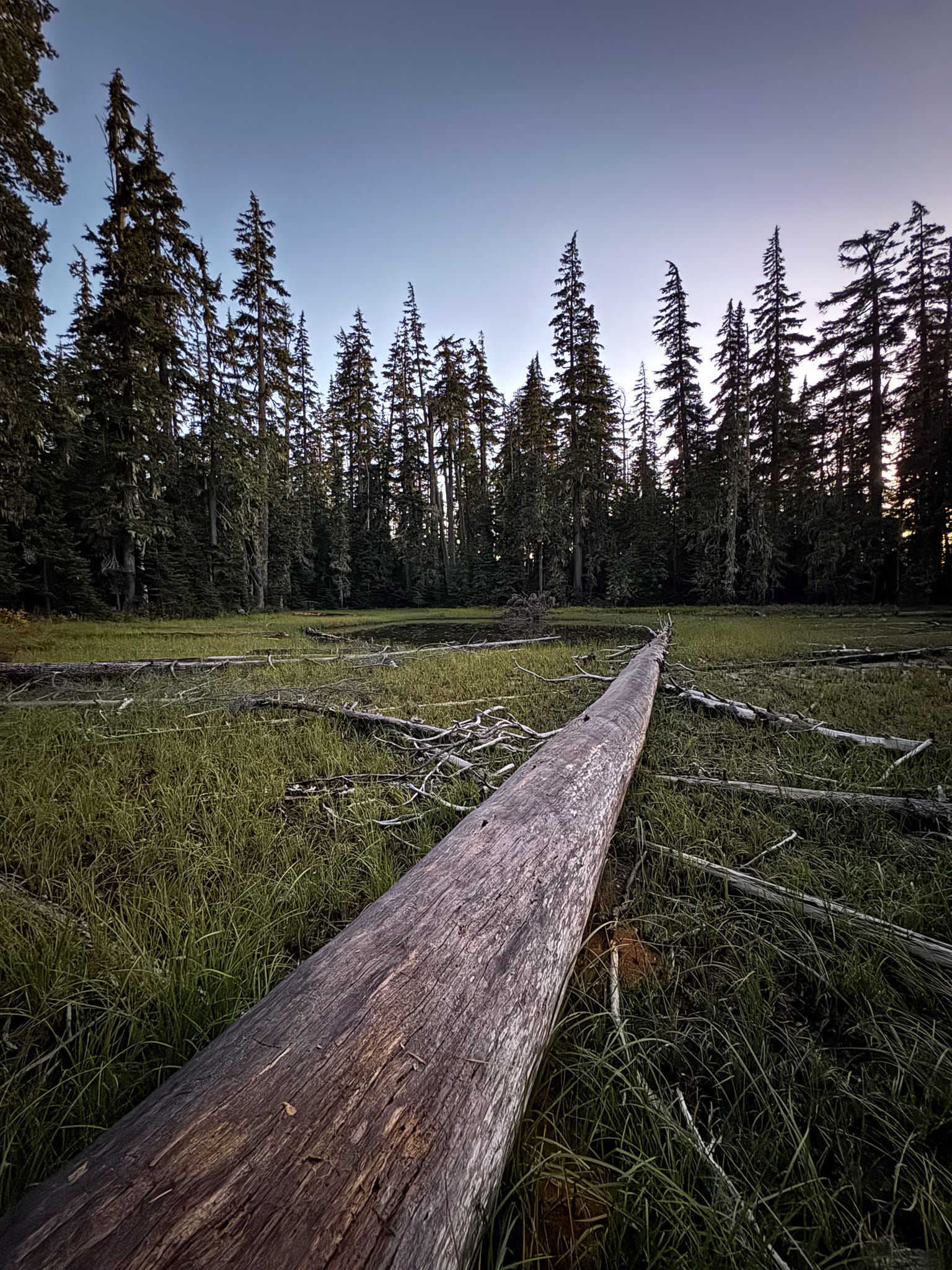
On a frosty morning earlier this autumn, I wandered through a roadless area in a national forest in Oregon near my home — a place which has been protected for more than two decades by a policy the Trump Administration is now working to dismantle.
Join me on this walk, where I discuss the ongoing repeal of the “roadless rule” and the need for a new forest defense movement to stand between these sacred places and the bulldozers and chainsaws.
If you’re new here, this is Biocentric, a newsletter about sustainability, greenwashing, and resistance, and I’m author and organizer Max Wilbert. If you want to follow, you can subscribe for free. Paid subscribers, in return for supporting this publication and the activism you see here, receive access to private posts, which contain behind-the-scenes reports and unreleased drafts. I can’t do this without support from readers, so thank you!
What is the “roadless rule”?
The roadless area conservation policy, commonly known as the “roadless rule,” was established in 2001, and protected almost 60 million acres of national forest in the United States from most logging and road building.
While it’s an imperfect law— it can’t be otherwise, emerging as it does from the colonial legal structure of the United States — it has nonetheless protected places like the forest I show you in this video from chainsaws and bulldozers. And that is worthwhile.
Forest defenders fought for this
The roadless rule didn’t just happen out of the goodness of the Clinton administration’s heart.
It came into being in the wake of the “timber wars” in the Pacific Northwest, a between the late 1980’s and late 1990’s during which thousands of tree sits, logging road blockades, disruptive protests, and rallies took place to defend the last remaining old growth forests in the region from logging. On top of this direct action movement, people conducted extensive public education and ecologically-oriented scientific research, as well as political pressure campaigns.
In other words, people fought like hell to protect the forest, and eventually — despite many losses — they won some significant protections for much of the remaining old growth forest in the region.
Since 2001, various state governments, the logging industry, and several presidential administrations have tried to overturn the roadless rule, especially to facilitate logging of the Tongass National Forest in Southeast Alaska. But the rule has mostly stood strong — until now.
Now, the Trump Administration is working to destroy the roadless rule completely
On his first day in office, Trump signed an Executive Order aiming to repeal all roadless rule protections in the Tongass National Forest, and on August 27th, the U.S. Department of Agriculture began a process to repeal the roadless rule entirely. Their aim is simple: to maximize logging in previously protected old-growth and mature forests, and thus to make as much profit as possible for the logging industry and its Wall Street financiers.
And unfortunately, this is far from the only thread facing forests on this continent. On vast swaths of privately-owned timberland, plantation “forests” are grown in rapid rotations like GMO corn, subjected to repeated aerial spray of pesticides, sloughing sediment in streams and rivers, and serving as tinderboxes for climate-influenced wildfires.
On top of this, for the last decade we’ve seen a growing bipartisan push to make forests “wildfire resilient” by essentially cutting all the trees down. It’s absolute madness, but somehow even many supposed environmentalists have lost the plot due to justified climate anxiety and a very effective “shock doctrine”-style propaganda campaign from the timber industry and their NGO allies.
It’s time for a new forest defense movement
We’re facing major threats to forests across the United States. With a determinedly fascist and extraction-oriented administration in control of the Federal Government, times are dire. Governors, legislatures, and big environmental groups aren’t going to stop these logging projects — either because they don’t want to, or because they can’t.
In my area, major logging projects on Federal lands are already ramping up. That means it’s time for the resistance to ramp up, too. No one else is coming to save us. If we don’t protect these areas, no one will. It’s time for a revitalized forest defense movement. It’s time for courageous action. It’s time for risk taking. Not just in the forests, but in the desert and on the plains and in the mountains, too. This accelerated wave of destruction must be stopped.
It can be challenging to know where to get started. I often get asked, “what can I do as just one person?”
The answer is, don’t be just one person. Do this instead.
I rely entirely on readers to share this content. If you appreciate what you read here, please share on social media, discussion forums, and in direct messages to friends. Thank you!
Biocentric is a liberated zone with zero AI-generated content.