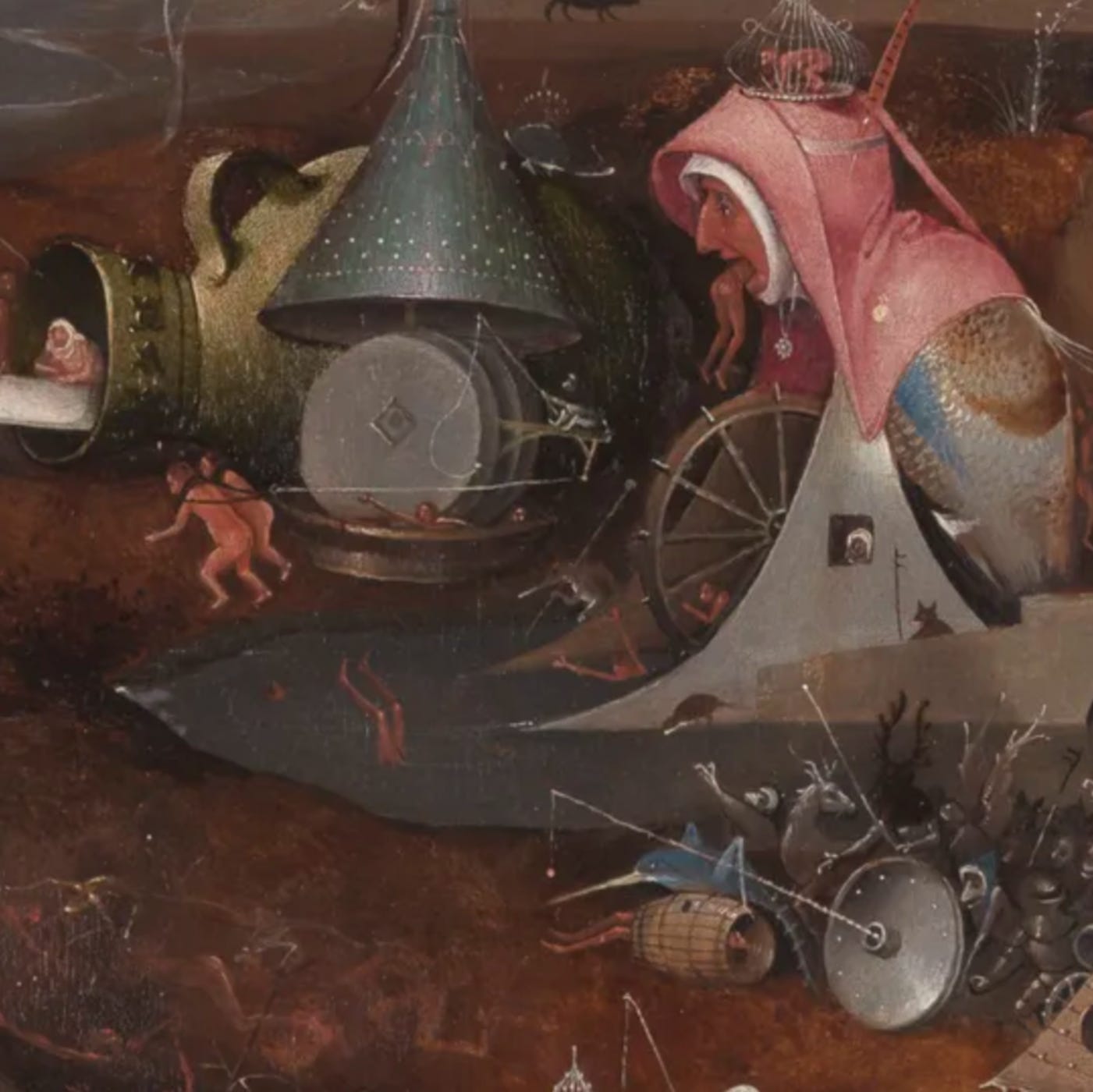
The End of the World: A Vision by James Kirke Paulding
“In the course of my wanderings, methought I encountered the celebrated Fire-King, who was sitting at home, quietly smoking his cigar, and calculating that being the destined survivor of all his race, he would succeed to an immense landed estate, and become lord proprietor of the whole earth.”
In the early months of 1843, a wave of Judgement Day fanaticism swept across the East Coast of the United States. Building on a close inspection of biblical texts, a lay preacher and farmer named William Miller had predicted that the end of the world would arrive sometime between March 21st, 1843, and March 21st, 1844. Miller began working on his theory in the early 1820s, and in 1831, he was asked to fill in at the pulpit of the Baptist church in Dresden, New York. Miller used his time centerstage to share his beliefs for the first time publicly. The Dresden congregation was mesmerized, Miller was invited by neighboring parishes to spread the word, and Millerism was born.
By 1840, the Millerite flock had grown beyond the proportions of obscurity. Thousands would come to hear Miller speak, and all manner of unfortunate events were being pinned on the movement, a sure sign of having “made it.” By the time it reached Philadelphia, the opening date of Miller’s prediction loomed large, and all that was left was to laugh.
Laugh is exactly what penny papers like the Public Ledger did. James Kirke Paulding’s satirical piece, “The End of the World: A Vision,” published among those pages in 1843, contains the withering observations of a man bearing witness to the last day of the world, April 1st. Granted a reprieve from the screaming heat by some unnamed deal with the devil, our narrator perambulates from place to place, recording his field notes for our amusement of all the many human reactions to the world melting down in judgement.
The world Paulding describes is due for a reset, a stage decline confirmed by the realization that none of the inhabitants seems to be anticipating ascension in their direction of travel.
Please enjoy…
Subscribe to Classics Read Aloud to receive future readings, including commentary and interesting “et cetera” tangent links, right to your inbox: https://classicsreadaloud.substack.com/subscribe