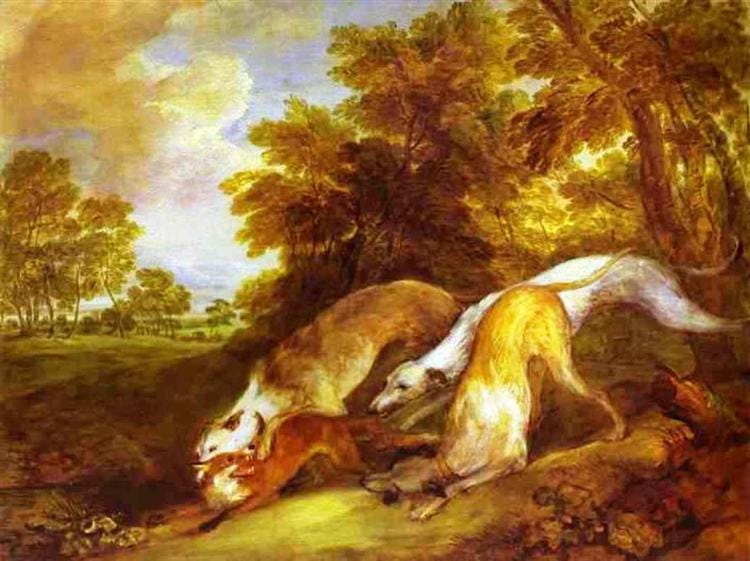
The Hounds of Fate by Saki (H. H. Munro)
“Three pounds goes but a little way in the world when there is nothing behind it, but to a man who has counted his exchequer in pennies it seems a good starting-point.”
Hector Hugh Munro had an eye for irony and the humbling tricks that the universe is inclined to play upon its fallible occupants. One gets the sense in reading “The Hounds of Fate” that the story is less about the circumstances that befall this particular man, but rather that there are a million inevitabilities unfolding at any given time, and we’ve simply been handed a microscope to observe this one.
Born in British-ruled Burma (now Myanmar) in 1870 and left motherless at the age of two, Munro was sent back to England to be raised by two “strict and puritanical aunts.” This twist of fate is one he never fully recovered from and continued to include snarled, grim, loveless aunts as characters in many of his stories.
Writing short stories that hone in on life’s absurdities and cruelties, Munro adopted the pen name Saki, allegedly borrowed from a 12th-century Persian poem, Rubáiyát of Omar Khayyám. In it, “The Eternal Saki” is the cup-bearer or Minister of Wine that fills the cups of existence, comparing all of humanity to the “millions of bubbles” unceasingly poured:
‘Tis but a Tent where takes his one day’s rest
A Sultan to the realm of Death addrest;
The Sultan rises, and the dark Ferrash
Strikes, and prepares it for another Guest.
And fear not lest Existence closing your
Account, and mine, should know the like no more;
The Eternal Saki from that Bowl has pour’d
Millions of Bubbles like us, and will pour.
Was this a signal from Munro that the reader should not take his stories too tragically—that the universe is infinite in its creation and destruction? Is he aligning with the poem’s thrust that life is precious, but none particularly so? Is his stance one of acceptance or rejection? Or, is here merely entertaining, himself as much as us?
These are fascinating questions to consider as you listen to this poignant story unfold.
Please enjoy…
Subscribe to Classics Read Aloud to receive future readings, including commentary and interesting “et cetera” tangent links, right to your inbox: https://classicsreadaloud.substack.com/subscribe