In this episode of the Collaborative Business Podcast, I have the pleasure of welcoming back Anoop Nathwani. He was my very first guest on the podcast, and he is also the first to return. That alone already says something about the depth and relevance of our conversations. This episode was sparked by a short exchange we had after I wrote a newsletter inspired by a very practical weekend experience. I tried to fix a leaking tap myself and quickly realised that plumbing is a profession for a reason. Doing it yourself without the right expertise does not just fail to solve the problem, it often makes it worse.
That reflection led me to draw a parallel with alliances. Alliance management is also a profession, yet it is still treated far too often as something people can simply do on the side. Anoop replied to my newsletter with a simple but powerful observation. At the end of the day, alliances are about relationships. That response was the starting point for this conversation.
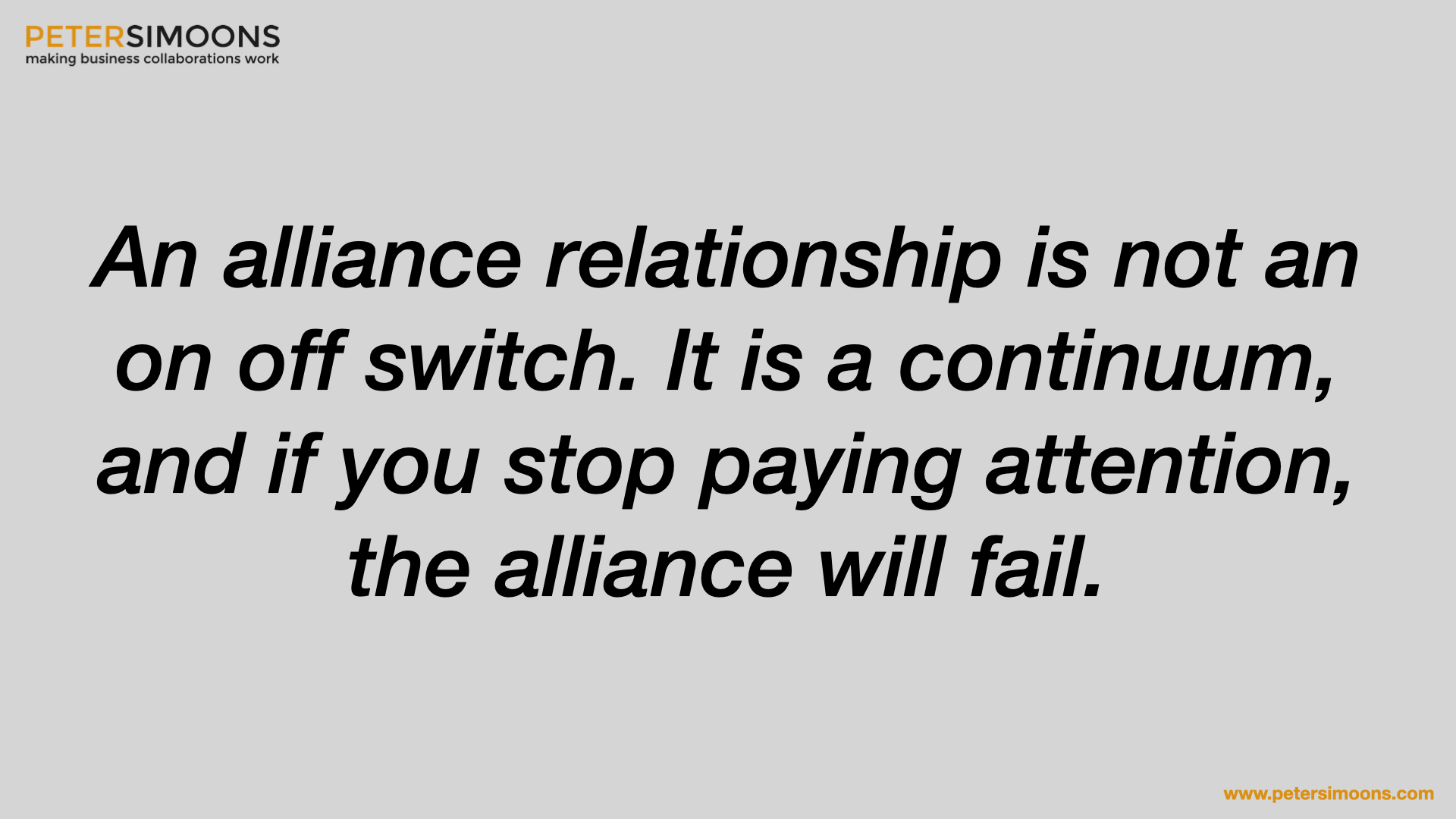
Together, we explore why the relationship aspect of alliances is so frequently underestimated or even ignored. Many organisations talk enthusiastically about alliances, but what they really mean is sales. They build contracts, define targets, and expect results to appear almost automatically. The relationship is assumed to be in place once the agreement is signed. Anoop and I strongly challenge that assumption. Relationships are not an on off switch. They are a continuum that requires constant attention, care, and professional skill.
We discuss why alliance failure rates remain so high, often exceeding sixty percent, and why the root cause is rarely the contract or the value proposition. More often than not, it is the quality of the relationship. Alliance managers, as Anoop puts it, are the glue. When they do their job well, they are almost invisible. When they are missing, everything starts to fall apart.
Another theme we unpack is the misconception that alliances are a magic wand for immediate sales. Sales do matter, but they are a lagging indicator. Sustainable results are the outcome of trust, communication, and shared intent, built over time. Expecting instant revenue from an alliance is like treating a marathon as a sprint. It also requires different skills and often different people from those who excel in sales roles.
We also dive into how you can measure what many consider intangible. Trust, relationship quality, and collaboration can be assessed through access to senior stakeholders, willingness to innovate together, openness in sharing roadmaps, and the depth of dialogue between partners. Communication plays a central role here, not just in sending messages, but in listening, understanding context, and showing empathy.
This episode is reflective, candid, and grounded in real experience. If you work with alliances or partnerships and want to understand why relationships are not a soft topic but the core of collaboration, this conversation is for you.