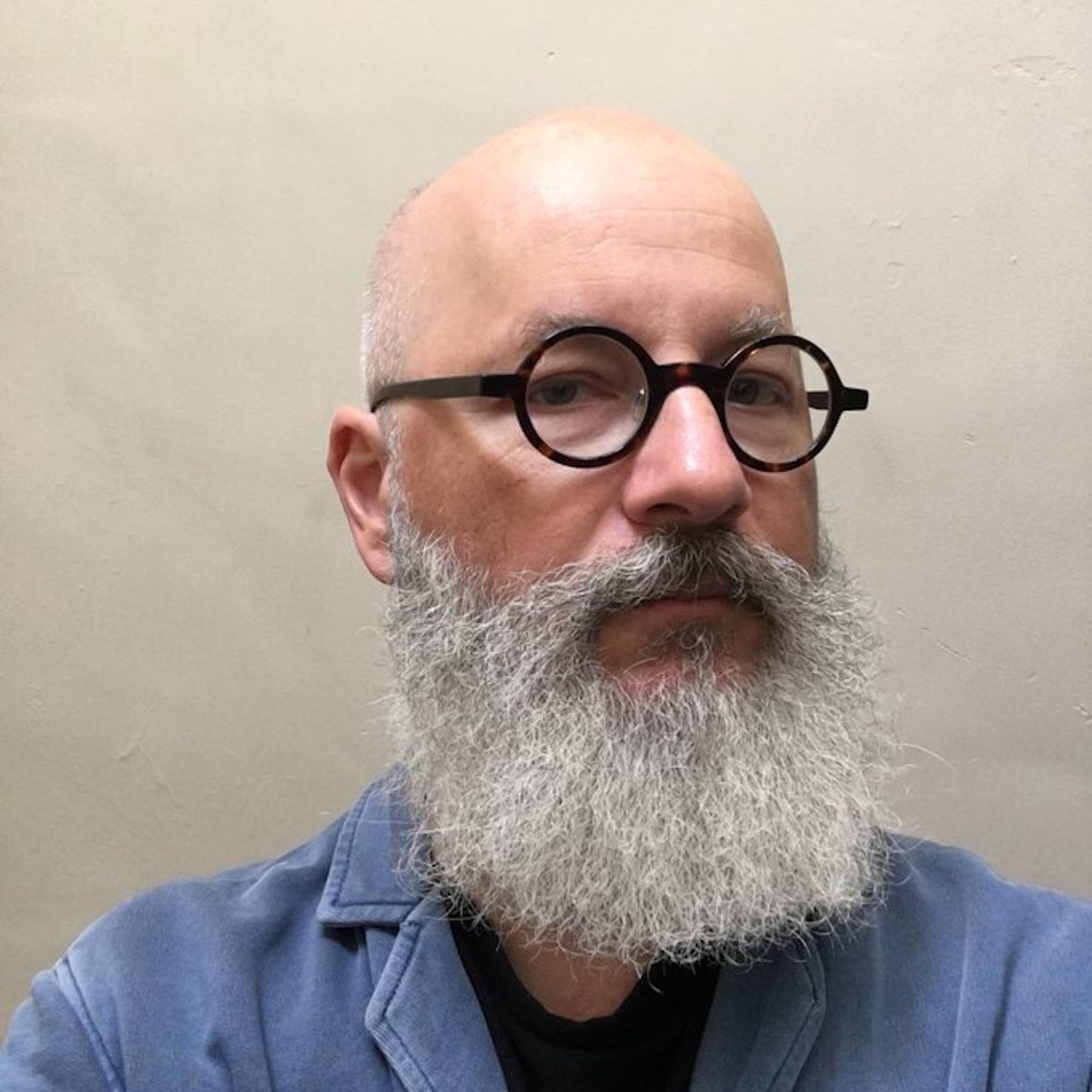
Hello, Happy New Year and welcome to Writer’s Diary 2026.
This is slightly different.
As you can tell, I’m going to be speaking, as well as writing, and the subject this year is going to be writing a book, which I’m going to be starting doing.
You can hear a train go by.
I’m going to be starting doing that, and I’m going to be asking for your help, and I’m going to be bouncing things off you, doing writing exercises, trying those out,
Because.
I’m aiming by the end of this year to have written a book and the working title at the moment is either The Page or On Drafting or something like that.
On Drafting: The Page or The Page: On Drafting something like that.
And the idea is that I’m going to be trying out some of the things that I think would be useful — right from the start — for a writer who was mainly wanting to concentrate on what they do every day when they sit down and they open up their laptop or they get a sheet of A4 or they carry on from where they were before.
And some of the things that I’ve learned and some of the things that I’ve taught are very much based on that.
Most of the stuff that I end up saying to students is really, really detailed advice about how to address the page, how to think about what you’re doing before you do it, and I guess, most of all, how to rewrite.
So the first thing I’m going to do is ask you directly what would be useful for you.
What are the things that you find puzzling or difficult or annoying?
When you are sitting down and you’re trying to write something, or you’re writing something and finding it’s really, really easy, and then when you go back, you see it’s not what you thought it was at all.
What are the questions that you have that you think a writing manual, a new writing manual to join the many many writing manuals that are out there?
What would be useful for you?
What would address the questions that you have?
I’m going to leave the comments open and I’ll take what comes there and I’ll try to do a day on anything that seems collectively a puzzle, collectively a difficulty, collectively an annoyance.
I know that you’d probably like to start with something, so I’m going to start with one of my favourite writing exercises.
If I do a masterclass or I do something with a group of people that I’m only going to see once.
But this is something to come back to as well, and I’ll remind you of it later.
So it came from Scarlett Thomas, the novelist.
And what you do is you get a notebook, something that you’re going to keep rather than a piece of paper you’re going to lose, or you open a note on your phone, and you make a list of ten numbers, one to ten, down the left-hand side.
Or you just start numbering things as you go along.
And for each of them, beside each number, you put, without thinking too much about it, you’re doing it pretty quickly.
You put a current obsession of yours, something that you are thinking about a lot, whether you want to or not.
These aren’t things that you necessarily think are good subjects or something that you’re particularly pleased that you think about.
But they are things that keep popping into your head.
They are things that obsess you.
So write down your ten current obsessions.
The idea of this exercise is that you come back to it later.
You put it aside, you forget about it and I’ll remind you in a couple of weeks and you can do it again.
And once you’ve done it maybe three times, you look at the lists you have and you see what it is that has been obsessing you constantly.
And you come back to those things and you think, Well, (here comes a siren) maybe I can write something with those as my subject, with these things as my start.
So that’s where we start (as the police siren fades away).
Write down your 10 obsessions, and I will see you tomorrow.