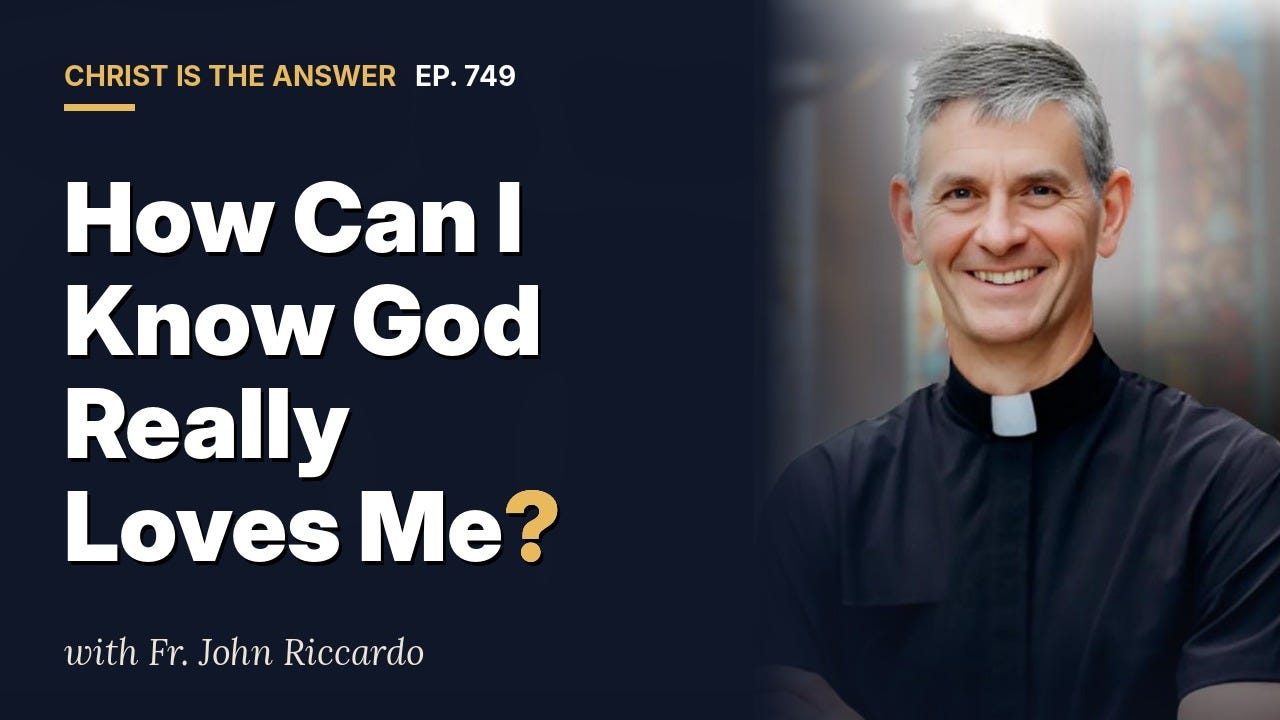
Episode 749 · RCIA for Catholics, Part 4
Most of us carry two quiet cries: I want to be loved, and I am not who I want to be. Fr. John Riccardo says the Holy Spirit, the Paraclete, is the one who answers both. He starts with the people who come through his office and what the Spirit poured into your heart at baptism is meant to do about it.
This episode helps answer: How Can I Know God Really Loves Me?
In this episode
* 'Paraclete' is a legal term, a defender. Fr. John also calls the Spirit 'the one who answers the cry' to be loved for who we are, not for what we do.
* God's love has already been poured into your heart through the Spirit (Romans 5:5). What the Father most wants to give those who ask is the Holy Spirit (Luke 11:13).
* Trying to earn salvation with good deeds is Pelagianism. Paul learned to respond to love already given, and forgiveness then flows from mercy received at the cross.
* The Spirit of adoption removes two fears: that God is against us, and that we are damaged goods. No saint is without a past and no sinner without a future.
* The second cry is 'I'm not who I want to be.' God promised a new covenant, a new heart, and dry bones brought to life (Jeremiah 31, Ezekiel 36-37, Psalm 51).
* At Pentecost the Spirit convicts of sin in order to save, not condemn, by warming hearts so they can be reshaped. Looking at the cross is the way in.
Timestamps
* 2:04 – The Paraclete and the first cry: to be loved
* 12:18 – Luke 11 and Romans 5: God wants to give himself through the Spirit
* 17:22 – You can't save yourself: from Pelagianism to the cross
* 22:30 – Romans 8: two fears and the 'shipwreck is over'
* 30:41 – The second cry: 'I'm not who I want to be' (Psalm 51)
* 36:47 – New covenant, new heart, and dry bones (Jeremiah, Ezekiel)
* 40:55 – From the cross and Pentecost: the Spirit convicts to save
Scripture
Luke 11:9-13, Romans 5:5, 1 John 4:10, 19, Philippians 3, Romans 8:15-17, Psalm 51, Romans 7:15, Jeremiah 31:31-34, Ezekiel 36:25-27, Ezekiel 37, Ezekiel 47, John 19:30-34, John 7:37-39, Acts 2, John 16:8, Deuteronomy 30:19, Luke 15
Also mentioned
Pope Benedict XVI, Jesus of Nazareth; St. Augustine (the bride and the ring); St. Thomas Aquinas ('I will have thyself'); St. Gregory of Nazianzus and St. Peter Chrysologus on Jesus' baptism; Cardinal Van Thuan (retreat on mercy, unnamed in transcript); St. Francis de Sales; Raniero Cantalamessa, Life in the Lordship of Christ; St. John Paul II, Dominum et Vivificantem
“There's no saint who has ever lived without a past, and no sinner, however vile their sin, without a future.” – Fr. John Riccardo
Description: Instruction on the Catechism of the Catholic Church and other topics critical to those seeking answers to life’s greatest questions