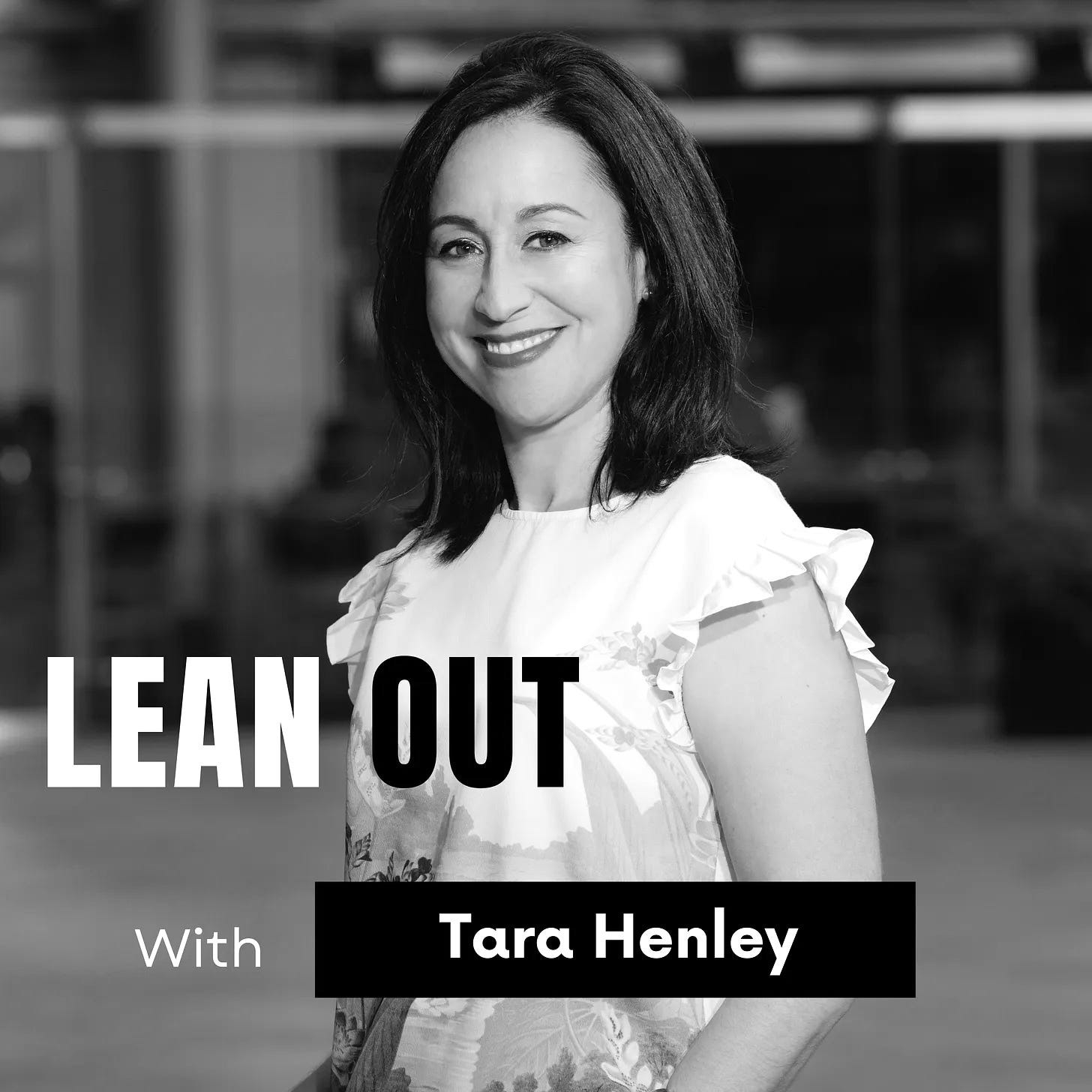
In January of 2022, during one of Toronto’s never-ending pandemic lockdowns, I launched Lean Out from the tiny kitchen of my 485-square-foot apartment. I had just left legacy media, somewhat loudly. I had been a current affairs radio producer at Canada’s national public broadcaster, the CBC. And I was worried that journalists were getting some of the biggest stories of our age wrong. I was fed up with our incuriosity on a range of hot-button issues, from pandemic policy to race and gender. The newsrooms felt increasingly stifling. It had become more and more difficult to engage in debate during story meetings, to stray from established narratives, and to put alternative voices on the air.
At the same time, I was hearing from a public that was increasingly furious with the press that was supposed to serve them. Time and time again, people would ask me: Why are you all ignoring the views and concerns of so many of our fellow citizens? What is going on with the media?
This, at a time when a strong fourth estate had never been more important. The public square was nasty and polarized. I watched wave after wave of online pile-ons and cancellation campaigns. Whole newsrooms joined in, too, purging established journalists for the slightest of infractions. The range of acceptable opinions for polite society became breathtakingly narrow. In private, journalists told me they were terrified. I feared we were losing some of the pillars of Western liberal democracy — and fast.
And me? I was bereft. Thinking and reading and writing and talking about ideas had been the great joy of my life. It had never occurred to me that that might be taken from me.
So, I decided to take a stand for civil dialogue and for open debate. I decided that we needed to stop having candid conversations in private and start having them in public. Lean Out was an appeal for speaking freely.
At the Lean Out Substack, we began publishing essays and op-eds and news roundups and written Q&A interviews, and hosting guest columnists. And on our first podcast, I posed some questions that I hoped to delve into on the program: Why is there now so much that we cannot say? Why are so many things off the table for discussion and debate? Why does all of this social justice talk feel so elitist? And why are so many of the people that progressives are supposedly fighting for just not that interested? Why are so many people tuning the media out?
Five years on, we have some answers to these questions — and we’ve found them together. Our show has listeners in more than 150 countries and 7,000 cities worldwide. This summer, we hit a milestone of one million downloads. It’s not bad for a niche Canadian current affairs podcast, largely focused on heterodox non-fiction books (and sometimes articles). Lean Out has published 256 episodes, featuring authors and journalists and academics from around the world and across the political spectrum. Our listeners, too, represent every political persuasion. We hear from Marxists, but we also hear from staunch conservatives — and, of course, from the politically homeless. Somehow, we’ve all managed to forge a little common ground.
What is that common ground? I think it rests on the conviction that most people are reasonable. That they are generally thoughtful adults that are doing the best they can to chart a path through this turbulent time. This common ground rests on the conviction that what most people want to better understand the moment we are living through, in all its complexity. That most of us can disagree without disparaging. That most of us are open to hearing new perspectives, and, in fact, feel richer for having been exposed to them. And, crucially, that we all have the capacity to change our minds.
This common ground we have built rests on a deep faith in our fellow citizens. And isn’t that what democracy is all about ?
This podcast has been the assignment of a lifetime, so it’s been a difficult decision to bring this project to a close — though the Substack will continue offering plenty of written content. In the meantime, I want to say that I am so grateful to you, our subscribers, for supporting the podcast portion of Lean Out. Each and every week, I got to speak to some of the most interesting and original writers and thinkers in the world. It was a volatile but fascinating time, in the media and elsewhere, and I got to cover it, in real time, as it unfolded.
In the process, some key themes for Lean Out emerged: pandemic policy, political polarization, the dire economic picture, particularly for our young people. A growing rage and a troubling censoriousness in our culture. The highs and lows of Canadian and American politics. The tensions between men and women. The crises facing modern men, including mental health, and the state of modern feminism, including our complicated relationship to the declining birth rate. Plus, the emergence of the woke left (which the American congresswoman Alexandria Ocasio Cortez herself has now characterized as “crazy”). And, more recently, the ascendance of the woke right, which I am increasingly concerned about.
At Lean Out, we heard from thinkers I have long admired: George Packer, Thomas Chatterton Williams, Michael Lind, Yascha Mounk, Musa al-Gharbi, Sebastian Junger, Nadine Strossen, Meghan Daum, David Greenberg, Ruy Teixeira, William Deresiewicz. We heard from more conservative feminists like Freya India and Mary Harrington and Louise Perry, and from more liberal feminists like Molly Jong Fast and Anna Louie Sussman and Susan Swan and Anastasia Berg. As well as gender critical feminists like Joanna Williams and Rosie Kay. We heard from Matthew Continetti on the old right in America, and Sohrab Ahmari and Oren Cass about the new right now being formed.
We heard reflections on the state of the left from Daniel Oppenheimer and Joan C. Williams and Eric Kaufmann. We heard from socialists like Freddie deBoer and Ben Burgis and Catherine Liu, and social conservatives like Tim Carney. We spoke to Richard Reeves and Nicholas Eberstadt and Zac Seidler and Jacob Savage about men’s struggles, and Leah Libresco Sargeant and Elizabeth Grace Matthew and Andrea Mrozek and Cory Clark about the challenges women grapple with. We spoke to Larissa Phillips and Daniel Cox about the ongoing war between the sexes.
Over the years, so many wonderful journalists have joined the program: Amanda Ripley, Ruby Cramer, Alec MacGillis, Michael Powell, Michael Forsythe, Mike Pesca, Andy Mills, Vicky Nguyen, Hadley Freeman, Conor Friedersdorf, Ryan Zickgraf and Zaid Jilani. And here in Canada, we’ve been joined by Paul Wells, Jen Gerson, Andrew Potter, Steve Paikin, Andrew Coyne, Holly Doan, Brian Stewart, Phoebe Maltz Bovy, Peter Menzies, Harrison Lowman, Terry Glavin, Tony Keller, Jason Guriel, Stephen Marche, and the up-and-coming podcaster (and Lean Out’s guest host) Chief Aaron Pete. And of course, the late, very much missed CBC broadcaster David Cayley.
Our work here has been referenced in Canadian and American media, on podcasts and Substacks, in books and in classrooms, and has led to invitations to speak at media conferences and public events, and to testify at the Canadian House of Commons.
Declining trust in the media became a central, and unifying, concern for the show. In 2024, the editor of the Literary Review of Canada, Kyle Wyatt, assigned me the Massey Essay on the state of the media, a collaboration between the LRC and Massey College at the University of Toronto. The essay tied together many of Lean Out’s disparate conversations on politics, economics, and culture. That essay — and the knowledge gained from all of those podcast episodes — has now become a book, The Trust Spiral.
And so, the conversation continues, as I venture out into the broader world of media to bring what we have learned here to a wider audience, and to discuss and debate the stories that the media has gotten wrong. Over Lean Out‘s lifetime, a lot more facts have emerged. It turns out the press did bungle some big stories, from the lab leak theory and school closures, to the Canadian “mass graves” story and the trucker convoy. We are happy that we’ve been able to be part of the media’s reckoning around them.
We will need much more of that in the future if we are to regain the trust of the public we serve.
So, where do we at Lean Out go from here? Unfortunately, I now have to acknowledge some of the realities of the current digital media environment. The fact is that we independents have not yet solved the business model problem.
In the earlier days of the show, I had help producing it, from Harrison Lowman and later Lauren Toffan, and help with factchecking from Luke Ettinger. For some time now, though, I have been a one-woman shop. Getting the show to air every week involves finding and booking guests, conducting research and interviews, editing the show, mixing it, factchecking it, and producing edited transcripts. Increasingly, the math on the business end does not add up. And from a capacity perspective, I don’t have the hours to continue the show and continue our output of written material, something subscribers have been keen to see more of.
It is with mixed emotions that I am ending the podcast component of the Lean Out Substack — but not without enormous gratitude. It has been a wonderful run. As one of my mentors recently reminded me, everything has its season. Thank you all for joining me on this wild ride, and for your support, in all the forms it has taken.
For paying subscribers of the Lean Out Substack, all payments will continue to be paused as we transition to written-only content and find our footing. For audio listeners on other platforms, if you haven’t already, I encourage you to subscribe to my Substack, tarahenley.substack.com. Going forward, I will be publishing some mix of essays, op-eds, news roundups, media criticism, and written Q&A interviews. We will see what works best in the new format. I have already begun work on my next book — about the rupture between men and women — so you can expect lots of content around that theme. I may be leaving the airwaves, for now, but you’ll still be able to find me on the screen and on the page.
Thank you again. It has been the adventure of a lifetime.
And now, on to the next chapter …
Thanks for reading Lean Out with Tara Henley! This post is public so feel free to share it.