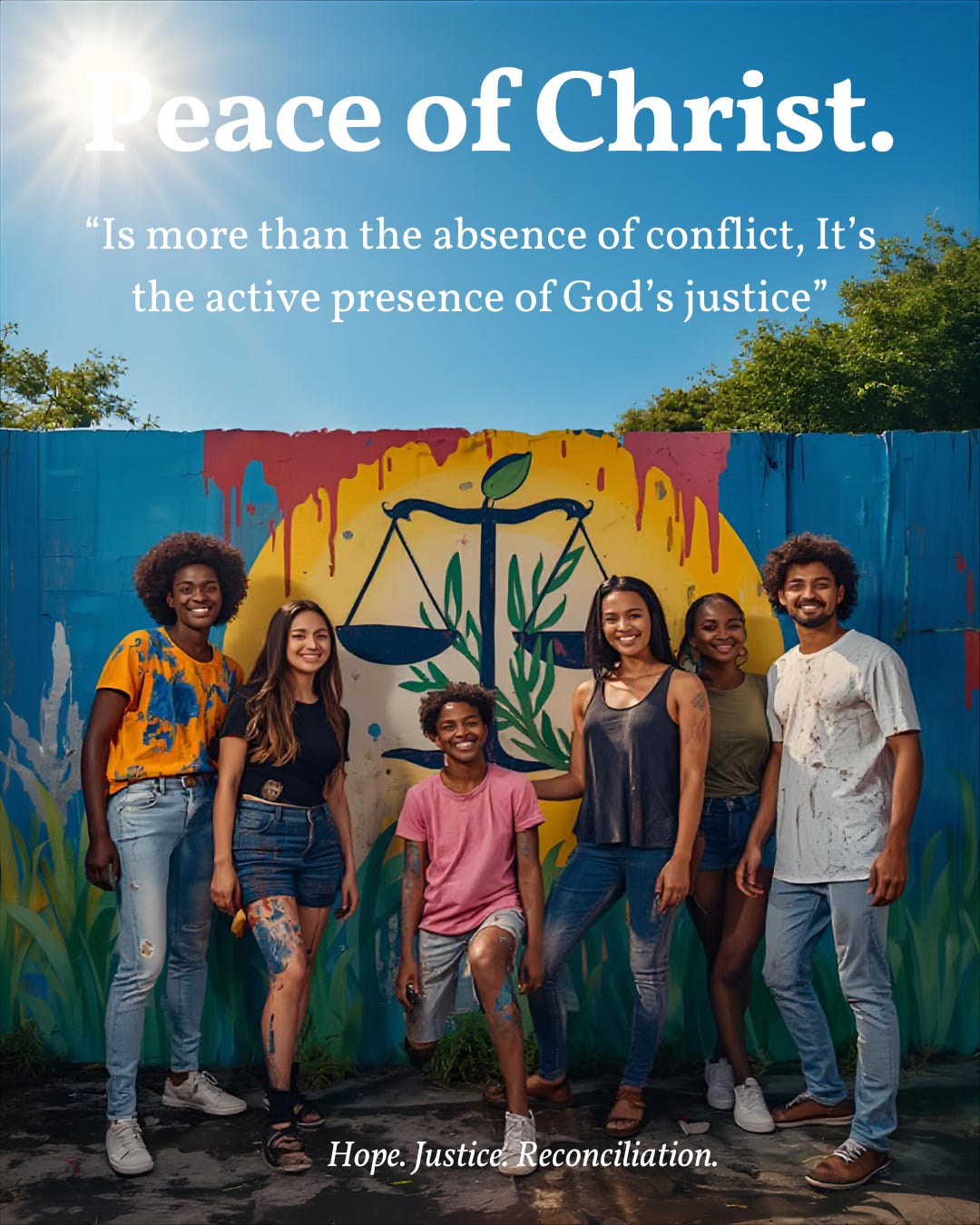
What Does True Peace Look Like? Understanding God’s Justice in Action
When we think about peace, many of us picture quiet moments, the absence of conflict, or a sense of calm. But what if our understanding of peace is too small? What if true peace isn’t just the absence of something negative, but the active presence of something transformative?
The peace of Christ is not the mere absence of conflict and violence. The peace of Christ signifies the presence of God’s justice. This truth calls us to a completely new vision of what it means to follow Jesus and live as His people in the world.
What Did Jesus Say About His Mission?
In Luke 4:16-21, we find Jesus standing up in the synagogue and reading from the prophet Isaiah. He proclaimed good news to the poor, freedom for the captives, and sight for the blind. Then He made a stunning declaration: “This scripture is fulfilled today in your presence.”
Jesus’ first sermon was essentially a job description. His peace isn’t passive or aesthetic—it’s active. It heals, lifts up, and announces jubilee. This wasn’t just a nice spiritual message; it was a concrete plan for transformation in the world.
How Do the Prophets Define True Worship?
The Old Testament prophets understood this connection between worship and justice clearly. Amos thundered to singing people that God wants mercy more than music, crying out, “Let justice roll down like waters” (Amos 5:21-24).
Isaiah challenged people who fasted while ignoring the hungry around them. He proclaimed that true worship “loosens chains and shelters vulnerable people,” promising that when we live this way, “your light will break forth like the dawn” (Isaiah 58:1-9).
What Does It Mean to Be a New Creation?
Paul reminds us in 2 Corinthians 5:17-21 that if anyone is in Christ, they are a new creation. The old has passed away, and we have become new. In that newness, we become ambassadors of reconciliation in the world.
As philosopher and theologian Cornel West puts it: “Justice is what love looks like in public.” Love doesn’t just feel good—it wears work boots and carries a toolbox.
Where Is God Already Moving in Our Communities?
Vision begins in worship, but it cannot end at the benediction. It must walk out the doors with us and impact the world. We can see God’s justice already at work when:
* Cities sell land below value to provide affordable homes
* Workforce housing initiatives gain momentum across communities
* Disaster relief organizations show up with hammers and hope after every storm
* People choose to act for peace in practical, tangible ways
What Does New Vision Look Like in Practice?
Living out this new vision means taking Jesus’ words in Luke 4 as our charter and job description, measuring success by who gets lifted up in the process.
In Our Daily Lives
It looks like practicing Isaiah 58 in small, steady ways—sharing bread, welcoming strangers, and spending ourselves for the hungry, both spiritually and physically. It means choosing action over apathy when systems harm people, speaking up and mending what we can.
In Our Workplaces
Being reconcilers means listening first, telling the truth, repairing when possible, and carrying grace into every meeting. It involves creating budgets that bless and investing time and resources toward mercy.
In Our Families
Raising children who expect fairness means teaching them to spot dignity in every face they meet and letting them see us make things right in the world by example.
In Our Churches
It requires conducting a church-wide audit of welcome, asking whose voices haven’t been heard and what doors need to be opened wider—physically, spiritually, socially, and emotionally.
In Our Communities
Justice can begin with business owners mentoring startups, neighbors learning each other’s names and stories, and people sharing meals together in safety and peace.
Why Is Rest Important for Justice?
This vision isn’t all about work. It also includes Sabbath—rest that restores so we can rise for mercy’s sake again. Burnout helps no one, and balance in our lives, even in our faith, is crucial for sustainable justice work.
How Do Hope and Joy Fuel Justice?
Living this new vision requires hope that refuses cynicism. We don’t deny pain—our own or others’—but we deny despair having the last word. Resurrection people keep building even in the midst of decay.
Joy fuels justice. We sing while we serve so we remember why we’re doing what we’re doing. This joy isn’t naive optimism but a deep-rooted confidence in God’s ultimate victory over injustice.
Life Application
Jesus still reads Isaiah in our midst today. The Spirit of the Lord is upon us to bring good news to the poor, freedom to the captives, and sight for the blind. This scripture longs to be fulfilled in our presence.
This week’s challenge: Choose one specific way to let God’s justice roll through your life. Whether it’s learning a neighbor’s name, mentoring someone at work, advocating for a vulnerable person, or simply listening more carefully to voices that often go unheard—take one concrete step toward making peace visible in your community.
Questions for reflection:
* Where in my life am I settling for the absence of conflict instead of pursuing the presence of justice?
* What would change if I truly believed that my faith should have work boots and a toolbox?
* Who in my community needs to experience God’s peace through my actions this week?
* How can I balance rest and action so that my pursuit of justice is sustainable?