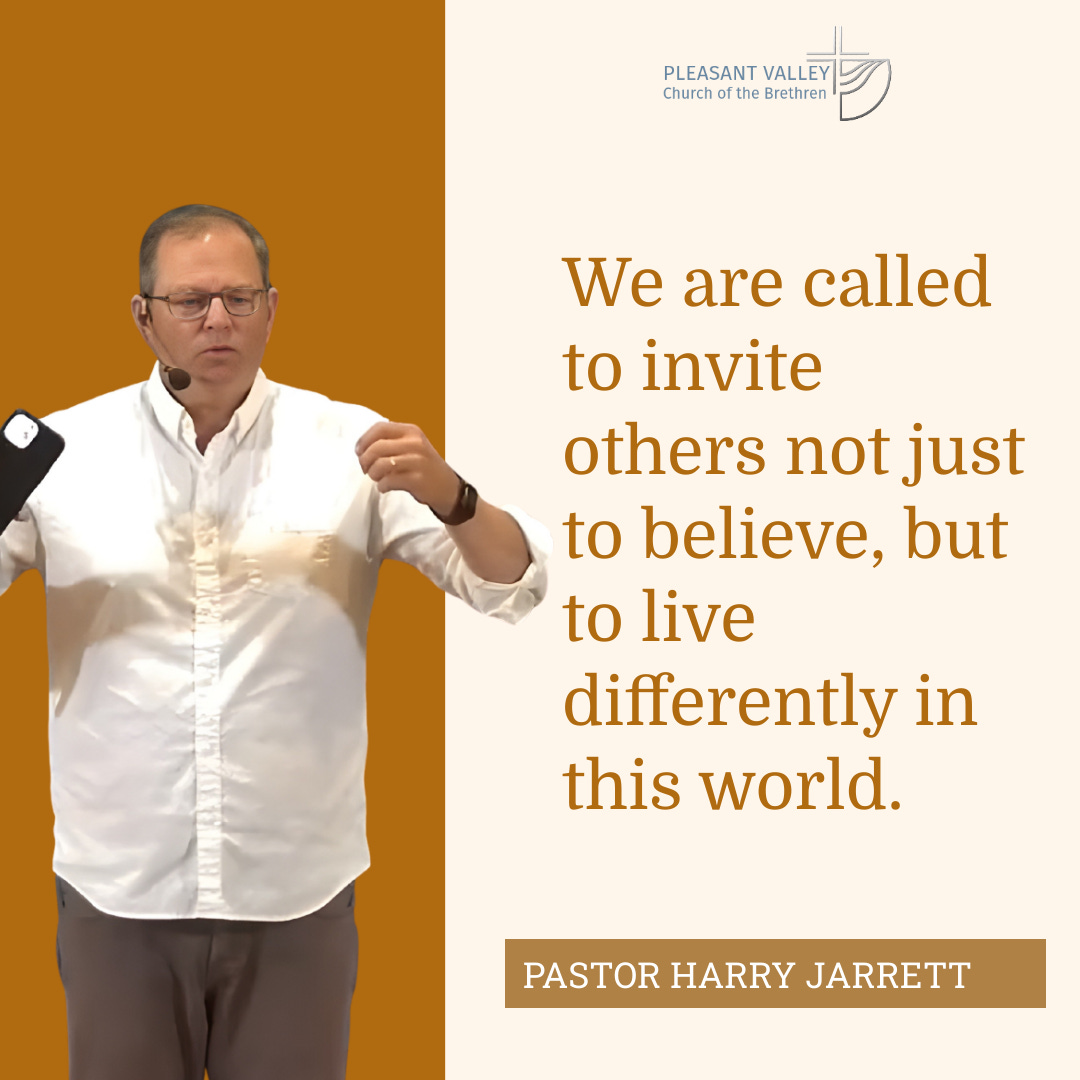
Inviting Others Into Obedience: Our Holy Calling as Followers of Christ
God calls His people not just to live faithfully but to invite others into the joy and challenge of obedience. This calling begins with our own households and children, then extends to the nations. We are meant to wrestle with this holy calling - to live obediently ourselves and invite others into that same obedience.
What Does Jesus Say About Our Influence?
In Matthew 5, Jesus tells us, "You are the salt of the earth, you are the light of the world." Salt preserves, flavors, and makes people thirsty. Light drives out darkness. But what good is salt if it stays in the salt shaker? What good is light if it hides under a basket?
Jesus is telling us that our lives are meant to invite others toward God. This message echoes in the Great Commission (Matthew 28), where Jesus instructs us to "make disciples of all nations, teaching them to obey everything I have commanded." Notice that we're not just passing along nice ideas about God - we're teaching obedience and calling people into discipleship.
How Has God Always Intended His Blessing to Work?
From the very beginning, God's blessing has been outward-facing. In Genesis 12, when God calls Abram, He doesn't say, "I'm going to bless you so you can have a nice comfortable life." Instead, He says, "I will bless you, and all peoples on earth will be blessed through you."
As theologian Walter Brueggemann reminds us, "God's people must always live with, for, and among others in the world. That is not an optional extra. It is the very DNA of what our faith is all about." We don't withdraw to some sort of private holiness - we live our obedience publicly so others might taste and see.
John Howard Yoder, an Anabaptist theologian, put it this way: "The church is called to be now what the world is called to become." When we live as a community of blessing, we give the world a glimpse of God's future.
God blesses us so that we can bless others. Faith was never meant to be private property.
What Can We Learn From the Early Brethren?
The early Brethren were deeply evangelistic. They worked hard at inviting others to make the same choice for radical obedience that they were making. Importantly, they weren't selling "eternal fire insurance" - they were inviting neighbors into a whole new way of life that was actually fairly dangerous, marked by simplicity, community, peace, and discipleship.
Donald Durham, a Brethren scholar, describes the Brethren movement in the 1700s as the forerunner for the Great Awakening among the American colonies. Their imitation of the early church was so powerful that it sparked renewal that reshaped an entire continent.
The early Brethren used two main approaches:
* Home community missionary work
* Immigration to new areas
Some stayed rooted in their towns and homes, inviting friends and neighbors into a different way of life. Others carried the message across seas and prairies. But both were saying the same thing: this life of obedience is too good not to share with friends and family.
What Is True Evangelism?
Evangelism is not about memorizing scripture or winning arguments with people who disagree with us about God or Jesus. It's about unlocking our personal testimonies and connecting them with our neighbors and friends.
Think of a championship basketball team. Their success doesn't come from one star alone but from disciplined teamwork, relentless practice, and players inviting each other into a shared rhythm. One selfish player who ignores the playbook weakens the whole team. Similarly, evangelism is not a solo sport - we invite others into God's rhythm of obedience, and together we support one another and shine brighter.
Evangelism is not about selling religion. It's about inviting others into a way of radical obedience that transforms life.
Where Does Evangelism Begin?
Psalm 78 makes it clear: "We will tell the next generation the praiseworthy deeds of the Lord so that they should set their hope in God and not forget the works of God, but keep his commandments."
Evangelism begins at home. Obedience is learned mostly not in church, but at the dinner table, in bedtime prayers, in how we as parents treat our neighbors, and how we model forgiveness on a day-to-day basis. If we don't invite our children into obedience, we risk breaking the chain of our witness.
Alan Kreider reminds us that the spread of the church was not accomplished by dramatic events but by ordinary believers explaining their hope to their children and neighbors.
How Do We Build Our Testimony?
Think about how your faith has made an impact in your life and what choices you've made because of how you follow Jesus. Then share that with others. This practice equips us to be authentic witnesses of Jesus Christ's work in our lives.
In Amish communities, when a barn needs to be built, neighbors come together for a barn raising. No one does it alone. Teaching our children obedience is like a barn raising - it takes the whole family of faith. We need to commit to building their faith just as we commit to building our own.
How Does Our Obedience Impact Others?
When we obey Jesus Christ, especially when it costs us something, the world takes notice. Like a team that plays with discipline and teamwork invites fans to join the movement, or a well-tended field that makes neighbors notice the fruit, our faith shines through our actions.
Matthew 5 says, "Let your light shine before others so that they may see your good works and give glory to our Father in heaven." The invitation isn't just in our words but in the living testimony of our daily deeds.
Dorothy Day once said, "The best thing to do with the best things in life is to give them away." When we give away our lives in obedience, the light shines brightest.
A life of obedience shines brighter than any sermon. Our deeds invite others to glorify God.
Life Application
Our calling is clear: God blesses us to bless others. Evangelism is an invitation to radical obedience, and we must begin with our children. Our obedience is the light that draws others to God.
This week, consider these questions:
* How am I living out obedience in a way that others can see?
* Who in my household or family am I actively inviting into obedience to Christ?
* What testimony of God's work in my life can I share with someone this week?
* In what ways might I be hiding my light instead of letting it shine?
Let us be bold and live lives so salty, so luminous, so compelling that others cannot help but say, "I want to live that way too." Remember, the Great Commission is our everyday commission - as you go about your daily life, make disciples by inviting others into the joy of obedience to Christ.