Radical Obedience: What It Really Means to Follow Jesus
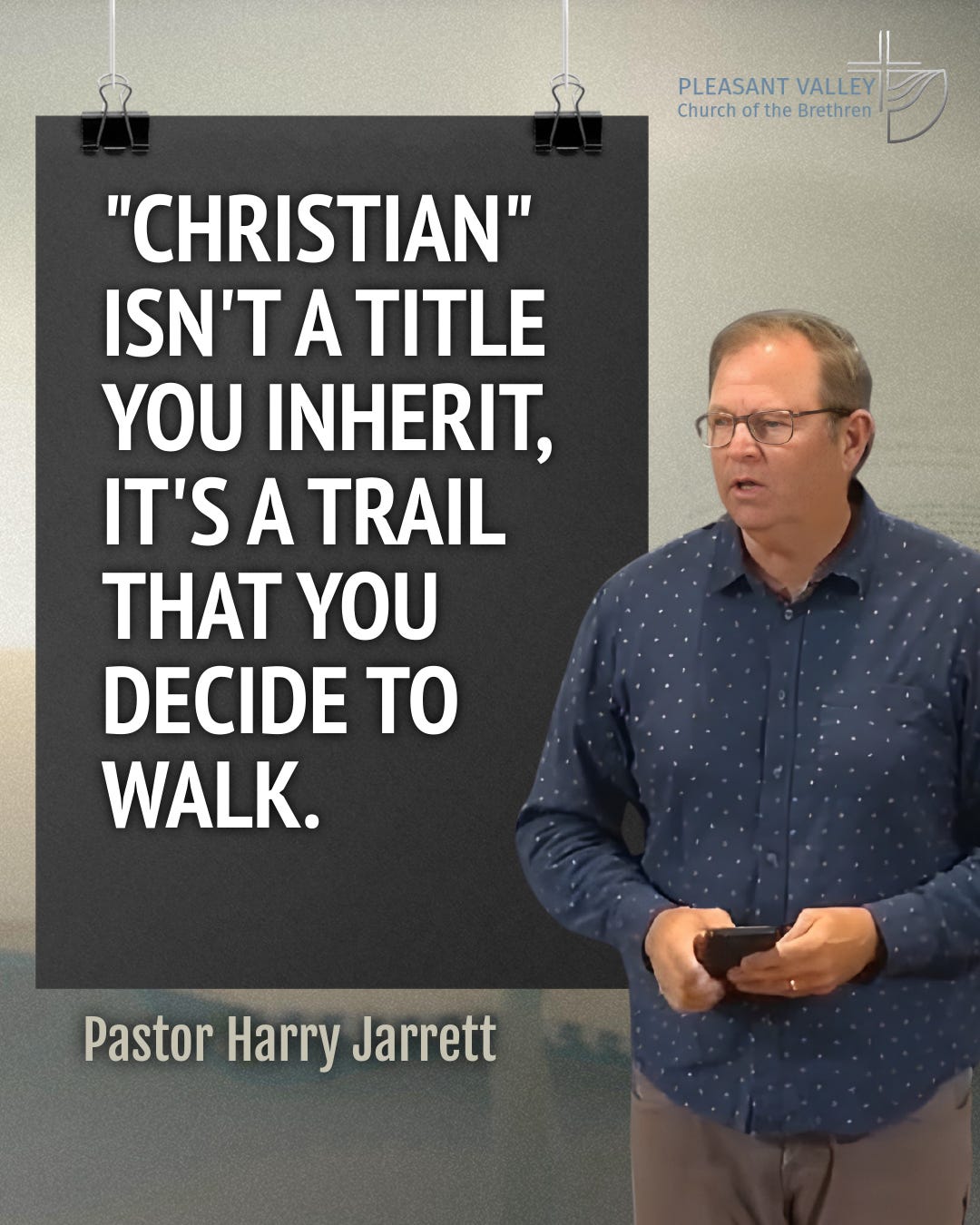
Most of us assume that being a Christian means having made a conscious decision to follow Jesus Christ as Lord and Savior. We believe that Christianity isn't a title you inherit but a trail you decide to walk. Yet, when we probe what this commitment costs in daily life, we discover that our experiences, assumptions, and cultural biases lead us to interpret Jesus' words differently.
But what if "Christian" doesn't always mean "follower of Jesus"? What if, in some times and places, calling yourself a Christian has been more about ethnicity and nationalism than about obeying Jesus?
The Call to Follow Immediately
In Mark 1:15, Jesus announces, "The time has come. The kingdom of God is near. Repent and believe the good news." Then, without fanfare, he approaches four fishermen by the Sea of Galilee and says, "Come follow me." Mark notes that "immediately they left their nets and followed Jesus."
The early Brethren took these words—"followed immediately"—extremely seriously. They understood that Jesus wasn't looking for volunteers to join a committee but was summoning people to a brand new way of life. They realized that a label without a life behind it is just a sticker.
When Christianity Became a Cultural Identity
In 16th-18th century Europe, all babies were baptized into the local church, whether Reformed, Lutheran, Calvinist, or Catholic. Their names were recorded in parish rolls, simultaneously making them members of both church and state. Social rank was fixed, citizenship and religion were fused, and opting out was nearly impossible.
Consequently, multitudes lived as "Christians" who had never chosen faith in Jesus, never decided to follow His way, and never intended to shape their lives by His commands. The result was a passive church and a corrupt Christendom. When faith is automatic, passion for God's way is almost always absent.
The Anabaptist Awakening
Into this landscape burst the Anabaptists in the 1500s, followed by the Pietists, and then the Church of the Brethren movement in 1708. Young adults led by Alexander Mack realized they were not genuine disciples because they had never consciously chosen Jesus or their own baptism.
Reading newly accessible scriptures (thanks to the Gutenberg Press), they heard Jesus say, "Follow me" and "If anyone would come after me, let them deny themselves and take up their cross." They saw Peter write of a suffering Christ and concluded: "We are not Christians until we suffer in the same way as Jesus."
This insight became their North Star. If Jesus' path was suffering service, then true disciples must trace the same steps.
What Does It Cost to Follow Jesus?
Luke preserves one of Jesus' hardest recruitment speeches: "Whoever does not carry their cross and follow me cannot be my disciple. Suppose one of you wants to build a tower. Won't you first sit down and estimate the cost? In the same way, those of you who do not give up everything you have cannot be my disciples."
The Brethren highlighted this passage in their 1708 covenant meetings. Alexander Mack even wrote a hymn titled "Count Well the Cost," a direct reference to Luke 14.
These eight young adults understood that rebaptism, house meetings, and refusing to bear arms would cost them something. Yet they saw this cost-counting as gospel obedience to Jesus Christ. They understood you aren't born a disciple; you become one by choice.
When Religious Conviction Creates Political Crisis
Their religious conviction created a political crisis. Since church and state were practically married, rebaptism meant renouncing infant baptism, which would wreck civic records used for taxes and military drafts. It also meant claiming primary allegiance to Christ's kingdom rather than the state.
The state answered brutally with raids, arrests, torture, and executions. Yet persecution only spread the movement. The sight of believers ready to die rather than betray Jesus proved contagious. They learned that obedience to Jesus is the most subversive act in a culture of convenience.
Those eight stepped into the Eder River, baptized one another, and birthed the Church of the Brethren. This wasn't a political protest but a faith declaration: "Jesus alone is our Lord. His teaching is our charter and our creed. We obey Him, come what may."
They soon realized following Jesus is never a private decision—it is public disruption.
Life Application
What does this mean for us today? Here are some clear applications:
* Examine our assumptions: We assume Christian equals disciple. But is that true of us? A comfortable believer may be a committed consumer, but a disciple is a costly follower.
* Assess our commitment daily: Are we so devoted to Jesus and His way that we would suffer discomfort or even death rather than violate Jesus' way in our lives and world?
* Remember that radical obedience doesn't flirt with the edge: It steps over daily, hourly, minute by minute in life.
* Recognize the ripple effect: Faithfulness collides with social, economic, political, and religious systems. Following Jesus is never a private hobby—it is public disruption.
* Identify constraining traditions: Are there inherited patterns that keep us from wholehearted obedience to Jesus? Tradition is a beautiful servant but a terrible master.
* Count the cost and trust the reward: Jesus promised, "Be faithful unto death, and I will give you the crown of life." But remember that crowns in God's kingdom are forged from crosses.
To be a genuine follower of the Way in 2025 means letting Jesus' words form our constitution, our creed, our ultimate identity. The radical obedience of Alexander Mack and those first Brethren still asks: How committed are we really to living 100% for Christ?
Ask yourself:
* Am I a Christian in name only, or am I truly following Jesus' way?
* What nets (family expectations, cultural habits, comfort) am I unwilling to drop to follow Jesus?
* If following Jesus meant losing status, comfort, or safety, would I still follow?
* How is my obedience to Jesus disrupting the systems around me?
May the lives we live every day outside our church walls answer these questions by the power of the Holy Spirit.