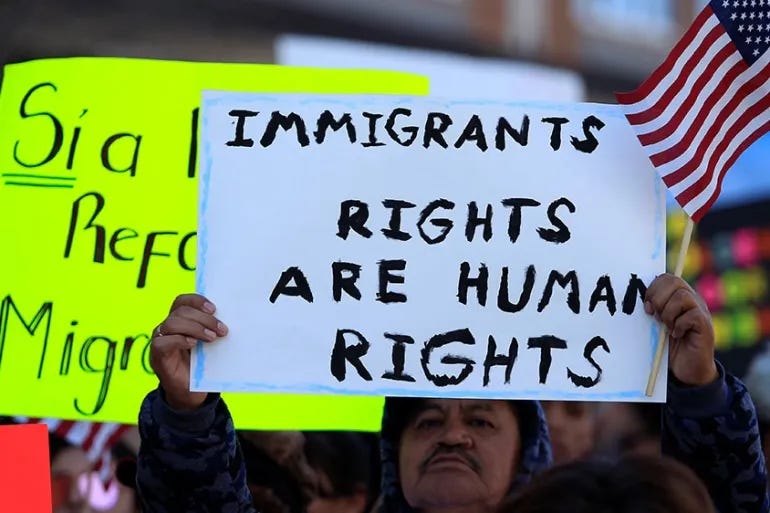
Seventy-seven years ago, on December 10, 1948, the newly established United Nations General Assembly unveiled the Universal Declaration of Human Rights (UDHR). A response to the human carnage wrought by two world wars in 22 years and the genocide of 11 million people, including six million Jews, by Hitler’s fascist regime, the UDHR ushered in a paradigmatic global shift: Henceforth, the dignity and worth of all members of the human family were to be recognized equally and respected internationally, as well as within the borders of nations large and small.
The UDHR was a declaration of principles, comprising 30 articles, built upon the foundational notion that we are all “born free and equal in dignity and rights,” without distinction of any kind, including “race, colour, sex, language, religion, political or other opinion, national or social origin, property, birth or other status.” It announced that regardless “of the political, jurisdictional or international status of the country or territory to which a person belongs,” we share the right to freedom from slavery, torture, degrading punishment, arbitrary arrest, exile, and “arbitrary interference with . . . privacy, family, home or correspondence, [and] attacks upon . . . honour and reputation.”
The UDHR proclaimed our rights to movement, both within a country as well as outside of it; to safety, wherever we are in the world; and to seek asylum in another land if safety is denied us in our homeland. It gave us all equal rights to fairness and due process under the law, as well as “the right to a standard of living adequate for . . . health and well-being . . ., including food, clothing, housing and medical care and necessary social services.”
Alongside the establishment of the United Nations General Assembly, the UDHR marked the advent of a new world order, “in which human beings shall enjoy freedom of speech and belief and freedom from fear and want.” If the human community had been able to stop the early-20th-century rise of fascism when the warmongers were still relatively weak, went the thinking of the nine-person commission tasked with drafting the document, the catastrophe of global conflict and the Holocaust could have been avoided. Therefore, centering humanity’s univerally shared values, “the highest aspiration of the common people,” would provide the new foundation on which to achieve “freedom, justice and peace in the world.”
From December 10, 1948, the UDHR became the agreement governing global law. It gave rise to the International Court of Justice as well as the refugee protection regime, which followed in 1951 with the Refugee Convention, because “disregard and contempt for human rights have resulted in barbarous acts which have outraged the conscience of mankind.”
The UDHR became pivotal to the post-WWII rules-based order, which disavowed the prevailing paradigm of “might makes right” in the hope of putting to an end the rule of the powerful by brute force or imperial domination.
But then came 9/11, and the world order shifted again. This time toward a “national security” paradigm which, as I discovered in researching Crossing the Line, does not sit comfortably alongside the fundamental rights of human beings as prescribed by the UDHR.
The 21st-century National Security State gave swift rise to the Border Industrial Complex, which now encircles the earth like a second equator, cleaving the wealthy, predominantly white world from the less wealthy, less white one, creating a global apartheid. Borders have always been tools of in-group/out-group exclusion, and therefore inherently racist. They have always been used by nation states to decide who’s allowed through the gate, and who isn’t. But today, the rights of nations have trumped the rights of human beings to the extent that the movement of folks in search of safety is increasingly thwarted, their fundamental right to asylum and due process under the law more and more often denied.
What’s more, our fundamental human rights to dignity and freedom from arbitrary arrest and interference in the privacy of home and family, freedom from enslavement, torture, degrading punishment, and exile are being abused and violated in what heretofore has been the world’s most evolved democracy: the United States of America.
Since 9/11 and the creation of the US Department of Homeland “Security,” an immigration gulag of more than 200 prison camps that incarcerate people seeking safety and a dignified life has evolved, hiding in plain sight all around us. Eighty percent of these camps are run by profiteers, who prioritize their bottom line over the rights of the humans they jail through brute force — and they are making billions.
Within an increasingly hostile anti-immigrant political climate, stoked by the white supremacist Trump regime, sycophants such as Florida Governor Ron DeSantis have been given free rein to criminalize, round up, coral, and detain newcomers to the US and people seeking safety in concentration camp-like settings. A recently released report by Amnesty International, entitled “Torture and Enforced Disappearances in the Sunshine State” reveals mistreatment, in some cases amounting to torture, occurring at the Krome and Everglades (aka “Alligator Alcatraz”) Concentration Camps.
It’s harrowing reading — real Deer Hunter stuff. But those subjected to cruel and degrading treatment are not prisoners of war. And the report is just one case study, focusing on two out of more than 200 facilities of the US Immigration and Customs Enforcement (ICE) gulag.
According to my research for Crossing the Line, Florida isn’t alone: From sea to shining sea, people who’ve committed no crime are suffering abuses reminiscent of Hitler’s Germany, pre-UDHR. The tortures documented in this latest Amnesty report are common practice under the ICE paramilitary apparatus that knows no transparency and suffers zero accountability. Which begs the question:
Can the 20th-century promise of universal human rights survive the 21st-century global obsession with national security, especially as fascism walks the earth once more?
In this episode of From the Borderlands, dedicated to Amnesty International with profound thanks, I discuss just this question with Ute Ritz-Deutch, host of the Human Rights and Social Justice Program on WRFI Community Radio, Ithaca, NY.
Click the play button above to hear our conversation!
Are you enjoying Tales of Humanity?I’d be so grateful if you heart and restack this post before you go. Thank you!
Tales of Humanity is a reader-supported publication. To receive new posts and support my work, consider becoming a free or paid subscriber.