Virtue Description:
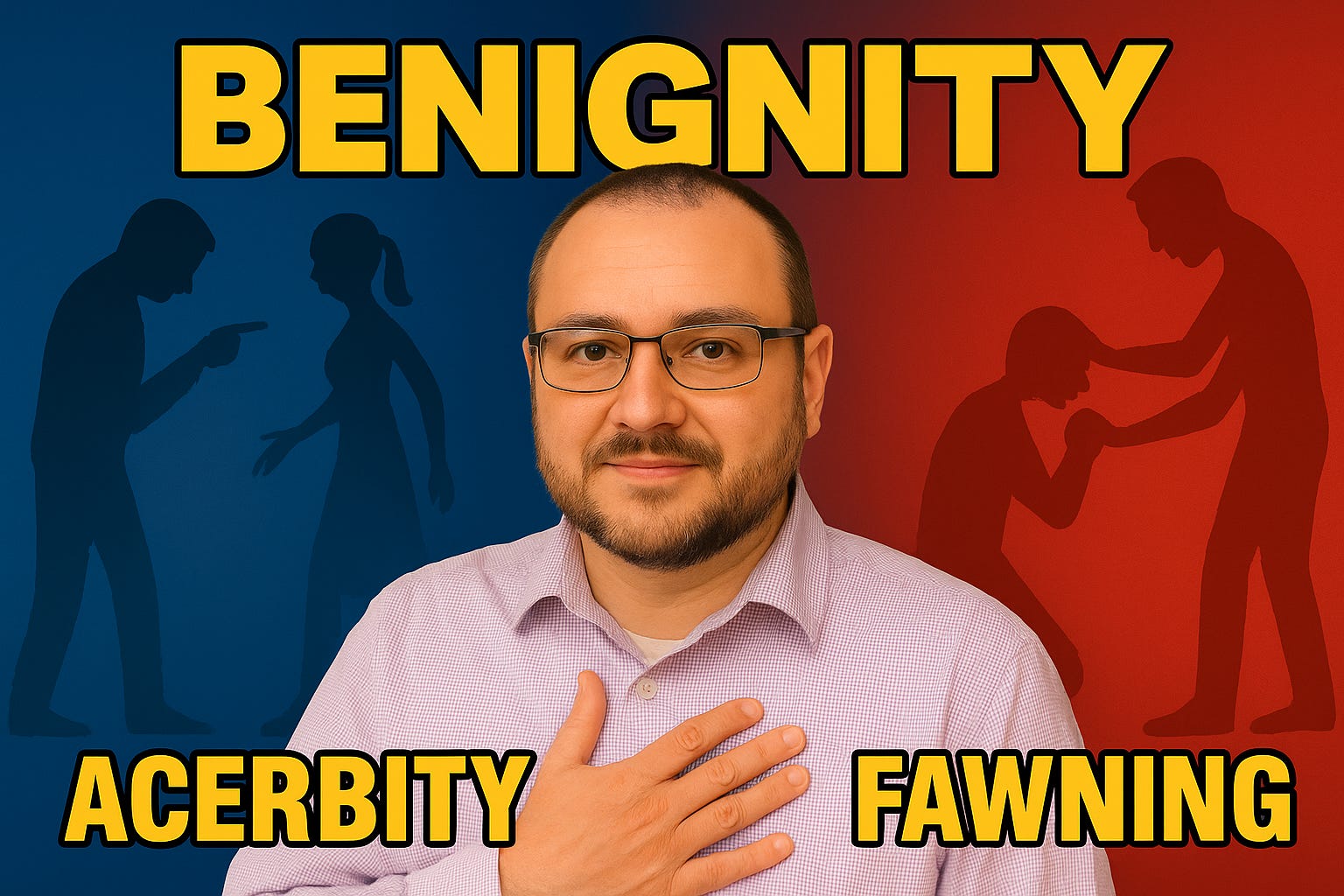
Today, we’re talking about Benignity, or Benignitas in Latin.
Benignity is the virtue of charity that inclines the will to treat others with kindness, gentleness, and goodwill in all interactions.
Aquinas says benignity is closely related to mercy and meekness, but emphasizes the positive affirmation of others’ dignity rather than simply restraining negative impulses.
A benign person acts with courtesy, patience, and consideration, seeking to build relationships rather than to provoke fear or resentment. This virtue involves both the interior disposition of the heart and the external manifestation of courteous speech and benevolent action. Benignity is essential for sustaining harmony within families, communities, and institutions, as it promotes cooperation, reduces conflict, and encourages mutual respect.
Support this content
Before we get to the show notes below, please consider supporting The Social Catholic so we can continue to bring you VirTrue. Below are two ways that you can help.This week’s episode is brought to you by the St. Mother Theresa Flying Novena. This prayer, also called the Express Novena, was Mother Theresa’s go-to prayer when she needed help in a hurry.
Please subscribe to the podcast. Please consider supporting our podcast with a paid subscription. We will occasionally post exclusive content for our paid subscribers as a thank you for helping us to create VirTrue. This could include posts on bonus virtues that are found in the Summa Theologica, but not in our medieval virtue tree model (see episode one for an explanation of our model of virtue).
Vice of Deficiency:
Acerbity – Harshness or cruelty in speech and action toward others.
Acerbity isn’t something you can pin down by looking—it’s felt. It’s the sharp edge in your words, the bite in your tone, the sting that makes people flinch. It’s cutting wit, harsh judgment, and a flavor that scrapes the tongue. You see it in the damage it leaves behind—words that wound, attitudes that bite.
Vice of Excess:
Fawning – Obsequiousness or sycophantic kindness, a distortion of gentleness in which one seeks to please or pacify others at the expense of moral courage, personal integrity, or proper boundaries. The individual becomes overly compliant, constantly acquiescing to others’ wishes, seeking approval, and avoiding conflict even when confrontation is necessary. This is not true kindness, but a servile deformity of it: the desire to be liked overrides the pursuit of what is right, reducing the person to a tool for others’ comfort rather than a steward of virtue.
My Life:
In my life, I have worked hard to overcome Acerbity, which has been a stumbling block in my efforts to dialogue with others, especially in some of my earlier attempts to speak on topics of apologetics.
The satisfaction of that cutting jab to your opponent in dialogue is alluring, but it completely defeats the purpose of trying to win over others to the truth.
My experience with fawning has also been a source of temptation to acerbity. I have witnessed others fawning over strong personalities and failing to hold them accountable, and that has been a source of temptation for me to counter their fawning with my own acerbity. Virtue isn’t a matter of physics. We feel the emotional pull to balance the equation, “For every action, there is an equal and opposite reaction,” but two wrongs don’t make a right, and it keeps both parties equally far from the heights of virtue.
The Secular Perspective
Acerbity has become incredibly common in our politics in America, lashing out with cutting and divisive wit has become the only tool our politicians know how to use, and equally vicious is the behavior of fawning over strong personalities of our own political thinking without holding them accountable to the areas where they could improve. Last week, in episode 2, we discussed enmeshment as a vice of excess for Compassion. In politics, we can often become enmeshed with ideologies, leading us to fawning behavior and away from the virtue of benignity.
Another example could be our attitude toward other drivers in traffic and how others hear us speaking about them.
Explore Example Saint
Born to a Spanish nobleman and a freed Black woman from Panama, St. Martin de Porres was considered illegitimate and suffered intense racial discrimination throughout his life. Despite being denied full religious status initially due to his mixed race, he never responded with anger or resentment. Instead, he met rejection with forgiveness, patience, and kindness. These are hallmarks of true benignity.
“Compassion, my dear Brother, is preferable to cleanliness. Reflect that with a little soap I can easily clean my bed covers, but even with a torrent of tears I would never wash from my soul the stain that my harshness toward the unfortunate would create.”
– St. Martin de Porres
Tell Me What You Think
Share your thoughts and continue the conversation with me in the comments. I will use your thoughts in future episodes when we invite guests to speak about this virtue.
Act of Virtue
O God, source of all goodness and loving kindness,
my heart is soft, and my eyes are open.
Where I see a need, my hands will act.
Where I see pain, my words will console.
Let my every action be a reflection of your grace, seeking to serve others without expecting anything in return.
May my small acts of benignity today be seeds that grow and bring light into the lives of others.
Amen.
Closing Prayer
Lord, bless us with faith, hope, love, prudence, temperance, fortitude, and justice that we may live as you intended man to live, in all virtue and righteousness. Help us to flee from sin, and avoid all temptations of the world, the flesh, and the devil. Protect us with a spiritual hedge in front of us, behind us, above us, below us, to our right, and to our left, within us and all around us, and seal it with the blood of your precious Son, our Lord Jesus Christ. Help us to keep you in everything that we think, say, and do. Amen.
Go out and fill the world with virtue, Deus vult!
Follow us on Social Media and other podcast networks:
Welcome to the VirTrue Podcast, where we explore the virtues this episode is about benignity—the quality of being benign—and how it shapes our lives and relationships. This page is dedicated to conversations on character, moral growth, and the practice of virtue; it is not intended as a resource for writing tips, Middle English study, or deciphering words from the English dictionary, Word Finder, or Word of the Day, though we occasionally touch on language to illustrate the virtue.