Don’t forget to follow us on Facebook for more great content from the Social Catholic.
Intro
Welcome to VirTrue, where we work together to turn away from vice and embrace the virtuous life we are all called to.I’m your host, Jethro Higgins.
🕊️ Virtue Description
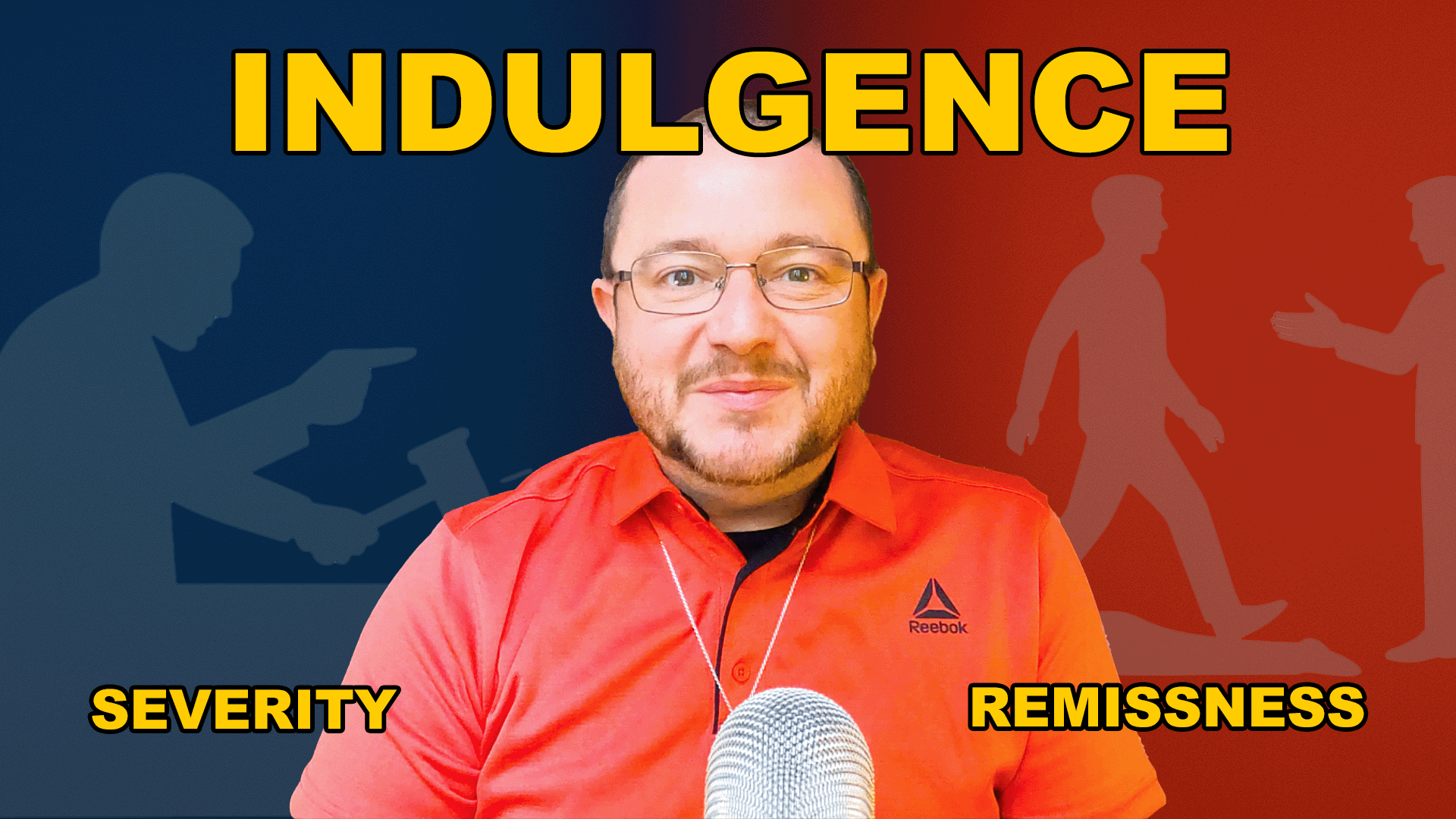
Indulgence, in the context of charity, is the virtue that moderates judgment toward the failings of others, tempering strictness with understanding and compassion.
According to St. Thomas Aquinas (Summa Theologica, II–II, Q32), indulgence is an extension of mercy that softens our treatment of faults, allowing correction and guidance to proceed with charity rather than harshness.
This virtue encourages correction rather than alienation, often referred to as the pastoral approach.It operates in harmony with justice, prudence, and mercy, ensuring that moderation does not become permissiveness.
Christ exemplified indulgence by responding to sinners with patient guidance rather than immediate condemnation, balancing forgiveness with accountability and encouraging moral growth while respecting human dignity.
Through indulgence, the faithful participate in God’s compassionate governance of creation, tempering natural judgment with love and discretion.
⚖️ Vice of Deficiency: Severity (Severitas)
Definition:A harsh and unyielding disposition that enforces justice without mercy, punishes without compassion, and fails to temper discipline with charity.
Why it fits:Severity is the absence of indulgence, it overemphasizes justice at the expense of mercy.Where indulgence seeks to heal, severity seeks to wound.
Description:Severity is justice without heart, a cold zeal for correction that crushes rather than reforms. It refuses to pardon minor faults, makes no allowance for human weakness, and alienates rather than restores.
💧 Vice of Excess: Remissness (Remissio)
Definition:A moral slackness or negligence that fails to correct wrongdoing or uphold justice under the pretense of mercy.
Why it fits:Remissness corrupts indulgence by turning it into indifference. It forgives not out of love, but from laziness, cowardice, or apathy.
Description:Remissness is mercy without truth, the failure to act when correction is needed. It mistakes avoidance of conflict for compassion, allowing disorder and sin to fester unchecked.
Support this content
This weeks episode is sponsored by the Crusader Rosary. Pray for virtue like the knights of old through the intercession of your mother.
The Social Catholic is a listener-supported podcast. To receive new posts and support our work, consider becoming a free or paid subscriber.
🪞 My Life
I lean more toward severity than remissness when it comes to indulgence toward others. It’s difficult to find the balance, being indulgent without feeling like evil is being ignored.
I’ve often erred on the side of rigid justice toward others while being remiss in holding myself accountable. Marriage and children have helped me see this imbalance more clearly, revealing the hypocrisy of judging others severely while excusing my own faults.
It’s also been hard to apply a pastoral approach to complex issues within the Church, such as addressing the divorced and remarried. Different groups take radically different stances, and finding the virtuous balance can be challenging.
“You’re not trying to win against them, you’re trying to win them over for Christ.”
🌍 The Secular Perspective
Mainstream American culture is defined by remissness.We say “live and let live,” or “if it’s not hurting anyone, why get involved?”This aversion to moral certitude has fostered a reactionary movement driven by severity—an attempt to fix a moral imbalance with equal and opposite force.
As I’ve said before, virtue isn’t physics. Equal and opposite reactions don’t restore balance—they prevent everyone from growing.
Even mainstream Protestant denominations tend to shy away from the notion of indulgence—both in its virtuous sense and in the Catholic teaching on indulgences (remission of temporal punishment due to sin).
🌟 Example Saint: Saint John XXIII and His Pastoral Clemency
Throughout his life, and especially during his papacy (1958–1963), Saint John XXIII modeled the virtue of clemency.
* A Good Shepherd: His gentle, loving approach earned him the title “The Good Pope.” He viewed himself as a pastor, not a judge.
* Correction with Mercy: He was firm but compassionate, aiming to reform rather than condemn.
* The Second Vatican Council: Convened to renew the Church’s relationship with the modern world in a spirit of mercy and reconciliation rather than condemnation, a monumental act of institutional indulgence.
* Clemency in Action: He pardoned political prisoners, prioritizing rehabilitation over punishment.
His motto:
“See everything; overlook much; correct a little.”— epitomizes indulgentia as pastoral gentleness.
Saint John XXIII shows that mercy does not undermine justice but perfects it, creating space for repentance, growth, and healing.
💬 Tell Me What You Think
Share your thoughts in the comments and continue the conversation.Your reflections might be featured in future episodes when we invite guests to explore this virtue together.
✝️ Act of Indulgence
O, my God, I will moderate judgment toward the failings of others, I will temper the desire to be strict with understanding and compassion. I will practice indulgence rather than rigidity, providing kind correction rather than alienation to those who have fallen short of following your will. My moderate approach will not lead to permissiveness, overlooking sin and vice, but will seek to guide the sinner on the right path while tempering judgment with love. Amen.
🛡️ Closing Prayer
Lord, bless us with faith, hope, love, prudence, temperance, fortitude, and justice, that we may live as You intended man to live,in all virtue and righteousness.Help us to flee from sin, and avoid all temptation of the world, the flesh, and the devil.Protect us with a spiritual hedge in front of us, behind us, above us, below us, to our right and to our left, within us and all around us, and seal it with the Blood of Your Precious Son, our Lord Jesus Christ.Help us keep You in everything we think, say, and do.Amen.
🕊️ Go out and fill the world with virtue. Deus vult!
Follow us on Social Media and other podcast networks: