When I talked to store owners in Spain and Croatia, they told me stories about the lengths they went to just to order records from the UK. Sending pounds in an envelope from Yugoslavia, risking prison time for handling foreign currency, or, a bit less intense, getting a cassette with song samples from the store before ordering.
The grass is always greener though. The owners of Umbrella Vinyl had Led Zeppelin and Pink Floyd easily accessible on vinyl, but they were looking for something different. Curiosity and a love of eclectic sound led them to Hong Kong, where the three of them came together, with their respective vinyl projects, before opening a record shop in Edinburgh.
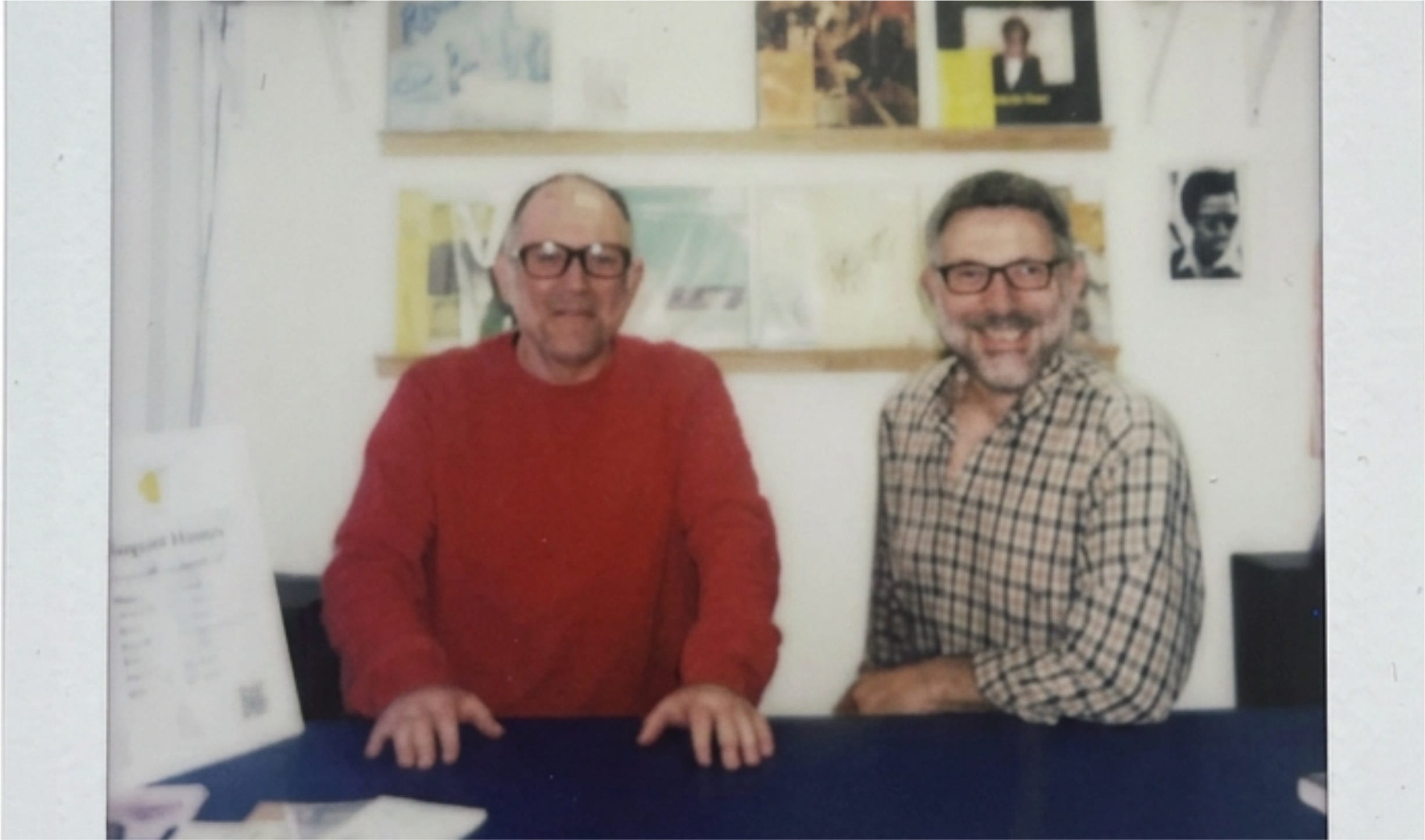
Laura couldn’t make it this time, but I met with two thirds of the Umbrella Vinyl crew, Nick and Josh:
You all met in Hong Kong, and you each had your own vinyl projects back then. Could you give us Umbrella’s origin story?
JOSH: Laura and I went out to Hong Kong in 2010, and from that point onwards I had a record label called Platinum Metres, which specialised in art music. When I was out there I was working a lot on that, making my own musical instruments and my own music, and then luckily went into publishing music by other people. It was while I was putting those records out that Laura and I met Nick, who was selling records at a music festival, Clockenflap, which was Hong Kong’s answer to Glastonbury. If Glastonbury was a question, that would have been the answer.
Nick was selling records and he was quite interested in publishing music as well, so it seemed like we should exchange ideas. We ended up working on a release together and that conversation just kept on growing. After we moved back to the UK, we came to Edinburgh, and Nick followed. We’d been thinking about what we wanted to do with all this knowledge and enthusiasm for records, because we’re all record collectors as well. So we released a tune called MRA by Chris McGregor’s Brotherhood of Breath, the South African group who moved to Europe and then the UK. We put out that record, and it blossomed into this shop.
And it was for a good cause, right?
JOSH: Yeah. To acknowledge the awful situation those musicians were put in, exiled from South Africa because of the apartheid system, we thought it would only be fitting to pay a percentage of the income to charities that help migrants, in this case migrant musicians.
And Nick, how did you end up selling records in Hong Kong?
NICK: I’d been in Hong Kong with my family since 2005 and was gradually transitioning out of my career and looking for new things to do. And I literally ended up buying 10,000 records and having them delivered to Hong Kong on three pallets, and then having to move them into my apartment in cardboard boxes. It was fantastic and awful at the same time, but mostly fantastic.
I started going through them and thought there has to be a business in this. There was amazing music. I started selling and got involved in the local network in Hong Kong, which is enormous for vinyl. You wouldn’t imagine it, but it’s big. Then getting invited to Clockenflap and meeting Josh and Laura. That’s where it came from.
JOSH: Nick was also running record fairs in central Hong Kong. Like he says, there’s this huge network, and the network matters more there than bricks and mortar shops. These fairs would bring vinyl enthusiasts from far and wide. Laura and I would DJ, and Nick would shift wax. A real carnival atmosphere.
How's the Hong Kong vinyl scene?
NICK: It’s very interesting. I found people selling records in coffee shops, doing very small record fairs. And that developed into the monthly fairs that I was organising, inviting anybody who wanted to sell and everybody who wanted to buy. They ended up being really busy Saturday afternoons for a few hours in a bar in central Hong Kong.
But the one interesting thing there was a Facebook group with several thousand members. And all week there would be transactions happening. And then we would meet at one of the underground stations, the MTR stations, on a Wednesday evening, six o’clock, and 50 or 60 people would meet in the public area. So you’re sort of mixed between actually being in the stations, behind and in front of the ticket barrier. And all of these boxes of records would be there. I would take a box of records down and give them out to 10 or 20 people. And then I’d be buying from other people.
It was a real community, really fantastic, all based on trust. Occasionally people didn’t show up, but it was just a fantastic way to meet people and find out what was going on. One of my great memories of Hong Kong was this rare thing where there was some equity between locals and expatriates. It’s very easy to move within an expatriate circle of people and not meet any locals. And there were lots of musicians there as well. So you’d find out about these gigs that were going on in these underground places that would actually be on the 43rd floor of some disused factory building, and you needed a secret handshake to get in. The access that dealing with the record community afforded me to the music that was happening in Hong Kong was truly amazing.
So you were invited into the underground scene.
NICK: Yeah. Especially when the protests started, there were all sorts of restrictions on being able to get visas for foreign musicians, and licences to make music in venues. And it was a great luxury to be afforded that access as an expat there, because I might often be the only non-local person at some of these gigs. And I saw some tremendous music.
And that led to one other venture that Josh and I did with a friend in Hong Kong, which was to produce a zine about music in Hong Kong. Not necessarily Hong Kong music, it might be music that was coming to Hong Kong. And we published this beautiful hard copy zine, very limited. And we were able to use that to talk to artists and venue owners and record producers. It was a fabulous time. And it was a shame it came at the end of our times, respectively, in Hong Kong, and the start of the protests in 2019.
And that led to your own label as well?
NICK: It resulted in working with Josh on a joint release, and then my label growing into something that was looking at making physical releases on a not-for-profit basis for Hong Kong musicians, whether they were expatriates or local locals. I’ve made so many great friends in this network. I had a bunch of releases there, all on vinyl, and then latterly a couple of cassettes.
That turned into a global thing. I’ve picked up contacts in North America, Canada, all over China and Southeast Asia, and Japan. When we started setting up the shop, that whole world thing became something for us.
And how did you come up with the name?
NICK: As we thought about the logo and the name and what the shop would be, we had our tagline: Global Sounds Under One Umbrella. That’s the way we look at music and records from all over the world. What we want to do here in Edinburgh is bring global sound under one umbrella for everyone.
JOSH: As Nick says, this love of music is a real social leveller. Not that music is a universal language, but you can universally unite through the love of it. And the umbrella, beyond the obvious metaphor of keeping us all under it, is also a reference to the protest movement in Hong Kong, which was unfolding while we were there. Lots of layers.
How did the fascination with African sounds start? Were you always into music from all over the world, even as teenagers, or did it start in Hong Kong?
JOSH: My mum was a bit of a hippie, into the world music scene. So when I was a child we had records by the Bhundu Boys and King Sunny Adé, and I had a taste for it. But I don’t think it was until later life that I heard people like Fela Kuti, or the heavier Afrobeat, the more obscure stuff like Tunji Oyelana. We’ve got all sorts of records by people like Blo and Witch. It was always there as a rhythm.
NICK: My dad was a great influence. I ended up with old blues records from…